Downsizing or aging in place in Ottawa — the move, the money and the alternative
Selling the family home and moving in later life is usually framed as releasing equity, and the arithmetic is less generous than people expect once transaction costs and condo fees are counted. What a move actually frees up, what adapting the home costs instead, and the City of Ottawa tax deferral that lets some owners stay put — with the 2026 thresholds stated.
By Ottawa Property Guide EditorialPublished August 1, 2026 Last verified August 1, 2026
Selling the family home and moving in later life gets talked about as though the decision is obvious: the house is too big, the stairs are a problem, and there is money locked up in it. Sometimes all three are true. But the arithmetic is less generous than it looks, and the alternative — staying and adapting — is usually costed far too casually against it.
This guide is about making that comparison honestly, in both directions.
What downsizing actually frees up
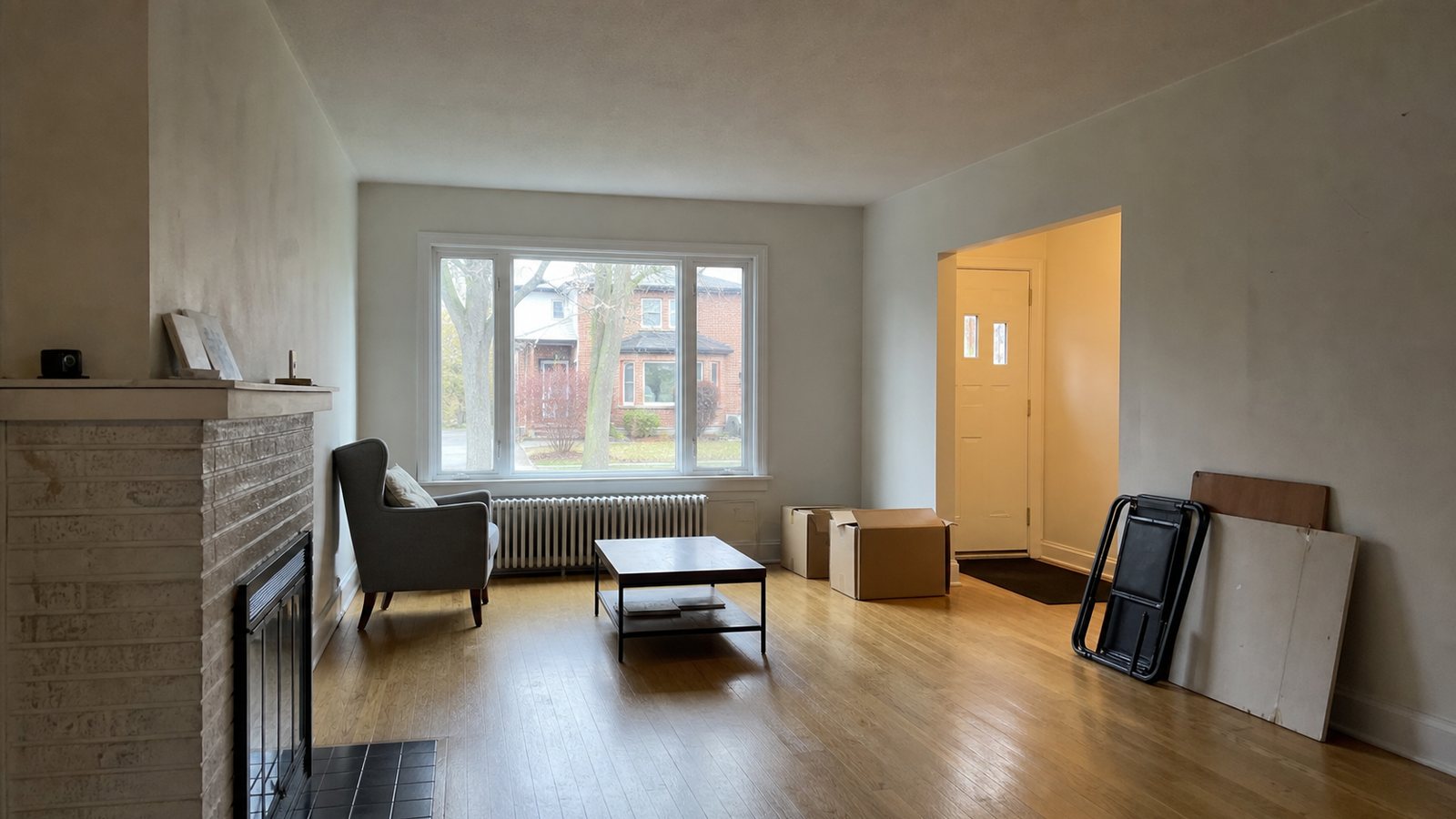
Start with the number people quote: the difference between what the house sells for and what the next place costs. Then take out what the move itself consumes, because the gap between the two figures is routinely a large fraction of the equity anyone expected to release.
The cost of selling — commission, legal fees, and whatever it takes to get a long-occupied house to market. The real cost of selling in Ottawa is the full list.
Land transfer tax on the purchase, which scales with the price of the new place and is payable in cash on closing.
Moving, and disposing of forty years of contents — the second of which costs more in time and difficulty than in money, and is the part people most underestimate.
Condo fees, if the next place is a condo. A monthly obligation that rises, replacing maintenance you previously controlled the timing of. What condo fees cover explains what you are actually buying.
None of that argues against downsizing. It argues for doing the subtraction before deciding, because a move that releases far less than expected is a much worse outcome when it is discovered afterwards.
The alternative: aging in place in an accessible home
Staying is a real option, and it deserves the same costing rather than being treated as the default that happens if no decision is made.
Turning a house into an accessible home is mostly unglamorous work: a ground-floor bathroom, a bedroom that does not require stairs, grab bars and better lighting, a ramped or level entrance, lever handles, and doing something about a basement laundry. Against the total cost of moving, a surprising amount of that is affordable — and unlike a move, it can be done in stages as it becomes necessary.
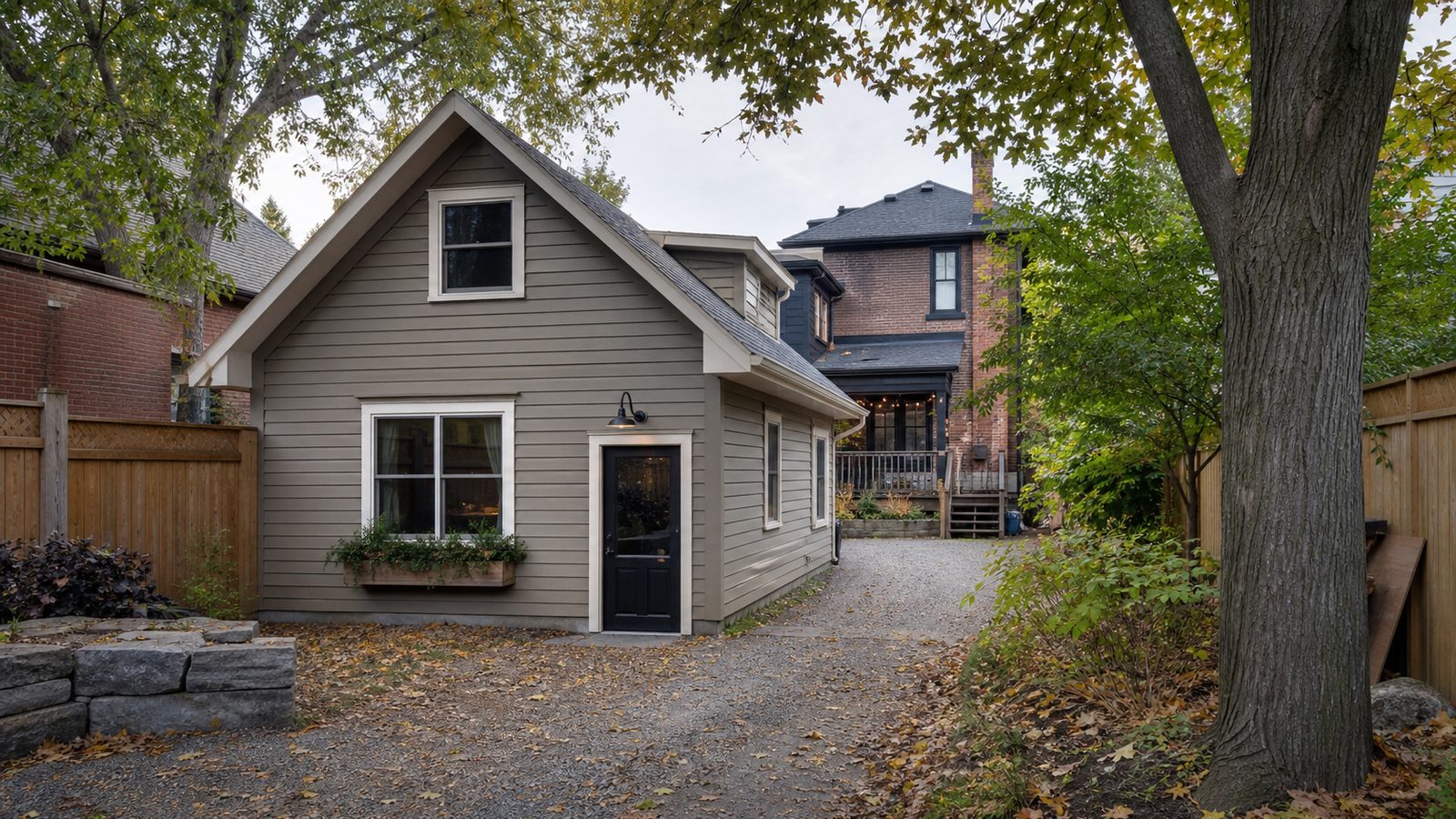
There is a bigger structural option too, and it is one Ottawa's rules now accommodate: adding a unit. A lot with a principal dwelling may have up to two additional dwelling units, three in total, subject to servicing — which makes a coach house or an in-law suite a genuine alternative to moving, whether for a family member or for rental income that helps carry the property. The rules are in secondary dwelling units, basement apartments and coach houses.
Seniors property tax relief: the Ottawa deferral almost nobody applies for
If the pressure to sell is the annual property tax bill rather than the house itself, this is worth knowing about before listing. The City of Ottawa runs full and partial property tax deferral programmes for low-income seniors and low-income people with disabilities.
Two honest observations about it. It is a deferral, not a rebate — the taxes are still owed and interest accrues at 5% a year, so what it buys is time and cash flow rather than money. And the renewal deadline is earlier than the application deadline, which is exactly the sort of detail that causes an otherwise eligible household to fall out of the programme in year two. Diarise 30 September.
The thresholds are annual figures and both are dated above. Check the current year's numbers before relying on them — this is one of the few things on this site that changes every twelve months by design.
Condo or house? Bungalow, apartment, or somewhere with a lift
If the decision is to move, the shape of the next property matters more than its size.
A condo trades maintenance for fees and control for convenience: no roof to replace, no driveway to clear, and a monthly cost you do not set. It also introduces a corporation whose finances become yours — which is why the status certificate is not a formality, and why selling a condo is worth reading from the buying side too.
A bungalow keeps the freehold model and removes the stairs, which in Ottawa's older suburbs is a well-supplied and much-wanted form — meaning you will be competing for it. A newer build is likely to be more accessible as designed, and easier to adapt further. Retirement communities and life-lease arrangements are a separate category again, with their own contracts worth a lawyer's eye.
The question worth asking of each: does this work if walking becomes difficult, rather than does this work today? That is the whole point of moving early, and the reason a move made under pressure produces worse choices than one made three years before it was strictly necessary.
When the move is not voluntary
A great many downsizing sales happen after a health event or a bereavement, on somebody else's timeline. If that is the situation, two things are worth saying plainly.
A sale under time pressure is a worse sale, and it is worth knowing that going in rather than discovering it in the results. If the timeline can be extended even by weeks, that is usually worth more than any negotiating tactic.
If the owner cannot make the decision themselves, whoever is acting for them needs the legal authority to do so — a power of attorney for property, or an estate trustee's authority if the owner has died. That is a legal question that comes before the property question, and it is covered in selling through a separation, a divorce or an estate.
Before you decide
Do the subtraction. Sale proceeds, less selling costs, less the purchase and its land transfer tax, less moving — then compare what is genuinely released against what adapting the current home would cost.
Cost the adaptations properly rather than dismissing them. A ground-floor bathroom is cheaper than a move.
Check the tax deferral programmes if the annual bill is part of the pressure, and diarise the 30 September renewal.
Consider a second unit as an alternative to moving, if the lot and the servicing allow it.
Decide the order of sale and purchase deliberately, and get advice on carrying two properties before committing to either sequence.
Ask of any new home whether it works in ten years, not whether it works now.
Start earlier than feels necessary. Every part of this is better done from choice than from a hospital discharge.
The honest summary is that downsizing is often the right decision and rarely the windfall it is described as. Made early and costed properly, it works. Made late and under pressure, it is simply a difficult sale with an emotional weight attached — which is the version worth planning your way out of.
Two situations where the seller is not free to simply sell. Selling after separation or divorce, a matrimonial home cannot be sold or mortgaged without the other spouse's consent — whoever is on title. Selling an estate property, nothing closes until an estate trustee has authority, usually through probate and an estate certificate. What the law actually says, and what it means for the sale.
If you're moving from one owned home to another, the sequence matters more than the price. Each order is a different risk — living in limbo versus carrying two homes — and the honest answer is choosing the one you can afford to have go wrong. How to line up closing dates, when a sale-of-home condition helps and when it kills an offer, and what moving between homes actually costs if the two dates do not meet.
The sale price is not what you walk away with. Commission and the HST on it, lawyer fees, mortgage discharge or a mortgage penalty, preparing your house for sale, moving and overlap all come off the top. Here is how to work out your net proceeds before you list — and which line regularly shocks sellers.
An in-law suite, a granny flat, a garden suite, a basement apartment — an Ottawa lot with a principal dwelling may have up to two additional dwelling units, three in total, but how many you actually get depends on your servicing rather than your ambition. What makes a legal basement apartment, why a septic system caps you at one, and why converting an existing basement still needs a permit.
August 1, 2026Updated August 1, 2026
Get Ottawa property guidance in your inbox
You'll get: First-time buying explainers · Selling guidance · New-build and builder updates · Neighbourhood guides · Renting and ownership costs · Local market context.
Occasional emails. No spam, and you can unsubscribe with one click. By subscribing you consent to receive emails from Ottawa Property Guide. We record the date and source of your consent, as Canadian anti-spam law (CASL) requires. Read our privacy policy.