

The selling process · 8 steps
Selling in Ottawa, step by step
What selling actually involves, in order — the costs, the choices, and the Ontario rules that catch sellers out.
01 You are here Decide when to sell — and in what order If you are buying too, the biggest decision is sequence, not price
If you're also buying, the biggest decision isn't price — it's sequence. Sell first and you know exactly what you have to spend, but you may need somewhere to live in between. Buy first and you avoid the gap, but you may carry two properties if your sale is slow. Neither is "right"; each is a different risk. Ottawa's market also has a rhythm — spring and fall are traditionally the active windows — though a well-prepared home sells in any month.
Assuming buy-first and sell-first carry the same risk — they don't. Sell-first tells you your real budget; buy-first means carrying two properties if your sale is slow.

02 You are here Understand what selling costs Commission and the HST on it, legal fees, mortgage discharge, and prep costs
Selling is not free money off the top. Before you count proceeds, subtract: real-estate commission if you use an agent (plus HST on that commission), legal fees, your mortgage discharge fee or — the one that shocks people — the prepayment penalty if you're breaking a fixed-term mortgage early, and any repairs, staging and moving costs. Ask your lender for your discharge and penalty numbers before you list, not after you've accepted an offer.
Asking your lender for the discharge and penalty numbers after accepting an offer instead of before listing — by then it's too late to plan around them.

03 You are here Choose how to sell: with an agent, or yourself Commission is negotiable and services vary — worth interviewing more than one
An agent brings pricing knowledge, marketing reach and negotiation experience — commission is negotiable and services vary, so interview more than one and ask exactly what's included. Selling yourself (FSBO) saves the commission but moves every task to you: pricing without full market data, marketing, showings, negotiating directly, and managing legal paperwork. Both routes work; the honest question is how much of the job you genuinely have time and stomach to do.
Choosing FSBO to save commission without appreciating that pricing without full market data, marketing and negotiation are skills the commission is paying for.
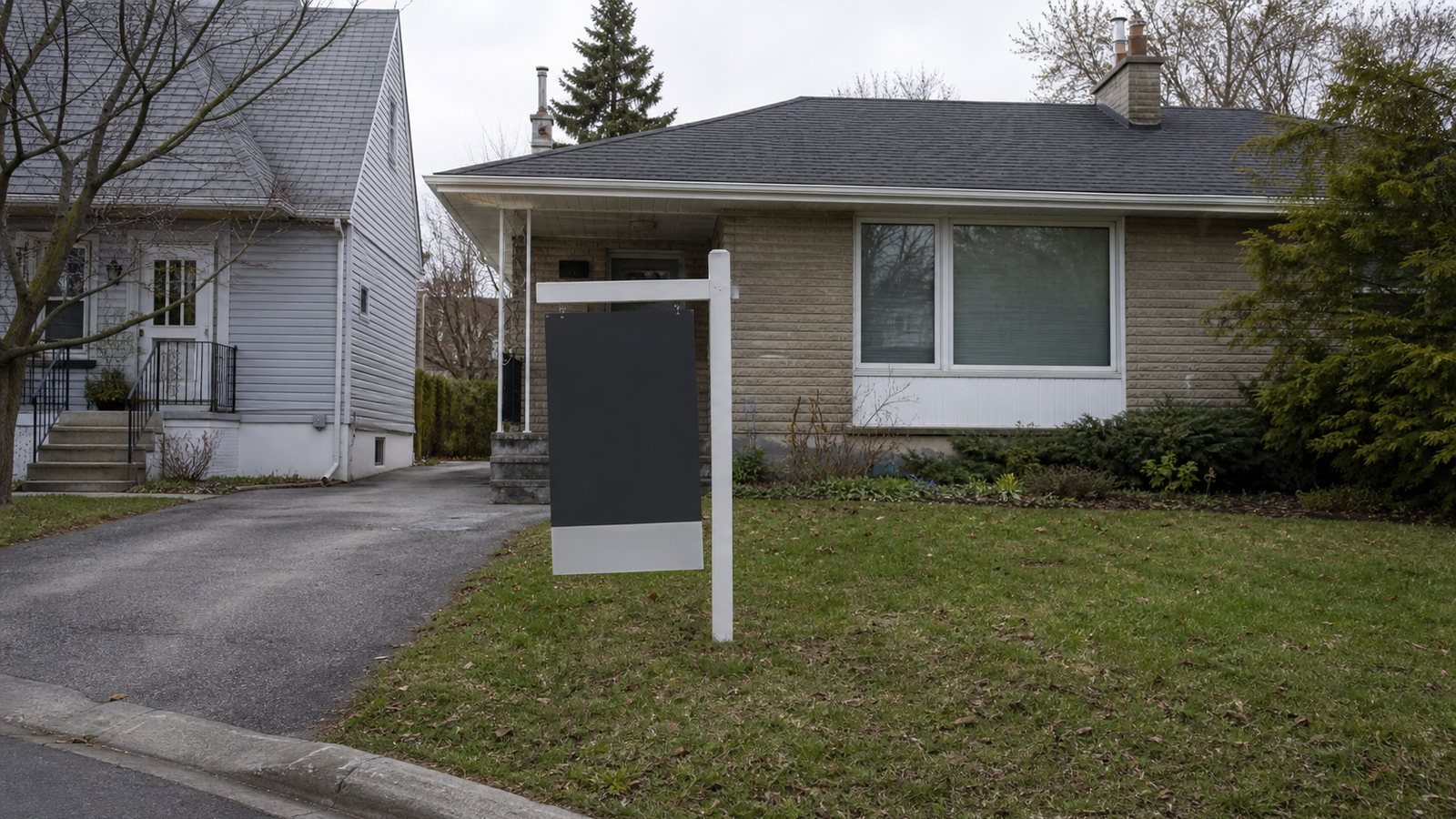


04 You are here Prepare the property — and know your special cases Condos and tenanted properties both carry extra homework before a single photo is taken
Declutter, fix the small things buyers notice, and consider what staging is worth for your price range. Two Ottawa-common situations need extra homework: selling a condo means buyers will scrutinize your building's status certificate, so know what's in it before they do. Selling a tenanted property in Ontario is governed by strict rules — tenants have rights through the sale, showings require proper notice, and ending a tenancy for a buyer's own use involves specific forms and obligations.
Listing a tenanted property without understanding tenant rights through the sale and the specific forms for ending a tenancy for a buyer's own use — this is where sellers get into genuine legal trouble.
 Renovation costs in Ottawa — what things cost, and which renovations add value
 Selling a condo in Ottawa — the status certificate works for the buyer now
 Selling with tenants in Ontario — the rules that outrank your sale
 Selling a home with defects or unpermitted work — what you must disclose
 Selling through a separation, a divorce or an estate in Ontario
 Downsizing or aging in place in Ottawa — the move, the money and the alternative
 Selling a new build on assignment — exiting before you've closed
05 You are here Price it Evidence work, not wishful thinking
Pricing is evidence work, not wishful thinking: what have genuinely comparable homes nearby sold for — not listed for — in the last few months? Overpricing feels safe and costs real money; homes that sit get stale, and stale homes get low offers. Whatever price strategy you choose, be able to explain the reasoning behind it, because buyers' agents certainly will.
Overpricing because it feels safe — homes that sit get stale, and stale homes get low offers.


06 You are here Offers, conditions and negotiation A slightly lower unconditional offer can be worth more than a high conditional one
Offers differ in more than price: closing date, deposit size, and conditions (financing, inspection, sale of the buyer's home) all change how solid an offer really is. A slightly lower unconditional offer can be worth more than a higher one built on conditions. Read every condition as "a way this deal can fall through" and weigh accordingly.
Chasing the highest headline price and overlooking a pile of conditions that make it less certain than a lower, cleaner offer.

07 You are here From acceptance to closing day Your lawyer handles the transfer, discharges the mortgage, settles the adjustments
Your lawyer handles the legal transfer, discharges your mortgage, and settles the adjustments — property tax and utilities prorated between you and the buyer to the closing date. Your jobs: keep the home in the condition the buyer agreed to buy, cooperate with any pre-closing visit, and have your next address ready to receive you and your money.
Not keeping the home in the condition the buyer agreed to buy between acceptance and closing — a real source of last-minute disputes.

08 You are here Taxes and afterwards The principal residence exemption usually shelters the gain — but you still have to report the sale
If the home was your principal residence for every year you owned it, the sale is generally sheltered by the principal residence exemption — but you must still report the sale on your tax return. If it was ever a rental, an investment, or a short-hold flip, the tax picture changes substantially. These are questions for your accountant, asked before you sell rather than at filing time.
Assuming the principal residence exemption means nothing needs to be reported — the sale still has to go on your tax return.
