The design studio appointment — how to walk in prepared and walk out without regret
One appointment, a few hours, and a list of decisions that are difficult to undo. Here's what actually happens at a builder's design studio, what's decided before you get there, and how to stop the room from making the choices for you. What a design appointment actually covers, how finishes and colour selections are recorded, and what is already decided before you walk in.
By Ottawa Property Guide EditorialPublished July 31, 2026 Last verified July 31, 2026
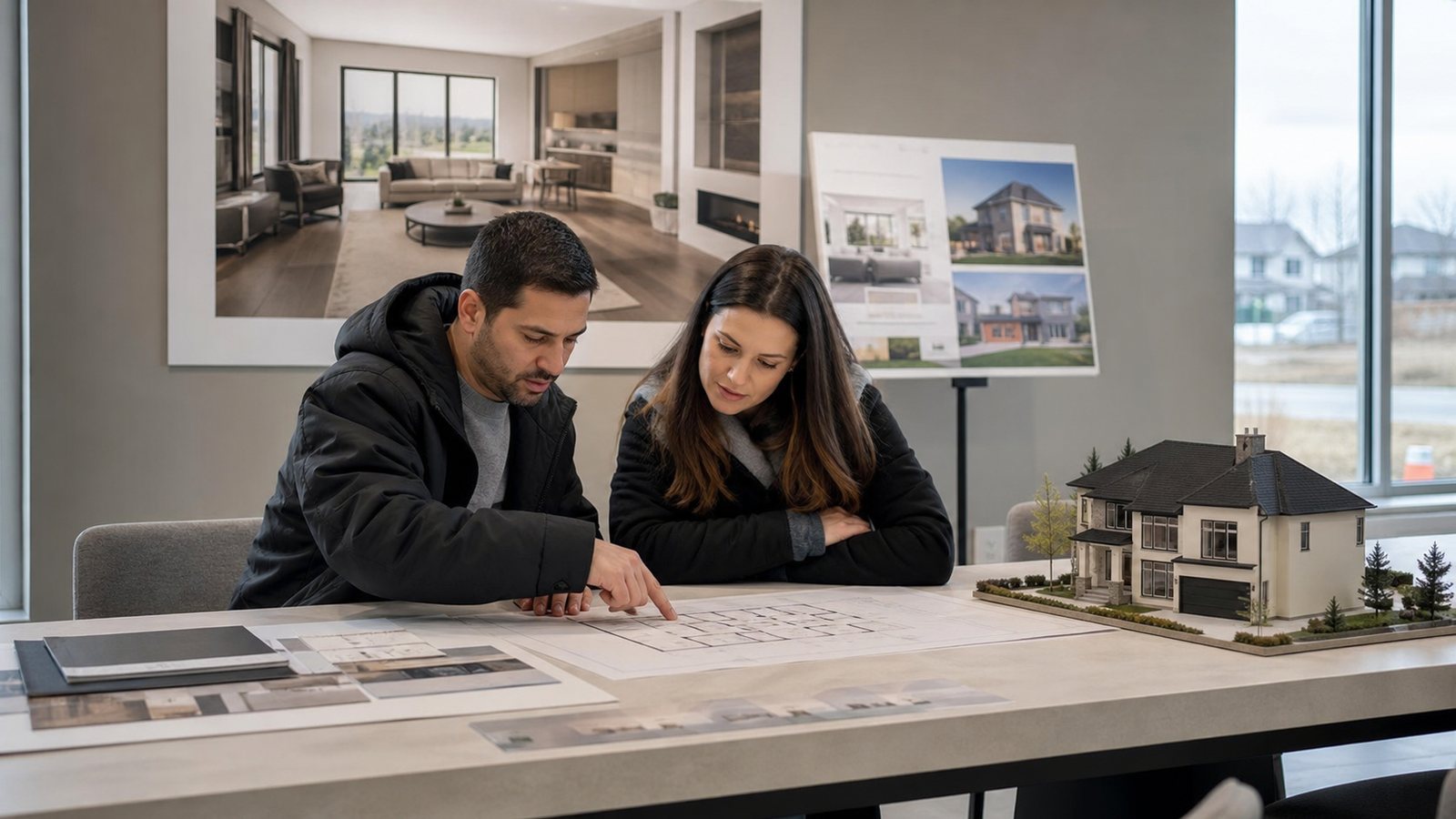
The design studio is where a new build stops being a floor plan and starts being your house. It is also, for most buyers, the single appointment they are least prepared for — booked weeks ahead, several hours long, and ending with a signed sheet that is expensive to revisit.
None of that is a trap. It is simply a meeting with an agenda you have not seen, run by someone who does this every day while you do it once.
What the appointment actually is
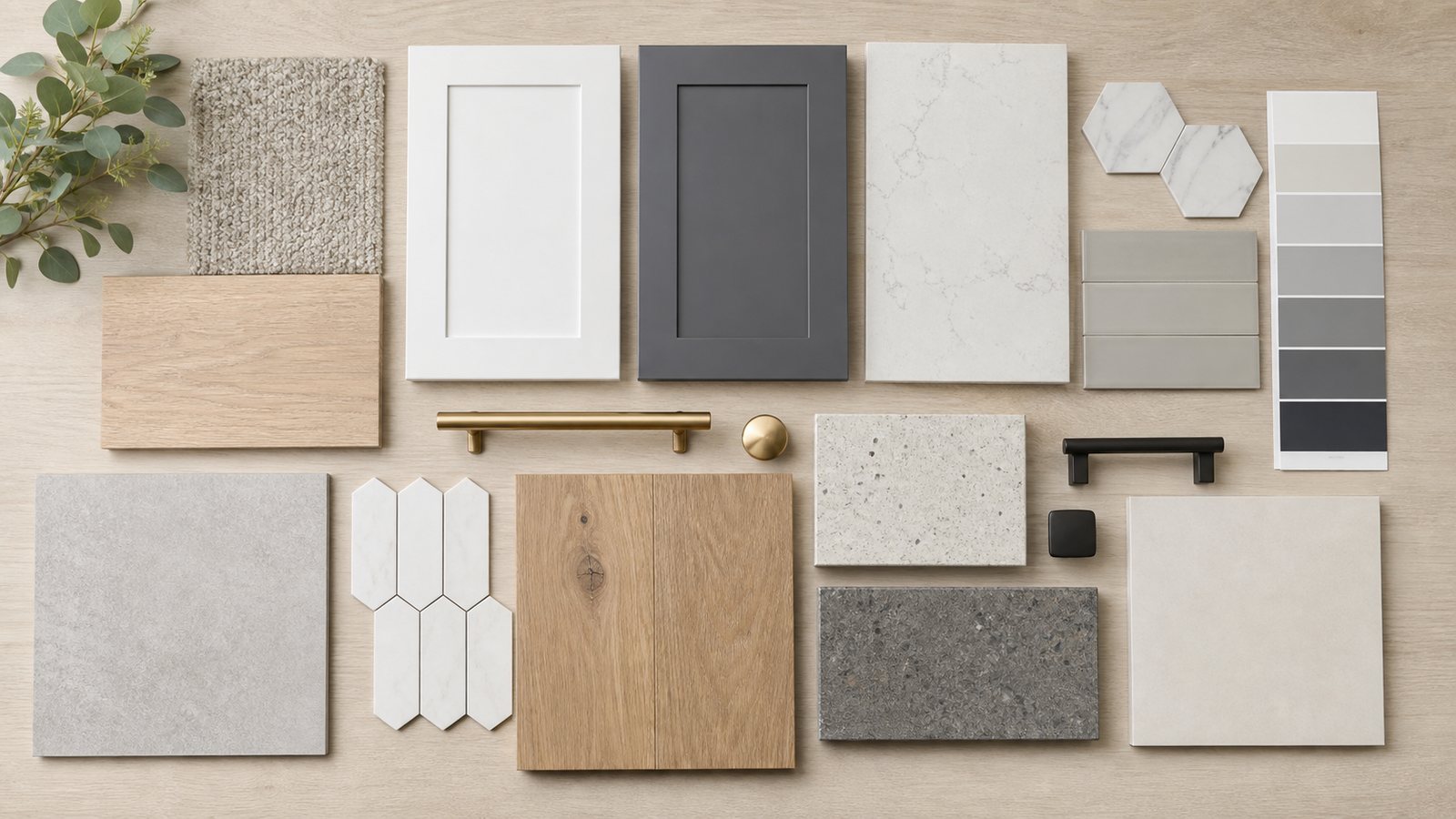
A design studio appointment is a working session with a consultant, in a showroom stocked with the options your builder offers. You go through the house room by room and record a choice for every selectable item: flooring, cabinets, counters, tile, paint, hardware, fixtures, and whatever electrical and structural options are still open.
The output is a selections sheet — the document that tells the site what to build, and the one you will hold against the finished house months later. It matters more than anything else you sign that day.
The decisions that were already made
The most common surprise is discovering that the thing you most wanted to discuss is no longer on the table. Structural choices — a basement bathroom rough-in, an extra window, a fireplace, a knocked-through opening, additional electrical — usually close before the design studio, because the framing has to be drawn before it can be built.
By the time you are choosing counter colours, the house's bones are set. If you have not yet had that conversation, have it now rather than at the studio, and see what's worth paying the builder for for how to think about which ones matter.
What to bring, and it is not a mood board
Your agreement of purchase and sale, with every schedule and amendment. It defines the base specification — what you are already entitled to before anything is added.
Your floor plan, marked up with where furniture goes and where you actually need power.
Photographs of anything you already own that has to live with the choices — a sofa, a rug, artwork, a dining table.
A written budget for upgrades, decided beforehand, at home, with nobody watching.
A second person, if you are allowed one. Fatigue is the real adversary in a four-hour appointment.
How the room is designed to work on you
Showrooms are lit brightly and evenly, which is not how your house will be lit. Samples are shown in small pieces, and a floor or a counter reads very differently across a whole room than it does as a chip in your hand. Options are usually presented from the top of the range downwards, which makes the base specification feel like a compromise rather than the thing you already bought.
None of this is dishonest. It is a showroom doing what showrooms do. But knowing it lets you slow down: ask to see the largest sample available, ask to take it to a window, and ask what the base option actually looks like installed rather than only as an absence.
Decision fatigue is the expensive part
By hour three, most people are agreeing rather than choosing. The rooms at the end of the walkthrough — often bathrooms, basement, laundry — get a fraction of the attention the kitchen got, and they are where late upgrades quietly accumulate.
Two habits help. Decide your big-ticket items before you arrive, so the appointment is confirming rather than deliberating. And ask to do the rooms you care least about first, while you are still sharp — the kitchen will hold your attention whenever you reach it.
Before you sign the sheet
Read every line back, room by room, against the floor plan.
Check that anything you declined is recorded as the base specification, not left blank.
Confirm the total, and confirm when each payment is due.
Ask what the builder may substitute if a product becomes unavailable, and whether that needs your consent.
Ask for a copy before you leave, and check the copy matches what you agreed.
The sheet has one more job, months later
Keep your selections sheet somewhere you will find it, because it is what you take to your pre-delivery inspection. Checking the flooring, cabinets, counters and fixtures in every room against what you actually chose is one of the most useful things you can do that day — a substitution is very easy to miss when you are seeing the finished house for the first time.
The model home is a sales tool, not a price list. Here's how builder upgrades are priced, which ones you genuinely cannot add later, and why the appraisal doesn't always agree with what you spent. Which structural options close before the design studio, how a lot premium is separate again, and what upgrades are worth it against what you can do later for less.
A new-build deposit is bigger than a resale one, paid in stages over months, and handed to a builder long before there is a house. What stands behind that money depends on whether you are buying freehold or condominium — and since April 2026, partly on whether you filed one form. How staged deposits are scheduled, what Tarion deposit protection actually covers, and the deposit vs down payment distinction that catches most first-time buyers.
Buying preconstruction is a different transaction from buying resale: the builder agreement is the builder's own paper, the home doesn't exist yet, and the timeline is measured in seasons. New vs resale, and the whole journey in the buyer's order.
July 22, 2026
Get Ottawa property guidance in your inbox
You'll get: First-time buying explainers · Selling guidance · New-build and builder updates · Neighbourhood guides · Renting and ownership costs · Local market context.
Occasional emails. No spam, and you can unsubscribe with one click. By subscribing you consent to receive emails from Ottawa Property Guide. We record the date and source of your consent, as Canadian anti-spam law (CASL) requires. Read our privacy policy.