Buy from a builder in Ottawa — the new build process, from first budget to keys
Buying preconstruction is a different transaction from buying resale: the builder agreement is the builder's own paper, the home doesn't exist yet, and the timeline is measured in seasons. New vs resale, and the whole journey in the buyer's order.
By Ottawa Property Guide EditorialPublished July 22, 2026 Last verified July 31, 2026
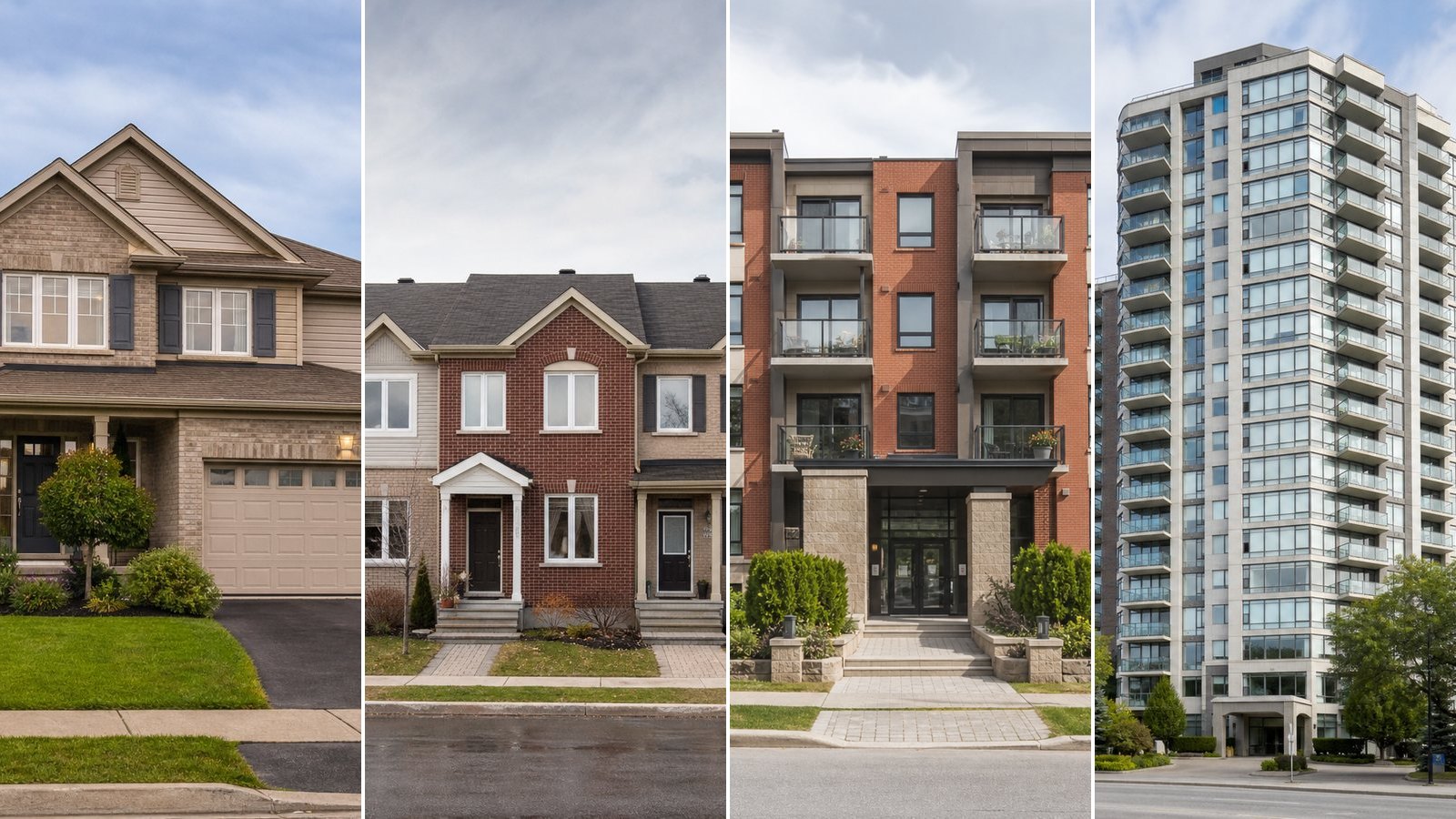
A resale purchase is short and sharp: find, offer, inspect, close. A new build stretches the same decisions across a year or more and moves most of them to the front — you commit to a home you've seen only as a floor plan, on the builder's contract, at today's price, for delivery in several seasons' time. None of that is bad; it just rewards preparation. This guide walks the whole sequence in order. For what each housing form means, start with Ottawa housing types explained; for who's building where, use our builder directory.
1. Set the real budget — not the sticker budget
The advertised "starting from" price is the entry ticket, not the bill. A realistic new-build budget adds: the lot premium for any lot that isn't the base one, design-studio upgrades (buyers routinely spend meaningfully beyond the standard package), appliances and window coverings (often not included), an air conditioner where it's an option, landscaping, fencing and a finished driveway (frequently excluded and sometimes timed years after move-in), plus closing costs that resale buyers don't see, like utility hookups and development-charge adjustments. Get a mortgage pre-approval first, then decide how much of the gap between it and the base price you're deliberately reserving for these.
2. Resale or new build? Choosing with open eyes
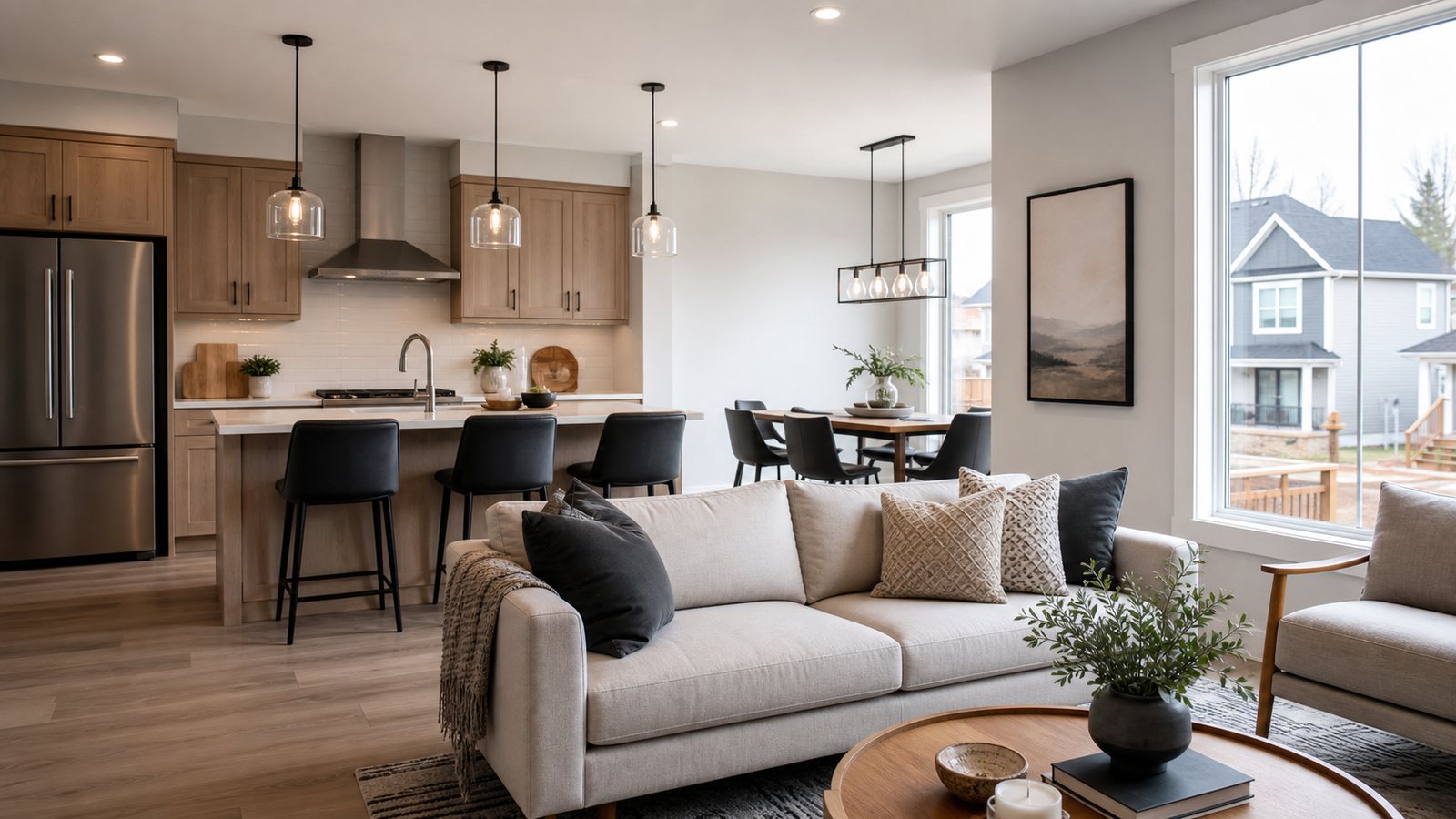
New builds offer warranty coverage, modern energy efficiency, no renovation debt, and the ability to choose finishes — in exchange for waiting, construction-phase uncertainty, extra closing costs, young-community landscaping, and prices that can't be negotiated the way a resale can. Neither is "better"; they're different bundles of trade-offs. Our What a budget buys across Ottawa piece shows the resale side of the same coin.
3. Pick your target communities
Ottawa's new-build supply concentrates in the growth areas — Barrhaven, Kanata, Stittsville, Orléans, Riverside South, Findlay Creek, Manotick's edges — plus nearby towns like Almonte and Kemptville. Each lives differently: commute pattern, transit reality, school pressure, how finished the neighbourhood feels today versus in five years. Read the neighbourhood guides for the areas on your list, and visit at commute hour, not just Saturday afternoon. Remember you're buying the community's future state: ask every builder what's planned for the empty land around your phase.
4. Research the builders — using official sources, not marketing
Once you know your areas, the candidate builders pick themselves — our builder directory shows who is active where, with what home types, checked against each builder's own website on a stated date. Then run the one lookup that actually tells you something: the Ontario Builder Directory, run by the HCRA, which confirms the builder is licensed, shows how long they have been building and how many homes they have completed, lists any conditions or discipline, and carries the warranty history Tarion supplies. Visit the communities they've finished, not just the ones they're selling.
5. Work the sales centre and model homes properly
Model homes are the builder's best case: they're typically loaded with upgrades. The discipline is to ask, for every feature you like, "is this standard or upgraded — and what does the upgrade cost?" Take the feature sheet home. Ask about: what's included versus optional (A/C, appliances, driveway, sod), current incentives and how long they hold, lot premiums by lot, tentative occupancy ranges for the phase, and what happens to the price if you wait for the next release. Everything worth remembering should be in writing.
6. Choose the lot and the plan like they're permanent — because they are
Finishes can be changed later; the lot and the structure can't. Prioritize: orientation and sun, backing condition (road, neighbour, pond, future development), driveway configuration, distance to the park versus the arterial road, and the plan's structural options (finished basement, extra bedroom, larger garage) — structural choices are usually only available now. A premium lot with a standard interior often ages better than the reverse.
7. The builder agreement — lawyer first, signature second
A builder's agreement of purchase and sale is the builder's document, drafted for the builder. Have a real-estate lawyer review it BEFORE you sign or within any review window — not at closing. The clauses that matter most: the deposit schedule and where deposits are held; the tentative versus firm occupancy dates and how they can move; delay compensation terms; what the builder may substitute ("or equivalent" materials clauses); price-adjustment clauses (development charges, HST changes); the assignment clause (can you sell your contract if life changes?); cancellation rights on both sides; and every fee in the adjustments schedule, which is where closing-day surprises live.
8. Deposits and financing across the construction period
New-build deposits are larger than resale norms and paid in stages over months. Between signing and closing, your mortgage approval will need to be refreshed — approvals expire, rates move, and your closing date will likely move too. Tell your lender or broker it's a new build with a long, movable closing; ask specifically how long any rate hold lasts and what happens if occupancy slips past it. If the builder offers financing incentives through a partner lender, compare them like any other offer — the incentive is real money, but so is a rate difference over a full term.
9. The design studio — budget set before you walk in
Design appointments are enjoyable and engineered to be. The two disciplines that protect you: arrive with a written upgrade budget you set at home, and know which upgrades are better done by the builder versus after closing. Generally better from the builder: anything structural, rough-ins (plumbing, gas, EV charger conduit), windows, and things buried in walls. Often cheaper later: light fixtures, closet organizers, backsplashes, window coverings, and sometimes flooring in secondary spaces. Every upgrade also rolls into the mortgage — convenient, but it means paying interest on a backsplash for 25 years.
10. During construction — what you can and can't control
Expect long quiet stretches punctuated by bursts of progress; that's normal. Builders vary in how much site access they allow — many offer scheduled walk-throughs at key stages (frame stage especially, before drywall closes the walls). Ask early what visits are permitted and whether you may bring your own inspector at any stage; policies differ and it's a fair question. Our construction stages guide explains what happens in each phase and what's worth looking at when you get the chance.
11. The PDI — your one formal look before the keys
The pre-delivery inspection happens shortly before closing: you (and anyone you designate) walk the finished home with the builder's representative and record every defect, unfinished item, and damage on the PDI form. Be slow and systematic — floors, walls, doors, windows, every tap, every appliance, every outlet. The PDI record protects you: damage noted there is unambiguously the builder's to fix; damage discovered after move-in invites a "was it the movers?" conversation. It is not the moment to be polite and quick.
12. Occupancy and closing — sometimes two separate days
For freehold homes, closing and moving in typically coincide. For condominiums there's usually an interim occupancy period: you move in and pay the builder a monthly occupancy fee before the building registers and final closing happens — you're living there, but not yet on title. Closing day itself brings the adjustments bill your lawyer flagged back at step 7: development-charge adjustments, utility hookups and meters, warranty enrolment, HST adjustments where applicable, and the rest. Budget for it as its own event.
13. After move-in — the warranty clock is running
Ontario's new-home warranty runs on fixed reporting windows: an initial period for items you find after moving in, and further coverage tiers over subsequent years for defects, major systems, and structural issues. The practical rule: keep a written deficiency list from day one, report through the official process within the windows rather than only informally to the site office, and keep every submission. Missing a window can mean losing coverage for that item.
The bottom line
A new build rewards buyers who treat it as a year-long project with three disciplined moments: the contract review before signing, the budget set before the design studio, and the PDI done slowly. Do those three properly and the rest of the journey is mostly patience — and the payoff is a home nobody else has lived in, in a community you watched get built.
A sales centre answers the questions you ask. It is nobody's job there to raise the ones you don't. Who the builder's agent across the desk works for, why agent registration on your first visit decides whether you can be represented, what the advertised price leaves out, and why the new build pressure you feel is structural.
Between signing and keys, your home passes through a fixed sequence of construction stages. Knowing the sequence turns the long wait into something you can follow — and tells you exactly what's worth looking at on the walk-throughs your builder allows. How a house is built, stage by stage, and what a realistic build timeline looks like between them.
Detached, semi, townhouse, stacked town, condo, apartment — listing sites assume you already know what these words mean and what they commit you to. Here's the plain-language version: what each type looks like, how the ownership works, and the trade-offs that actually shape daily life. What is a semi, how a town home differs from a stacked one, and the freehold vs condo distinction that matters more than the shape of the building.
What do I pay on closing? The purchase price is only the headline number. Between the accepted offer and closing day, a cluster of hidden costs comes due — land transfer tax, lawyer fees and disbursements, title insurance, adjustments and the repair buffer nobody budgets for.
Ottawa's fast-grown southwest suburb — newer family housing at scale, big-box convenience, strong community infrastructure, and a car-first commute that residents plan their lives around.
Ottawa's west-end tech suburb — planned communities around the Kanata North business park, family subdivisions, trails and ponds, and a location that shortens tech commutes while lengthening downtown ones.
A former village at Ottawa's far western edge, beyond Kanata — new-build family streets around an old Main Street core, trail access, small-town texture, and real distance from everything downtown.
SuburbanFamily-friendly
Get Ottawa property guidance in your inbox
You'll get: First-time buying explainers · Selling guidance · New-build and builder updates · Neighbourhood guides · Renting and ownership costs · Local market context.
Occasional emails. No spam, and you can unsubscribe with one click. By subscribing you consent to receive emails from Ottawa Property Guide. We record the date and source of your consent, as Canadian anti-spam law (CASL) requires. Read our privacy policy.