Renovation costs in Ottawa — what things cost, and which renovations add value
There is no official price list for renovation work, which is why every number you find online disagrees with the last one. This is what a kitchen renovation, a bathroom renovation, a basement renovation, a roof and an electrical panel upgrade typically cost in Ottawa, what each range assumes, and which renovations actually return their money when you sell. The honest headline: the only real number is three written quotes.
By Ottawa Property Guide EditorialPublished August 2, 2026 Last verified August 2, 2026
Start searching for renovation costs in Ottawa and you will find a dozen confident numbers that do not agree with each other. A basement is $32,000 on one page and $95,000 on the next. Neither is lying. They are describing different jobs and pretending to describe the same one.
So before any figure below: there is no authority that publishes renovation prices. Land transfer tax has a government page. Tarion deposit protection has a statute. Renovation costs have contractors, and contractors are quoting the work in front of them. Every range on this page is assembled from published Ottawa contractor cost guides, which is the best source that exists and is not the same thing as an official one.
What a renovation costs in Ottawa
Each row states what the range assumes, because the assumption is doing most of the work. The difference between the bottom and the top of a kitchen range is not haggling — it is a different project.
Project
Typical Ottawa range
What that assumes
Kitchen — cosmetic refresh
$15,000–$30,000
Existing layout kept. Cabinet doors or refacing, counters, sink, taps, paint. No walls moved, no plumbing or electrical relocated
Kitchen — full mid-range
$35,000–$65,000
New cabinets, counters, appliances, flooring and lighting. Same footprint or minor changes. Mid-range finishes, not custom millwork
Kitchen — structural or high-end
$75,000–$120,000+
A wall comes out, services move, or the finishes are custom. Structural work means an engineer and a building permit
Bathroom — refresh
$5,000–$15,000
Vanity, toilet, fixtures, tiling, paint. Tub and shower stay where they are
Bathroom — full mid-range
$15,000–$35,000
Down to the studs, new waterproofing, new layout within the same room, tiled shower
Bathroom — large or structural
$40,000–$75,000+
Room enlarged, plumbing stack moved, or a new bathroom created where there was none
Basement — basic finish
$25,000–$50,000
Framing, insulation, drywall, flooring, lighting, one open space. Roughly $50–$100 per square foot. No bathroom, no kitchen
Basement — with a bathroom, kitchen or a secondary dwelling unit
$60,000–$120,000+
Adds plumbing below grade, egress windows, fire separation and permits. A legal secondary dwelling unit is a code project, not a finishing project
Roof — asphalt shingle replacement
$10,000–$21,000
Typical Ottawa detached home, tear-off and replace. Budget jobs start lower and premium materials or complex rooflines run well above
Window replacement — per window
$600–$1,200 installed
Standard vinyl, standard opening. Bay, bow, custom shapes and oversized units run $1,200–$2,500+ each
Window replacement — whole house
$8,000–$25,000
Depends entirely on the count and the sizes. Ottawa pricing runs slightly above the provincial average on labour and demand
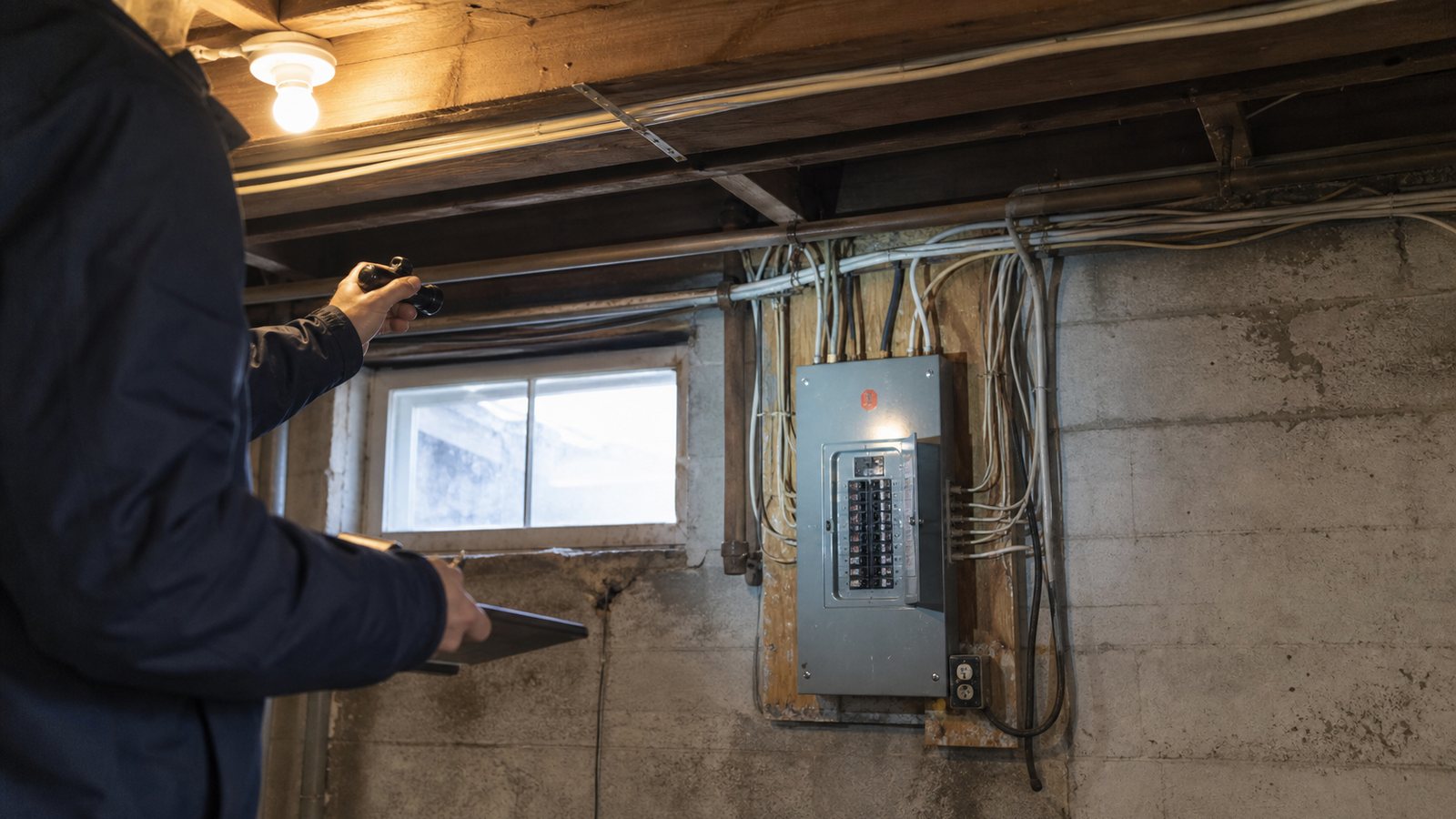
Electrical panel — 100A to 200A upgrade
$2,000–$5,500
Panel, breakers, labour, permit and inspection. A full service entrance upgrade including the meter base and service cable runs higher
Foundation — crack injection
$400–$800 per crack
A single repair to a poured concrete crack. Two to four cracks is common in an older Ottawa home
Foundation — interior waterproofing
$10,000–$22,000
Full perimeter, from inside. The usual answer to persistent basement water where excavation is impractical
Foundation — exterior waterproofing
$20,000–$42,000
Full perimeter excavation, membrane and weeping tile. Access and landscaping drive the top of this range
Foundation — underpinning
$40,000–$100,000+
Lowering the floor for headroom, usually as part of a basement conversion. This is a structural project, not a repair
Ontario's 13% HST applies to renovation labour and materials. A quote that looks like it is at the bottom of a range may be quoting before tax, which is a $6,500 difference on a $50,000 kitchen. Ask which it is.
Why the ranges are so wide
Six things move a renovation budget, and only one of them is finish level.
Whether anything structural moves. A wall that is holding something up needs an engineer, a permit and a beam. This is the single biggest step change in any renovation budget.
Whether services move. Plumbing and electrical are cheap to install where they already are and expensive to relocate — particularly below grade, where a new drain means cutting the slab.
The age of the house. Older Ottawa homes hide knob-and-tube wiring, galvanised supply lines, asbestos in old flooring and insulation, and framing that is not where the drawings say. What to check in an older Ottawa home covers what tends to be behind the wall.
Permits and inspections, where the work needs them — including the wait, which is a schedule cost as well as a fee.
Who is doing it. A general contractor managing trades costs more than hiring trades yourself, and is buying you the coordination and the single point of responsibility.
When. Ottawa's construction season compresses exterior work — roofing, windows, foundations — into a window that everyone else also wants. Booking a roof in October is not the same market as booking one in February.
The practical consequence: a quote is not comparable to another quote unless both describe the same scope. Three quotes that differ by 40% usually differ by what they include. Ask each one what happens when they open the wall and find something, and how a change order is priced. That conversation is covered in hiring a contractor in Ottawa, along with the ten-day right to cancel a contract you signed in your own home.
Which renovations add value, and which do not
This is the question behind most renovation budgets, and the answer is less exciting than the renovation shows suggest. Very little returns more than it costs. The good outcome is recovering most of it while getting to live in the result.
Renovation
Typical return at resale
Kitchen facelift
About 75–100% of cost
Bathrooms
Nearly 75–100%
Replacing old or outdated flooring
Approximately 50–75%
Energy-efficiency upgrades
At least 50–75%
Those figures are CIBC's, drawing on appraisal industry guidance, and they are national rather than Ottawa-specific. Treat them as the shape of the answer: kitchens and bathrooms lead, everything else trails.
What the percentages hide is more useful than the percentages. Condition is not a renovation and it returns more than one. A roof at the end of its life, a failing furnace, active water in the basement, knob-and-tube wiring or an undersized panel are not upgrades — they are deductions a buyer makes, and often larger deductions than the repair would have cost. Fixing them does not add value so much as stop subtracting it.
And the ones that reliably do not pay back: anything the next buyer has to share your taste about, anything that makes the house unusual for its street, and pools. Over-improving relative to the neighbourhood is the classic Ottawa version — a $120,000 kitchen does not make a house worth $120,000 more in an area where the ceiling is set by everything around it. Pricing and timing an Ottawa home sale explains how comparable sales set that ceiling.
Permits, and the ones people miss
Whether your project needs a building permit is a City of Ottawa question, and Ottawa zoning and what you can build is the guide to that side. Two things catch homeowners out regardless of the project.
Electrical work is not a City permit. It is filed with the Electrical Safety Authority, and Ontario is explicit about who does it:
By law, only an LEC can be hired to do electrical work on a home in Ontario.
Electrical Safety Authority, on permits for homeowners
A Licensed Electrical Contractor files the notification as part of the job. If an electrical quote does not mention the permit and the inspection, that is worth a direct question — the cost of the permit is small and the cost of unpermitted electrical work surfacing later is not.
Unpermitted work is a selling problem, not just a safety one. It shows up on a title search or in a buyer's conditions, it can affect insurance, and it turns into a price negotiation at the worst moment. Selling a home with defects or unpermitted work is the guide to what happens then. The cheap version of that problem is pulling the permit now.
Paying for it
Most renovation financing is ordinary: savings, a line of credit secured against the home, or a refinance. Two Ottawa-specific things are worth knowing before you arrange any of it.
Energy-efficiency work has rebates and a City loan attached to it, and they are large enough to change which project you do first. Insulation, heat pumps, windows and air sealing all carry provincial rebates, and the City of Ottawa runs a long-term loan repaid through the property tax bill. That is a guide of its own: home energy rebates and retrofits in Ottawa.
A renovation does not change your property assessment the moment it is finished, but significant work does get picked up, and Ottawa property taxes and how assessments work explains the mechanism. Budget for the possibility rather than being surprised by it.
The short version
Get three written quotes for the same scope. Everything else on this page is context for that conversation.
Ask what is assumed — tax in or out, permits included, who pulls them, what happens when the wall opens.
Fix the deductions before the upgrades. Condition returns more reliably than finish.
Do not over-improve for the street. The neighbourhood sets a ceiling that your kitchen does not.
Check the energy rebates before you start, because several of them require the assessment or the application to happen first.
The federal grant most people still ask about is closed. What replaced it is income-tested. But the provincial rebates on a heat pump, insulation and windows are substantial and open to everyone, and the City of Ottawa lends against energy efficiency work at a fixed rate over twenty years, repaid through your property tax bill. The trap is sequencing: several of these have to be applied for before the work is done, not after.
Every homeowner eventually hires someone in a hurry, at the worst moment, from the first name that answers. Ontario gives you a specific protection for exactly that: a contract signed in your home can be cancelled within 10 days, for any reason. How to choose a contractor when you have time — the contractor deposit, the insurance, the building permit for renovation work — and what changes in an emergency repair.
Ontario is a buyer-beware province, with one large exception that decides most disputes. A seller need not disclose a patent defect a buyer could see, but must disclose a known latent defect that makes the home dangerous or unfit — and concealing anything removes the protection entirely. Where unpermitted work sits, and how to sell a house honestly.
Older Ottawa homes carry a short list of specific, findable problems: radon, knob and tube or aluminum wiring, vermiculite insulation, galvanized or lead plumbing, and a buried oil tank. None of them is a reason to walk away on its own. All of them are reasons to write a condition rather than waive one.
Zoning decides what a property may be used for and what may be built on it — and in Ottawa there is a complication most people have not caught up with: two zoning by-laws are in effect at once, and the most restrictive provision of the two applies. How to check what your property is zoned, what the codes control, and what to do when your plan does not comply.
Before you can price my home becomes how to price it, you need a home value you can defend. How comparables — comps — actually produce a market value, why a valuation, a home evaluation and a lender's appraisal are three different things, what overpricing costs in time on market, and the best time to sell in Ottawa.
July 23, 2026
Get Ottawa property guidance in your inbox
You'll get: First-time buying explainers · Selling guidance · New-build and builder updates · Neighbourhood guides · Renting and ownership costs · Local market context.
Occasional emails. No spam, and you can unsubscribe with one click. By subscribing you consent to receive emails from Ottawa Property Guide. We record the date and source of your consent, as Canadian anti-spam law (CASL) requires. Read our privacy policy.