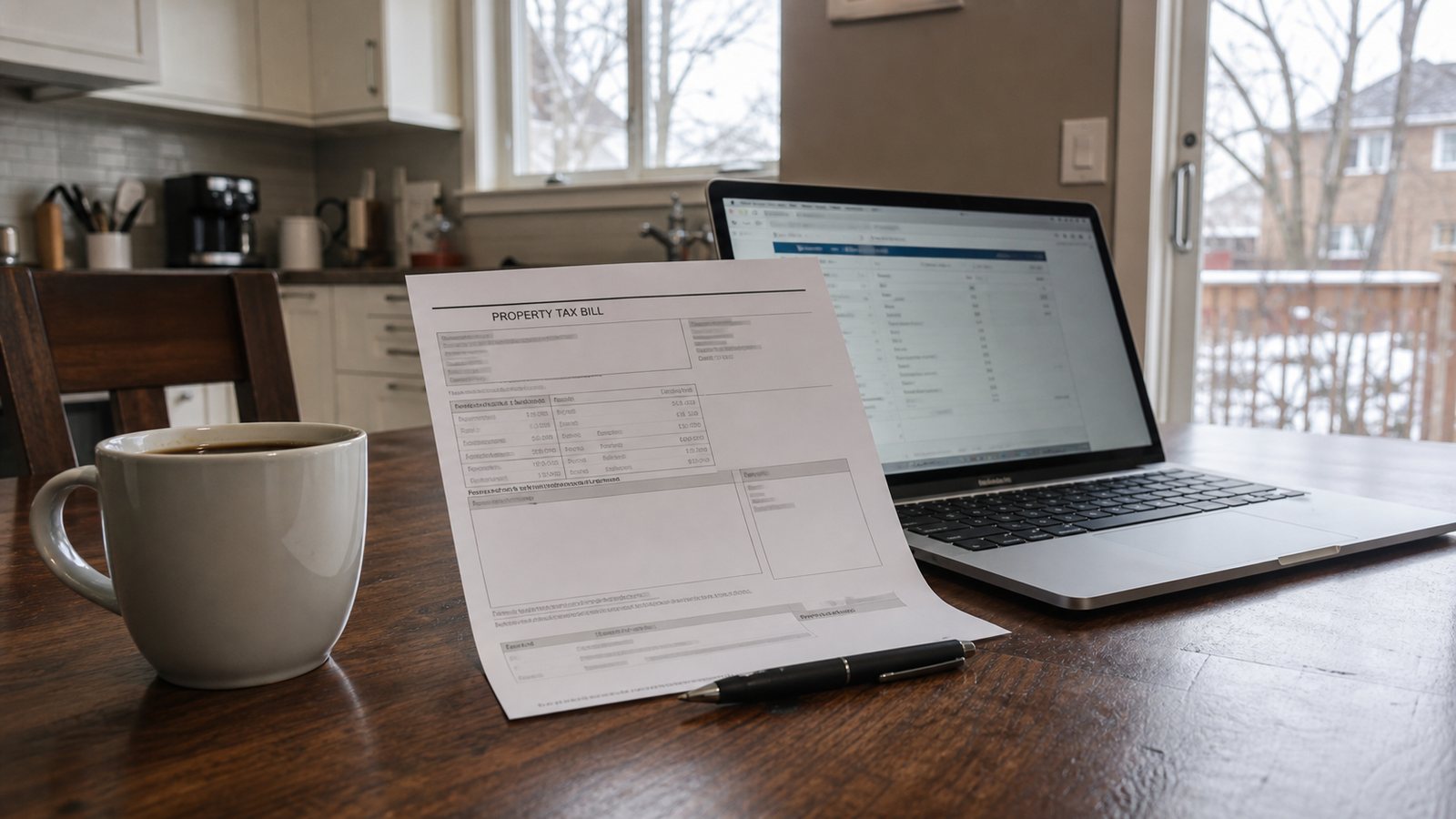
Home energy rebates in Ottawa — heat pumps, insulation, and the money you have to claim before you start
The federal grant most people still ask about is closed. What replaced it is income-tested. But the provincial rebates on a heat pump, insulation and windows are substantial and open to everyone, and the City of Ottawa lends against energy efficiency work at a fixed rate over twenty years, repaid through your property tax bill. The trap is sequencing: several of these have to be applied for before the work is done, not after.
By Ottawa Property Guide EditorialPublished August 2, 2026 Last verified August 2, 2026
Two things have changed since the last time most Ottawa homeowners looked at this, and both matter before you price a heat pump or an insulation job.
The Canada Greener Homes Grant — the federal $5,000 everyone remembers — is closed. Natural Resources Canada states it plainly:
Status: This program is closed
Natural Resources Canada, on the Canada Greener Homes Grant
Applications closed in early 2024, and 31 December 2025 was the final day for existing applicants to upload documents. If you are working from a contractor's brochure or a two-year-old article that still promises it, the brochure is wrong.
The money that is actually available in Ottawa now comes from three places instead, and the largest of them is provincial rather than federal.
The provincial rebates: Home Renovation Savings
Ontario's Home Renovation Savings program is delivered by Save on Energy and Enbridge Gas with provincial backing. It is not income-tested and it is not restricted by how you heat — electric, gas, oil, propane and wood-heated homes are all in.
Upgrade
Rebate
Home energy assessment
$600
Insulation
Up to $7,700
Attic insulation
$1,250
Air sealing
Up to $250
Windows and doors
$100 per rough opening
Cold climate air source heat pump
Up to $7,500
Ground source heat pump
Up to $12,000
Heat pump water heater
$500
Smart thermostat
$100
Solar panels and battery storage
Up to $10,000
Appliances
Up to $200
The sequencing trap, which is the point of this guide
There are two ways through the provincial program and they are not interchangeable.
A single upgrade — one measure, such as a heat pump or a smart thermostat. You skip the home energy assessment entirely.
A bundle — two or more upgrades, which unlocks the larger totals, particularly on insulation. This path starts with a home energy assessment, and there is a second assessment after the work.
That first assessment has to happen before the work does. It is the whole mechanism: the pre-retrofit assessment is what establishes the baseline the post-retrofit one is measured against. Insulate the attic first and then book the assessment and you have not made the process more efficient — you have removed the evidence the bundle rebate depends on.
This is the single most expensive mistake available in this guide, and it is entirely avoidable. Decide which path you are on before anyone starts work. If there is a chance you will add a second upgrade later, the bundled path and its assessment is the cheaper decision even though it looks like the slower one.
The federal side, for the households it applies to
The grant that replaced Greener Homes is the Canada Greener Homes Affordability Program, launched in 2025 and aimed at low-to-median-income homeowners and tenants rather than at everyone. It is delivered through participating provinces, so the eligible measures and the application route are provincial rather than a single federal form. And that is where it stops for us: as of August 2026, Ontario is not on the list. Natural Resources Canada names British Columbia, Manitoba, Nova Scotia, Prince Edward Island and Quebec as the provinces whose residents can apply, and says more will be added as agreements are signed. So there is nothing to apply for in Ottawa today — worth re-checking if your household is in that income band, since the list is meant to grow, but do not budget against it. Applications go to the provincial program in any case, never to the federal government.
If you heat with oil, there is a separate and much larger program. The Oil to Heat Pump Affordability program is listed by Natural Resources Canada at up to $10,000, with up to $5,000 more available in participating provinces and territories. Its criteria are specific:
You heat your home with oil.
You can show proof of purchasing at least 500 litres of heating oil in the 12 months before you apply.
Your household income is median or below, after taxes, against NRCan's published threshold table.
The Ottawa piece: the Better Homes Ottawa loan, repaid through your property tax bill
This one is genuinely local, and most Ottawa homeowners have never heard of it. The Better Homes Ottawa Loan Program is a City of Ottawa loan for energy efficiency retrofits and climate resiliency work, delivered by EnviroCentre.
Eligibility is about the property and the tax account rather than a credit score alone: residential properties — detached, semi-detached, townhouse, or multi-unit buildings of three storeys or less — with a City of Ottawa property tax account, and City taxes, utility bills and other payments in good standing over the past five years, or satisfactory credit. Properties enrolled in CMHC's Mortgage Deferral Program or the City's Tax Deferral Program are excluded.
What the Local Improvement Charge means when you sell
This is the part worth understanding before you sign, because it is unusual and it reaches into a future transaction. The loan attaches to the property rather than to you, and Better Homes Ottawa is explicit about what happens next:
If you sell your home, the loan—and the energy savings—transfer to the new owner.
Better Homes Ottawa, on the loan program
Read that from both sides. As a seller, you are not obliged to clear a twenty-year loan out of your proceeds the way you would discharge a mortgage — but you are selling a house with a charge on its tax bill, and that is a disclosure conversation and a negotiation, not a footnote. A buyer who learns about it late reacts to it as a surprise cost regardless of the heating savings sitting on the other side of the ledger.
As a buyer, this belongs on the list of things your lawyer checks — it is exactly the kind of charge a title search exists to surface, and title insurance and what your lawyer does covers that process. Ask what the annual charge is, how many years remain, and what was installed for it.
None of that makes it a bad deal. A 20-year fixed rate against a home is competitive financing for work that reduces a bill you are paying anyway. It is simply a decision with a longer tail than a line of credit, and it should be made knowing that.
Which upgrade first, in an Ottawa house
Rebate size is a poor guide to what to do first. Ottawa's climate is: the order below is.
Air sealing and attic insulation. The cheapest measures with the largest proportional effect, and the ones a heat pump is sized against. Doing them first means buying a smaller heat pump.
The heat pump, sized after the envelope work. A cold climate air source unit is the relevant category here — the rebate names it specifically, and Ottawa winters are why.
Windows and doors, which people usually want to do first and which return the least per dollar. At $100 per rough opening the rebate is real but modest, and the payback on windows alone is long.
Two practical notes. A heat pump may need electrical capacity you do not have, and a panel upgrade is its own project with its own permit — renovation costs in Ottawa covers what that costs, and electrical work in Ontario can only be done by a Licensed Electrical Contractor, who files the notification with the Electrical Safety Authority. And energy upgrades return roughly 50–75% of their cost at resale, per CIBC's guidance, which is respectable but is not the reason to do them. The reason is the bill, and living in a house that holds its heat in February.
Before you start
Confirm every amount with the issuer, not with a contractor's brochure and not with this page.
Decide single-upgrade or bundle first, because the bundled assessment has to come before the work.
Check the income-tested federal programs if they might apply — they are structured very differently from a rebate.
Get three written quotes, and check the rebate is for the specific equipment quoted. Model eligibility is not a formality.
Understand the tax-bill charge before taking the City loan, including what it looks like to a future buyer.
And keep every invoice, assessment report and approval. They support the rebate claim now, and later they are the evidence that the work was done properly — which is worth more at sale time than sellers expect, for the same reason set out in hiring a contractor in Ottawa.
There is no official price list for renovation work, which is why every number you find online disagrees with the last one. This is what a kitchen renovation, a bathroom renovation, a basement renovation, a roof and an electrical panel upgrade typically cost in Ottawa, what each range assumes, and which renovations actually return their money when you sell. The honest headline: the only real number is three written quotes.
Every homeowner eventually hires someone in a hurry, at the worst moment, from the first name that answers. Ontario gives you a specific protection for exactly that: a contract signed in your home can be cancelled within 10 days, for any reason. How to choose a contractor when you have time — the contractor deposit, the insurance, the building permit for renovation work — and what changes in an emergency repair.
Ottawa winters don't forgive procrastination. A few weekends of fall work — furnace, gutters, grading, faucets, weatherstripping, and a snow plan — is the cheapest insurance a homeowner here can buy. Here's the full checklist, in the order the season demands it. Seasonal maintenance in the order it matters — and how to winterize before the freeze does it for you.
Between an accepted offer and the keys, a real estate lawyer does work you will never watch: searching the title, finding liens nobody mentioned, and arranging title insurance. What title insurance covers for its one-time premium, the exclusions that matter — including renovations done without permits — and why it is not a substitute for a survey.
Your property tax bill is your MPAC assessed value multiplied by two rates. The part that confuses everyone is the assessed value: Ontario's province-wide reassessment has been postponed for years, so assessments for the 2026 tax year are still based on 1 January 2016 values. What that means, what to do if the figure looks wrong, and what else is on the bill.
August 1, 2026Updated August 1, 2026
Get Ottawa property guidance in your inbox
You'll get: First-time buying explainers · Selling guidance · New-build and builder updates · Neighbourhood guides · Renting and ownership costs · Local market context.
Occasional emails. No spam, and you can unsubscribe with one click. By subscribing you consent to receive emails from Ottawa Property Guide. We record the date and source of your consent, as Canadian anti-spam law (CASL) requires. Read our privacy policy.