Buying a house in winter in Ottawa — what you gain and what you cannot see
Ottawa's winter market is thinner in both directions: fewer listings, and fewer buyers competing for them. That can work in your favour. What does not is that snow hides the roof, the grading and the driveway, frozen ground says nothing about spring drainage, and some systems cannot be tested at all. How to buy well in February.
By Ottawa Property Guide EditorialPublished August 1, 2026 Last verified August 1, 2026
Ottawa's housing market has a rhythm, and the winter off season is the quiet part of it. That is usually described as a bad time to buy. It is more accurate to say it is a different time to buy, with a real advantage and a real limitation, and the buyers who do well are the ones who plan around both.
Is winter the best time to buy? Fewer buyers, more motivated sellers
Fewer listings come to market in January and February, which sounds like a disadvantage until you notice that fewer buyers are looking at them. Competition is generally thinner, which means more room to keep conditions, more room to negotiate, and less pressure to decide in an evening.
There is also a selection effect worth understanding. A house listed in February is usually listed for a reason — a job move, a separation, an estate, a purchase already committed to elsewhere. That is not an invitation to lowball; it is a reason the seller may value certainty and a workable closing date more than the last few thousand dollars. Ask what date suits them. It is often worth more than it costs you.
The corollary is that a house that has sat unsold through the winter is a different signal from one newly listed in it, and worth understanding before you assume you have found a bargain. Pricing and timing an Ottawa home sale covers how time on market reads from the other side.
A winter inspection: a snow covered roof, and everything else you cannot see
This is the real cost of a winter purchase, and it is not small. What you cannot properly assess in an Ottawa February:
The roof. Covered. Its age and condition are inferred rather than seen.
Grading and drainage. The single most common cause of basement water is where the ground slopes and where the downspouts discharge — and both are invisible under snow with the ground frozen.
The driveway, walkways and steps, and any settling or cracking in them.
Landscaping, trees and fences, including whose fence it is.
Air conditioning and heat pumps, which often cannot be safely run below certain temperatures — so "it was not tested" is common and correct rather than evasive.
The state of the yard generally, which in a spring viewing tells you a great deal about how the property has been kept.
What a home inspection covers makes the same point from the inspector's side: ask directly what they could not see, and whether they offer a follow-up visit in better conditions.
What winter shows you that summer does not
It works in both directions, and this is the part buyers forget to use.
Whether the house is actually warm, and whether some rooms are not. Cold spots, draughts around windows and doors, and a furnace that runs constantly are all visible in February and invisible in July.
Ice damming at the roof edge, and icicles in the wrong places — a genuine signal about insulation and ventilation.
Condensation on windows, which tells you about both the windows and the humidity.
Whether the street gets cleared, and where the snow ends up. A narrow street with nowhere to put snow is a February-only discovery.
The real commute. This is the big one. A route you drive in February is the honest version of that commute — see relocating to Ottawa, where the same advice appears for exactly this reason.
How the parking actually works once snowbanks have taken a foot off each side of the driveway.
A summer buyer has to imagine all of that. You get to check it.
How to buy well in February
Keep the inspection condition, and ask the inspector explicitly what winter prevented them from assessing.
Ask for a follow-up inspection in the spring where the purchase allows it, or price the uncertainty.
Ask for summer photographs, and check any previous listing for the property.
Budget for the roof and the grading as unknowns rather than assuming they are fine because nobody mentioned them.
Use the advantage. Thinner competition is exactly the market in which keeping conditions costs you least — see making an offer.
Ask the seller what closing date suits them. In a winter sale that is often the most valuable thing you can offer.
Walk the property line and the driveway anyway. You will learn less than in June, but you will learn something, and it is where the snow tells you about drainage.
The summary is unglamorous: winter buying trades information for leverage. If you use the leverage to keep the conditions that recover the information, it is a good trade. If you use it to buy faster and cheaper with nothing checked, it is not.
What does an inspection cover? A few hundred dollars of clarity on a several-hundred-thousand-dollar decision. What Ottawa inspectors typically look at, what they don't, what the inspection cost buys, and how the deficiencies they find fit a conditional-on-inspection offer.
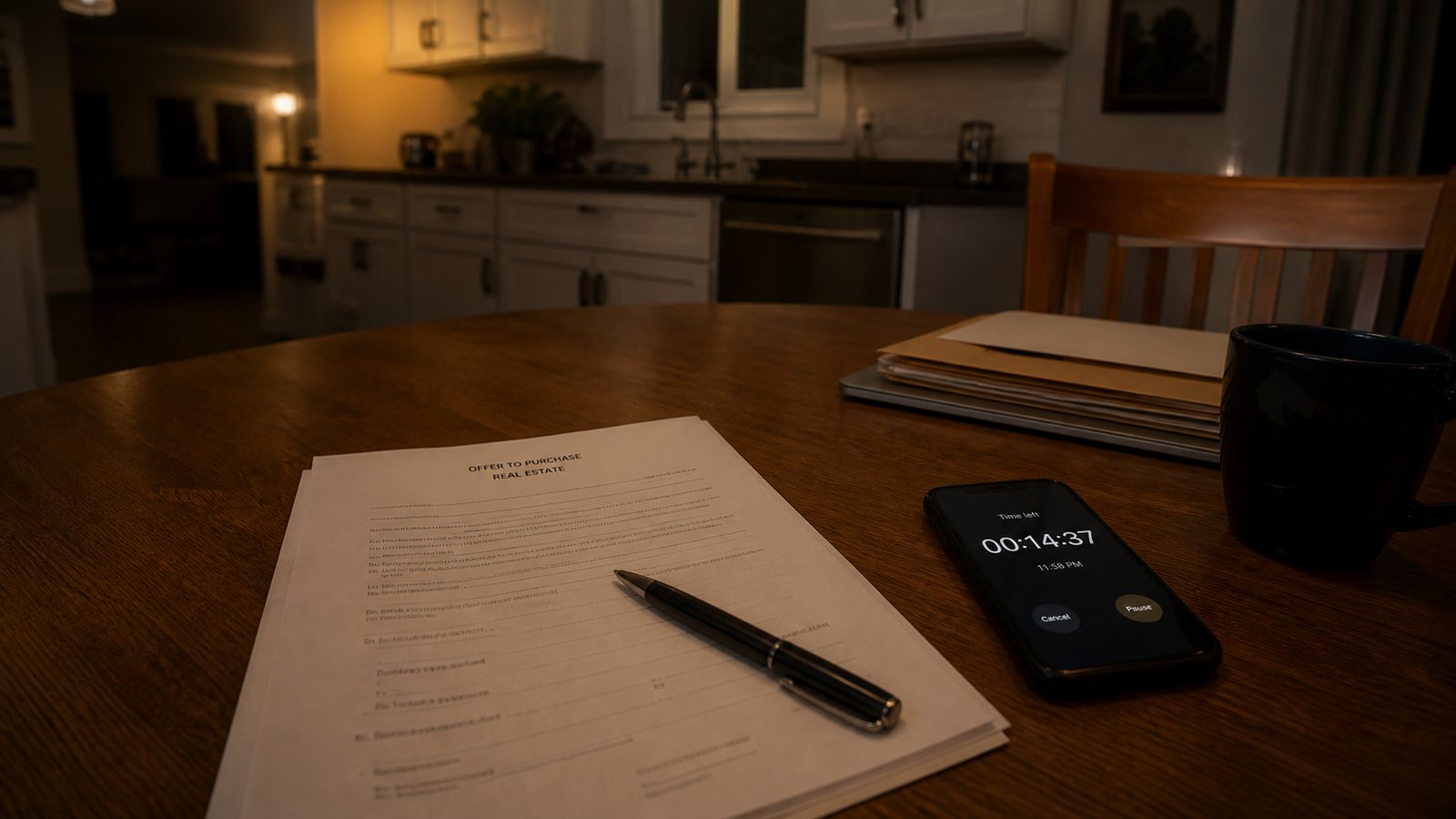
An accepted offer is a binding contract, and most of what decides whether it goes well is settled before you sign it. Whether to make a conditional offer or a firm one, what an irrevocable date commits you to, where your deposit goes and the honest answer to can I get my deposit back, and exactly what you are entitled to be told when there are competing offers.
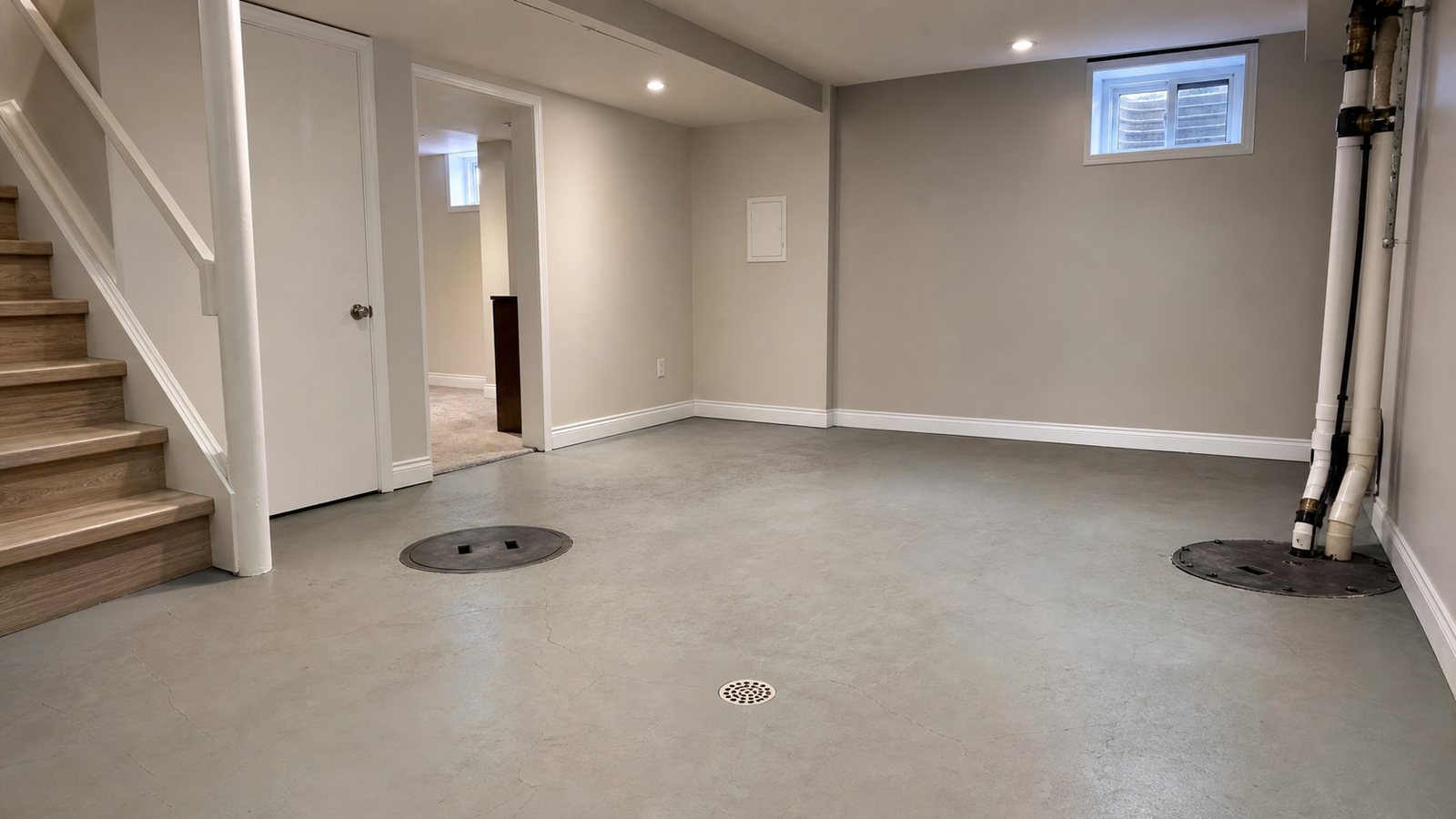
Three different problems get called a wet basement, they have different causes, different fixes and different insurance, and telling them apart is most of the work. What to look for at a viewing, and the City of Ottawa rebates that pay a large share of the fix — up to $3,000 for a sump pump and $2,500 for an outdoor storm backwater valve.
Before you can price my home becomes how to price it, you need a home value you can defend. How comparables — comps — actually produce a market value, why a valuation, a home evaluation and a lender's appraisal are three different things, what overpricing costs in time on market, and the best time to sell in Ottawa.
July 23, 2026
Get Ottawa property guidance in your inbox
You'll get: First-time buying explainers · Selling guidance · New-build and builder updates · Neighbourhood guides · Renting and ownership costs · Local market context.
Occasional emails. No spam, and you can unsubscribe with one click. By subscribing you consent to receive emails from Ottawa Property Guide. We record the date and source of your consent, as Canadian anti-spam law (CASL) requires. Read our privacy policy.