Basement water in Ottawa — seepage, overland flooding and sewer backup
Three different problems get called a wet basement, they have different causes, different fixes and different insurance, and telling them apart is most of the work. What to look for at a viewing, and the City of Ottawa rebates that pay a large share of the fix — up to $3,000 for a sump pump and $2,500 for an outdoor storm backwater valve.
By Ottawa Property Guide EditorialPublished August 1, 2026 Last verified August 1, 2026
Water in the basement is the most under-investigated subject in an Ottawa house sale, and "the basement got water once" is the sentence it hides behind. It could mean three completely different things, costing anywhere between a few hundred dollars and a renovation, and the difference is not obvious from looking at the stain.
So start by separating them, because everything else — the fix, the cost, the insurance, and whether the City will help pay — depends on which one it is.
The three problems that all look like a wet basement
Seepage and groundwater. Basement leaks in the ordinary sense: water working through the foundation wall or up through the floor slab, usually driven by grading, downspouts, a failed weeping tile, or a water table that rises in spring. It tends to be slow, local and repeatable — the same corner, every year, after the same weather. The fixes run from regrading and downspout extensions at the cheap end to excavation and exterior waterproofing at the expensive end.
Overland flooding. Surface water — a river, a creek, a sudden storm that overwhelms the ground — running across the land and into the building. This is the one tied to where the property sits rather than how it was built, and it is the one with a public map behind it.
Sewer backup. The sanitary or storm sewer surcharges and pushes back up through the floor drain, a basement toilet or a laundry standpipe. It is the least visible of the three when the basement is dry, the least pleasant when it is not, and the one the City of Ottawa actively pays homeowners to prevent.
Spotting basement leaks and foundation cracks while you are standing there
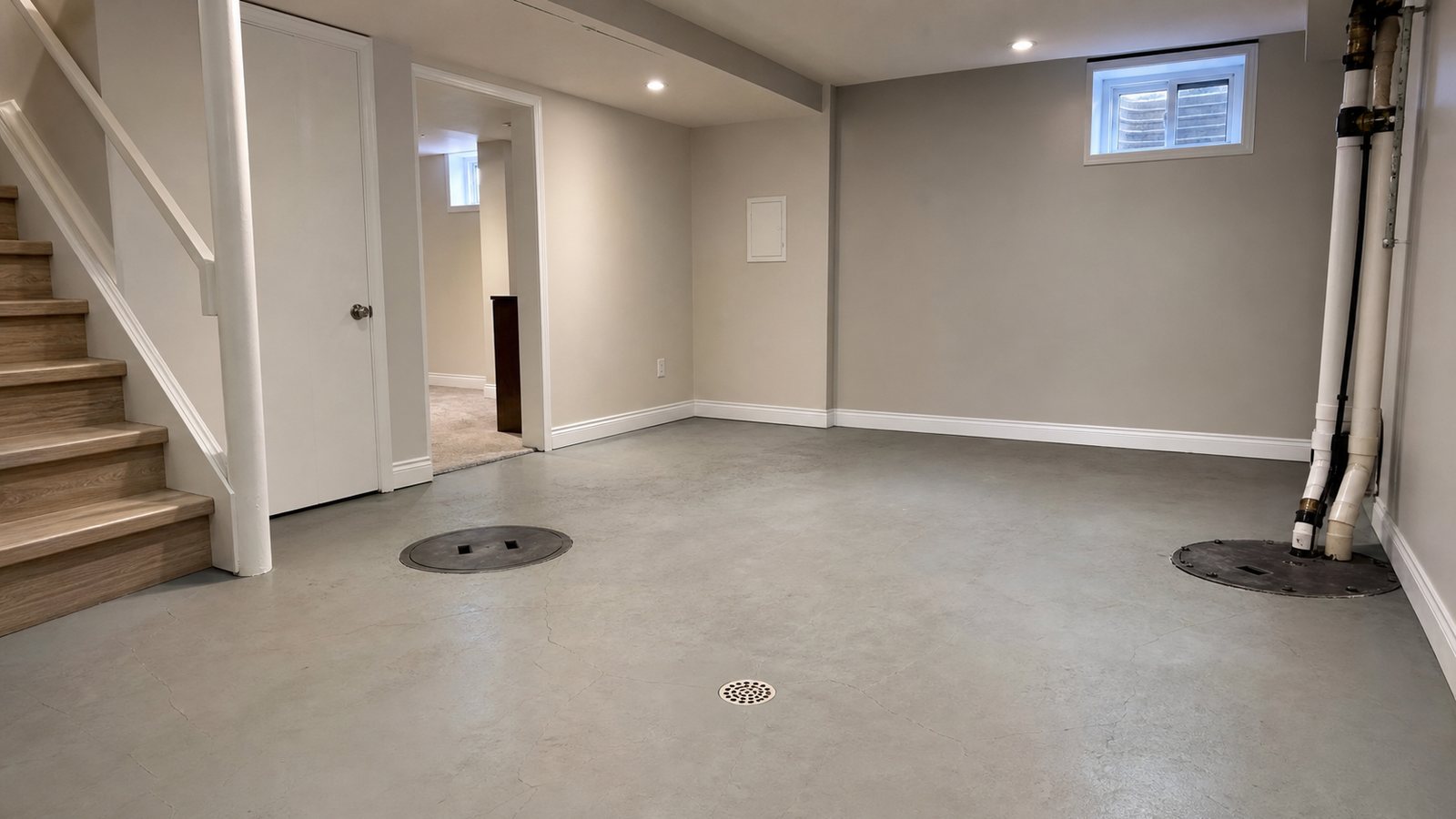
The floor drain and the sump pit. Is there a sump pump, how old does it look, and is there a backup power source? A pump that is obviously new in an otherwise untouched basement is a story worth asking about.
Foundation cracks and efflorescence — hairline cracks in the wall, and the chalky white mineral bloom that forms around them. It is left behind by water passing through concrete, so it means water has been there, whatever the current condition.
Paint that stops. Fresh paint on the bottom two feet of a basement wall, and nowhere else, is not a decorating choice.
Storage habits. Everything in the basement sitting on pallets, shelving or blocks tells you what the owner expects the floor to do.
The finished basement that is finished everywhere except one wall — or a section of newer flooring in an older room.
Outside: downspouts and grading. Where does the roof water actually go, and does the ground fall away from the house or towards it? This is the cheapest problem on the list to fix and the most commonly ignored.
A backwater valve access cover in the floor — a round plate, often near the drain. Its presence is a positive; note it and ask when it went in.
Then ask the direct questions, because the seller's disclosure is worth more than your ten-minute read of a dry room: has water ever entered the basement, when, from where, what was done about it, and was a claim made. That last one matters more than people expect — see below.
The flood plain map for Ottawa, and how to read it
There is a flood plain map for Ottawa, it is public, and Ottawa and its conservation authorities publish it together. It identifies known riverine flood hazards for a property or area, and it shows three scenarios: a 1-in-50-year, a 1-in-100-year and a 1-in-350-year flood event.
Three conservation authorities cover the city — Mississippi Valley, Rideau Valley and South Nation — and which one applies depends on the watershed your property sits in rather than on any municipal boundary you would recognise. If a property is anywhere near the Ottawa, Rideau, Jock, Carp or Mississippi rivers, check the map before you get attached to the house.
Being on a flood plain is not automatically disqualifying, and plenty of desirable Ottawa property sits near water. What it changes is concrete: what you may be permitted to build or alter, what an insurer will offer, and what the property will be worth to the next buyer, who will also look at the map. It is a fact to price in, not a fact to discover afterwards.
The protective plumbing rebate almost nobody knows about
This is the most useful thing in this guide. The protective plumbing rebate — formally the City's Residential Protective Plumbing Program — pays towards installing the devices that prevent basement flooding. The amounts are not token.
Four conditions decide whether it applies to you, and the first two are the ones that catch people out.
The property has to be old enough. Storm-side work requires a property built before 1 January 2004; sanitary-side work requires one built before 1 January 2012. A newer house was built to a standard that already addresses it.
A building permit is required before the work starts, and the City rebates the full current permit fee — so there is no saving in skipping it, and skipping it forfeits the rebate.
Rebates are not available for maintenance, repair, or replacement of an existing device. This programme adds protection that is not there; it does not renew protection that is.
As of 1 July 2026 you have 18 months from the date the permit is issued to finish the work and submit the application.
The rebate is the lesser of the maximum above and what the work actually cost. Read the two dates against the house you are buying: a 1970s home in an established neighbourhood qualifies on both counts, which is exactly the housing stock where sewer backup is most likely in the first place.
Does insurance cover basement flooding? Not by default
This is the most expensive misunderstanding in the whole subject. The Insurance Bureau of Canada is unambiguous about both of the big ones:
Damage caused by the backing up of sewers and drains is typically not covered by a standard policy… Overland flooding, which occurs when bodies of fresh water, such as rivers or dams overflow onto dry land, is typically not covered by a standard policy.
Insurance Bureau of Canada, on water damage and flood protection
So the answer to does insurance cover basement flooding is: not by default. Both are available as optional endorsements — sewer backup coverage from most insurers, and overland flood insurance from many, priced on the risk of the specific address. Which means two things when you are buying. Neither is automatic, so a policy you have not read is a policy that probably excludes exactly the thing this guide is about. And because overland flood cover is priced on risk, a property's flood exposure shows up as a quote or a refusal — the insurer has done the mapping work whether or not you have.
Get the quote on the actual address during your condition period. Insuring a house with problems covers what to do when the answer comes back expensive or negative, and why a previous owner's claim can follow the property to you.
Drainage and grading first: what to do if you already own the house
The order of operations is cheapest-first, and it is genuinely worth doing in that order rather than starting with the excavator.
Drainage and grading. Move the water away from the wall before spending anything on the wall. A surprising share of Ottawa basement seepage is a downspout discharging two feet from the foundation.
Work out which of the three problems you have, from where the water appears and when. Walls after rain is not drains during a storm.
If it is backup, apply to the protective plumbing programme — permit first, then the work, then the rebate. Confirm your build date against the 2004 and 2012 thresholds before you start.
Add the endorsements, and tell your insurer what you have installed. Protective plumbing is exactly the kind of thing that changes what is available to you.
Keep the paperwork. Permits, invoices and the rebate approval are what let the next buyer treat this as a solved problem rather than a disclosed one.
That last point is the one sellers underrate. A basement that flooded once and was fixed properly, with documents, is a stronger story than a basement nobody has ever said anything about — because every experienced buyer in this city is going to look at the walls anyway.
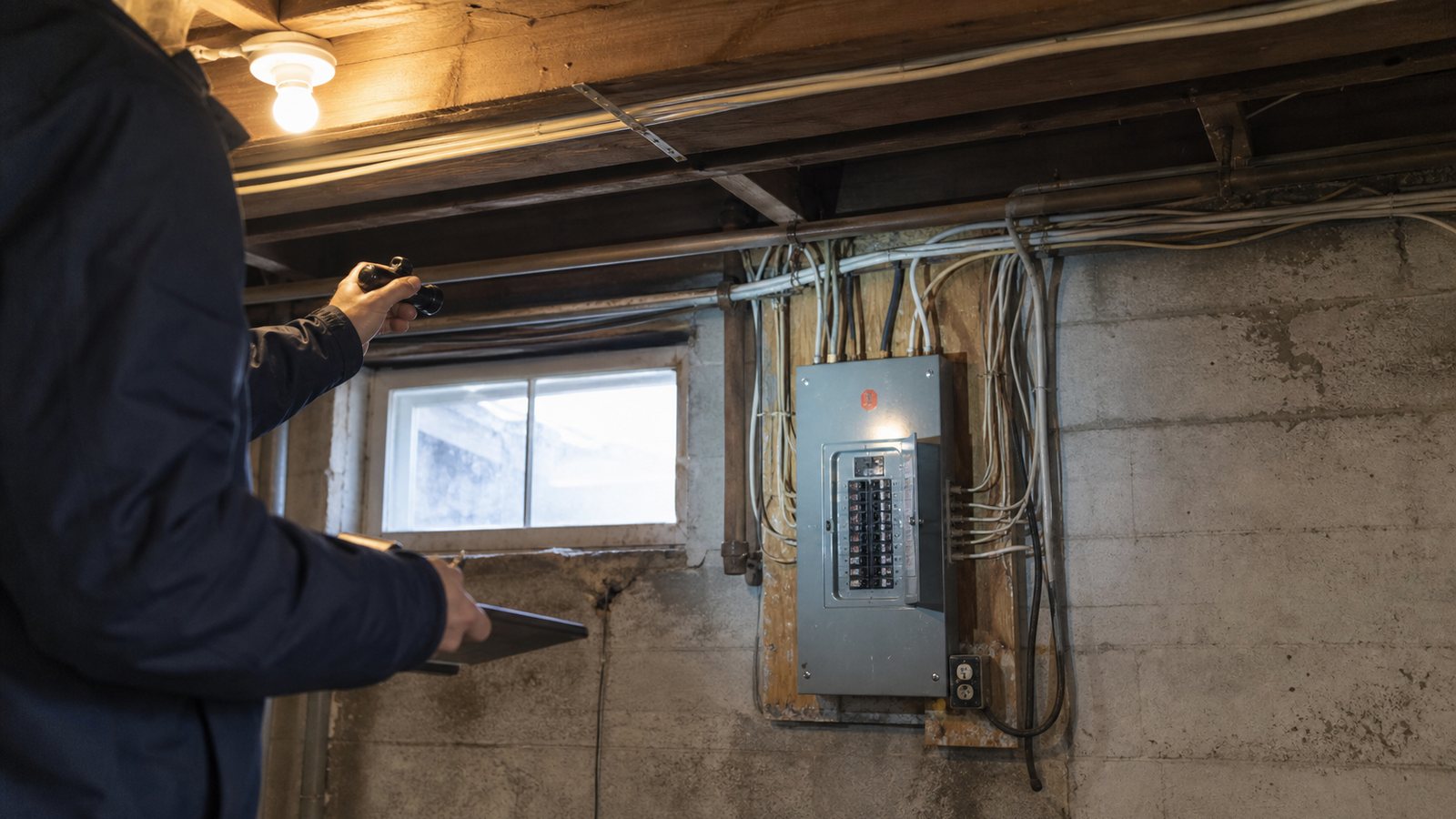
Older Ottawa homes carry a short list of specific, findable problems: radon, knob and tube or aluminum wiring, vermiculite insulation, galvanized or lead plumbing, and a buried oil tank. None of them is a reason to walk away on its own. All of them are reasons to write a condition rather than waive one.
No lender funds a purchase without insurance in place, so an insurer's opinion of the house is a closing condition whether you treated it as one or not. Insurance for an older home turns on knob and tube, an oil tank, a flooded basement and a previous owner's claims — and if you cannot get home insurance on that address, the deal does not close. What a home insurance refusal really means, and when to find out.
What does an inspection cover? A few hundred dollars of clarity on a several-hundred-thousand-dollar decision. What Ottawa inspectors typically look at, what they don't, what the inspection cost buys, and how the deficiencies they find fit a conditional-on-inspection offer.
Ottawa winters don't forgive procrastination. A few weekends of fall work — furnace, gutters, grading, faucets, weatherstripping, and a snow plan — is the cheapest insurance a homeowner here can buy. Here's the full checklist, in the order the season demands it. Seasonal maintenance in the order it matters — and how to winterize before the freeze does it for you.
July 22, 2026
Get Ottawa property guidance in your inbox
You'll get: First-time buying explainers · Selling guidance · New-build and builder updates · Neighbourhood guides · Renting and ownership costs · Local market context.
Occasional emails. No spam, and you can unsubscribe with one click. By subscribing you consent to receive emails from Ottawa Property Guide. We record the date and source of your consent, as Canadian anti-spam law (CASL) requires. Read our privacy policy.