Insuring a house with problems — the condition that closes the deal, or doesn't
No lender funds a purchase without insurance in place, so an insurer's opinion of the house is a closing condition whether you treated it as one or not. Insurance for an older home turns on knob and tube, an oil tank, a flooded basement and a previous owner's claims — and if you cannot get home insurance on that address, the deal does not close. What a home insurance refusal really means, and when to find out.
By Ottawa Property Guide EditorialPublished August 1, 2026 Last verified August 1, 2026
Insurance for an older home is treated as an errand — something you sort out in the week before closing, like a moving van. For most purchases that is fine. For a house with any of the features in this guide, it is the thing most likely to stop the deal, and it will stop it late.
The mechanism is simple and worth being blunt about. No lender advances mortgage funds without proof of insurance on the property. So if an insurer will not cover the house, or will only cover it at a price you did not budget for, that is not an inconvenience you deal with afterwards — it is a purchase that cannot complete. An insurer's opinion of the building is effectively a condition of your deal, whether or not you wrote one.
Knob and tube insurance, oil tanks, and what else gets refused
Underwriting rules vary between companies, which is the single most useful fact in this guide — a refusal from one insurer is not a verdict on the house. But the categories that cause trouble are consistent.
Knob and tube wiring. The most common reason people cannot get home insurance at all on an Ottawa house. Many insurers will not write a policy on a home with active knob and tube at all; others require it removed within a set period after closing, which turns into a deadline you inherit on day one.
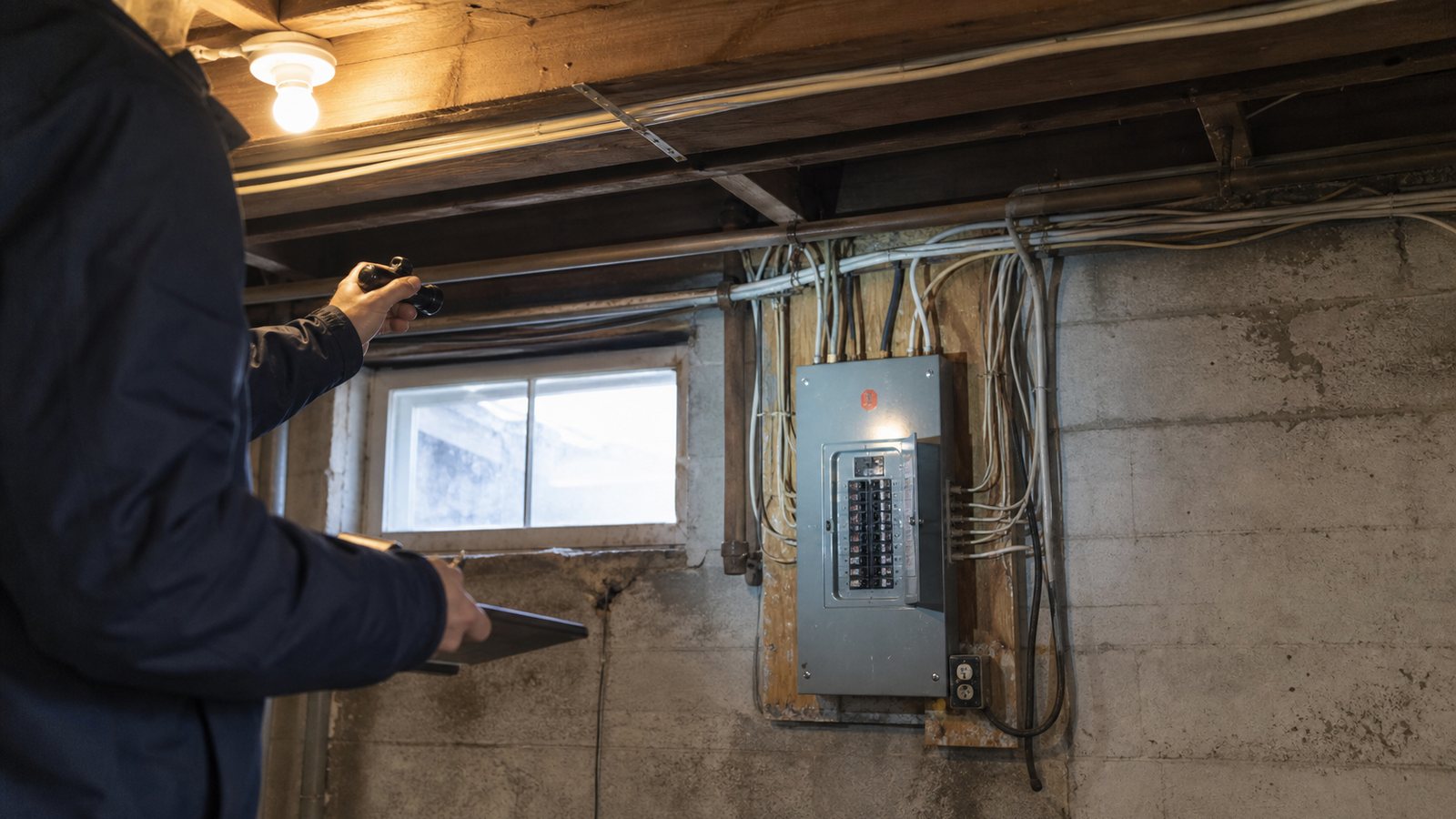
Aluminum wiring. Usually not a refusal but a condition — an inspection by a licensed electrician, and often specific remediation at connections, before or shortly after binding.
Oil tanks. Age, location and construction all matter, and an underground tank is the worst case because the exposure is environmental rather than structural. Insurers ask when a tank was installed, and "we don't know" is treated as the oldest plausible answer.
Wood stoves and solid-fuel appliances. Not a problem, but a paperwork problem: expect a wood stove WETT inspection or equivalent, and expect to have to produce it rather than describe it.
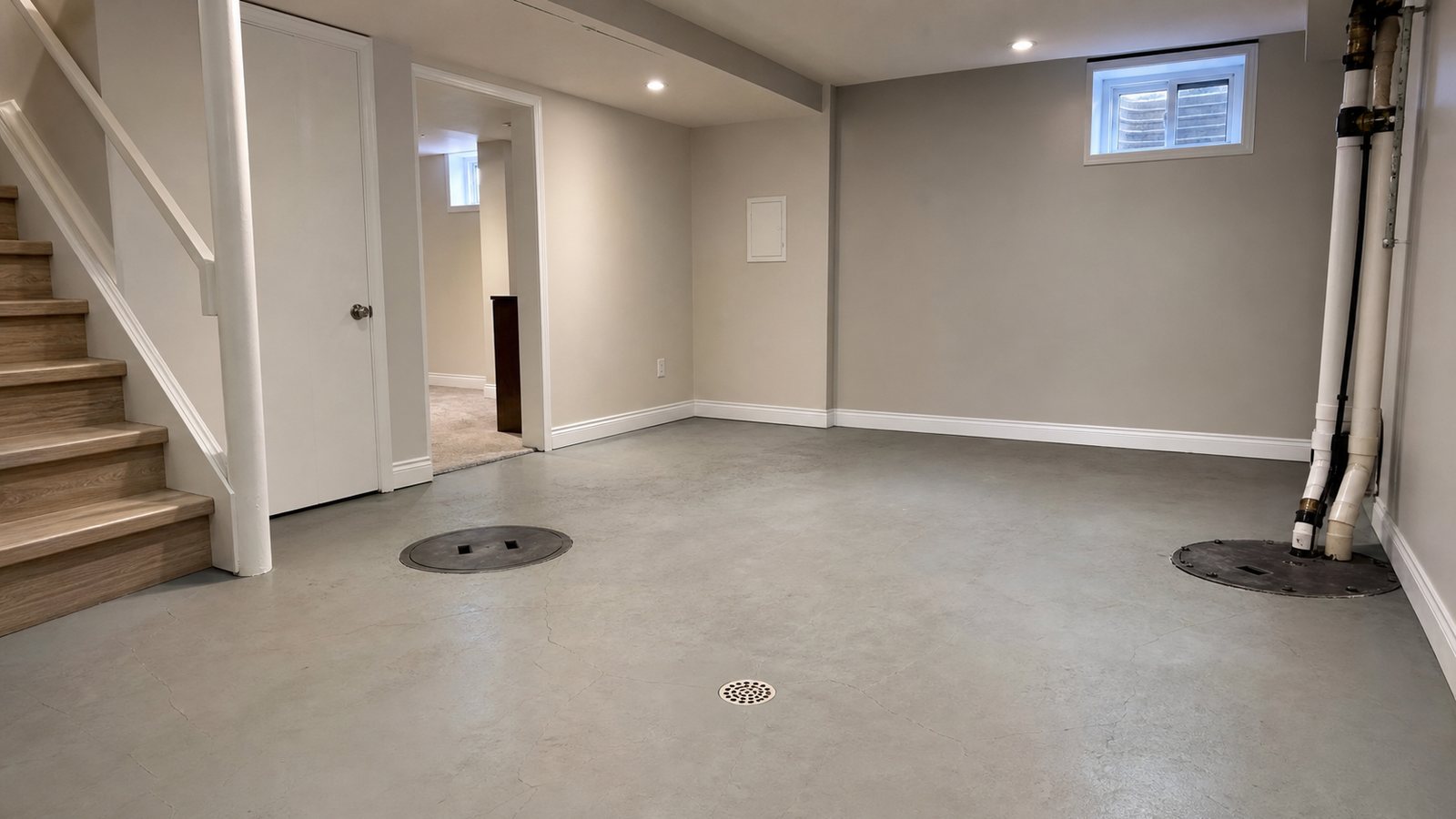
Water history. A basement that has flooded is the category most likely to result in cover being offered with the water endorsements removed — which is to say, cover for everything except the thing that has already happened.
Roof age, panel type and service size round out the list. None of these is exotic; all of them are things an inspector will tell you and an insurer will ask about.
Sewer backup coverage and overland flood insurance are extras, not defaults
Two of the most likely losses in an Ottawa home are excluded from a standard policy. The Insurance Bureau of Canada states it plainly:
Damage caused by the backing up of sewers and drains is typically not covered by a standard policy… Overland flooding, which occurs when bodies of fresh water, such as rivers or dams overflow onto dry land, is typically not covered by a standard policy.
Insurance Bureau of Canada, on water damage and flood protection
Both are available as optional endorsements — sewer backup coverage from most insurers, overland flood insurance from many, priced according to the risk at that specific address. So the standard policy is not the product you want on most Ottawa houses, and the quote that looks cheapest is often the one missing both.
It also means the insurance quote is a second opinion on the property. An insurer that declines overland flood cover, or prices it steeply, has told you something about the address that no listing will. Read a refusal as information rather than as an obstacle. Basement water, flooding and sewer backup covers the underlying risks and the City rebates that reduce them.
Insurance claims history follows the address, not just the owner
This surprises nearly everyone. Insurers share insurance claims history, and that history attaches to the address as well as to the person. So a claim made by the seller three years ago — a sewer backup, a burst pipe, a fire — can shape what is offered to you, a completely different customer with a clean record.
You cannot see that history directly. What you can do is ask the seller, in writing, whether any insurance claim has been made on the property and what for. It is a fair question, it is the same question your insurer will effectively be asking, and a seller who declines to answer has told you something too.
Getting insurance before closing, in the right order
Get the inspection first, so you know what you are describing. Wiring type, roof age, heating source, panel, any evidence of a tank, any evidence of water.
Call a broker rather than one insurer. A broker shops several underwriting appetites at once, which matters precisely because the rules differ between companies and a single refusal proves little.
Ask for a quote on the actual address, in writing, including both water endorsements — not a verbal reassurance, and not a quote on a house like it.
Sort the insurance before closing — in fact before the condition comes off. This is the whole point. Everything above is cheap to discover during a condition period and ruinous to discover in the week before closing.
A home insurance refusal, or a premium that comes back loaded, is a number: price the remediation — rewiring, tank removal, protective plumbing — and take it back into the negotiation as a number rather than a worry.
Re-quote after remediation. The premium that priced in knob and tube should not survive the rewire, and insurers do not update your file on their own.
Waiving the condition on a house like this
Ottawa buyers in competitive situations are regularly advised to drop conditions to win. On a new or near-new home in a low-risk location that is a calculated risk with a fairly small tail. On a pre-war house with unknown wiring, or anything close to a watercourse, the tail includes not being able to close at all — and a failed closing is not a lost deposit, it is a lawsuit about the difference between your price and what the seller eventually gets.
If you are going to compete anyway, the workable middle is to front-load the work: get the insurance answer before you write the offer rather than after. It is possible on a property you have already viewed, and it converts the riskiest condition into homework you did on the weekend. Which is also the argument for having an agent who will tell you to do it — see how to choose a buyer's agent.
The general point holds beyond insurance. Every problem in this cluster is cheap while you still have a condition and expensive the moment you do not, and that is the whole of the advice.
Three different problems get called a wet basement, they have different causes, different fixes and different insurance, and telling them apart is most of the work. What to look for at a viewing, and the City of Ottawa rebates that pay a large share of the fix — up to $3,000 for a sump pump and $2,500 for an outdoor storm backwater valve.
Older Ottawa homes carry a short list of specific, findable problems: radon, knob and tube or aluminum wiring, vermiculite insulation, galvanized or lead plumbing, and a buried oil tank. None of them is a reason to walk away on its own. All of them are reasons to write a condition rather than waive one.
What does an inspection cover? A few hundred dollars of clarity on a several-hundred-thousand-dollar decision. What Ottawa inspectors typically look at, what they don't, what the inspection cost buys, and how the deficiencies they find fit a conditional-on-inspection offer.
What do I pay on closing? The purchase price is only the headline number. Between the accepted offer and closing day, a cluster of hidden costs comes due — land transfer tax, lawyer fees and disbursements, title insurance, adjustments and the repair buffer nobody budgets for.
July 22, 2026
Get Ottawa property guidance in your inbox
You'll get: First-time buying explainers · Selling guidance · New-build and builder updates · Neighbourhood guides · Renting and ownership costs · Local market context.
Occasional emails. No spam, and you can unsubscribe with one click. By subscribing you consent to receive emails from Ottawa Property Guide. We record the date and source of your consent, as Canadian anti-spam law (CASL) requires. Read our privacy policy.