What to check in an older Ottawa home — radon, wiring, asbestos and the rest
Older Ottawa homes carry a short list of specific, findable problems: radon, knob and tube or aluminum wiring, vermiculite insulation, galvanized or lead plumbing, and a buried oil tank. None of them is a reason to walk away on its own. All of them are reasons to write a condition rather than waive one.
By Ottawa Property Guide EditorialPublished August 1, 2026 Last verified August 1, 2026
Buying an old house in Ottawa means taking on a specific set of old house problems, and there is a lot of housing stock here built before the rules that would have prevented the problems below. Centretown, the Glebe, Hintonburg, Old Ottawa South and the older parts of Alta Vista and Westboro are full of homes that are better built than anything going up today and carry three or four specific issues that a new build cannot have.
The list is short and it is knowable. That is the useful thing about it: an older home is not a general risk, it is a handful of named checks. What follows is what to check in an older home, what each one actually costs you, and — the part that decides whether any of it matters — what to do about it at the offer stage rather than after closing.
Radon testing: the one old house problem that is not about age at all
Radon in Ottawa comes up in almost every conversation about older houses. Radon is a radioactive gas that seeps out of the ground and accumulates indoors. It is the second leading cause of lung cancer in Canada after smoking, and Ottawa sits in a part of the country where it turns up regularly: the Public Health Agency of Canada puts the share of homes above the guideline in the City of Ottawa Health Unit at 7%.
It is in this guide because buyers ask about it when they look at old houses. But the honest answer is the one Health Canada gives: the age of the house does not tell you anything. A 2024 build can test high and a 1920s house can test clean. Radon depends on the ground underneath and how the house draws air, not on when it was built. So this is a check for every purchase, and it is here because this is the guide where people look for it.
Two practical consequences. First, radon testing cannot be squeezed into a condition period — 91 heating-season days is a season, not a week. So this is almost always something you do after you own the house, which is fine, because the guideline is an annual average and the recommended response window is a year. Second, where the kit goes changes the answer. Testing an unfinished basement nobody uses will produce a number that has nothing to do with your exposure, and testing the room where your family actually sits is the point.
If a seller produces a radon test, read what it was: a long-term test in an occupied room over winter is evidence. A short-term test in July is not. And if a house has already been mitigated, that is a positive — a sub-slab depressurisation system is a solved problem, not a red flag.
Knob and tube wiring and aluminum wiring: an insurance problem first
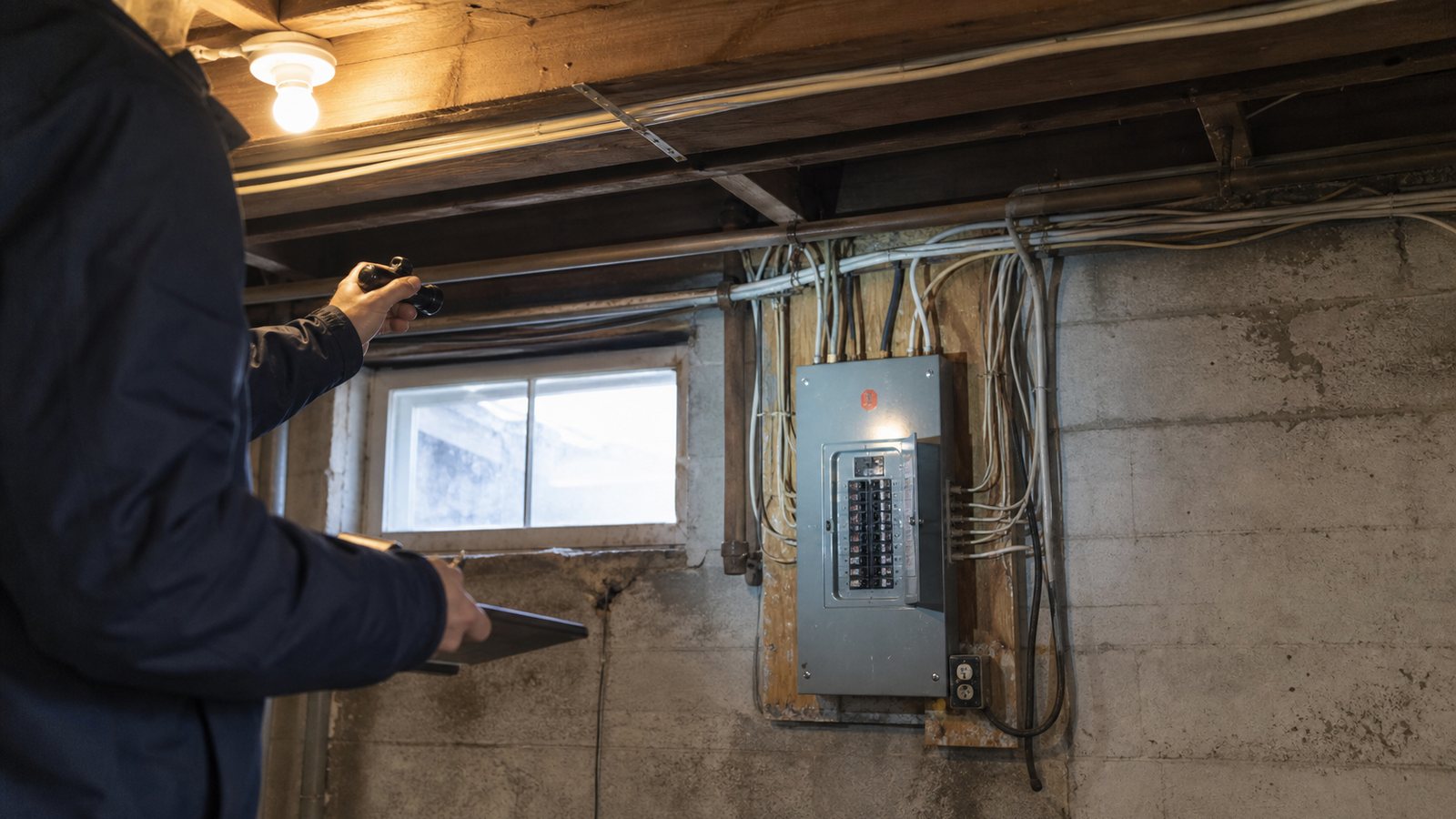
Knob and tube wiring was standard into roughly the 1940s and survives in Ottawa homes that were never fully rewired — often partially, with modern circuits downstairs and the original wiring feeding upstairs bedrooms. Aluminum wiring is a different era, broadly the mid-1960s to late 1970s, and a different problem: the metal expands and contracts at connections, which is where failures happen.
Both are worth finding, and the reason is usually not the one people expect. The first consequence is insurance, not danger. Many insurers will not bind a policy on a house with active knob and tube at all, and others require an electrical inspection, remediation, or specific connector work on aluminum before they will. That turns a wiring question into a closing question, because no lender funds a purchase without insurance in place.
So the sequence matters: find out what the wiring is during the condition period, then get an actual insurance quote on that specific house before the condition comes off — not a general assurance that it will be fine. Insuring a house with problems is the whole of that story, because it applies to several items in this guide at once.
A partial rewire is the common Ottawa case and it is the one to ask about specifically. "The house was rewired" and "the panel was replaced" are different sentences, and a new panel with old branch wiring behind it is a house that still has the problem.
Vermiculite insulation and asbestos in an old house
Vermiculite is a loose, pebbly attic insulation that looks like grey-brown popcorn. Vermiculite ore from the Libby mine in Montana, produced from the 1920s to 1990 and sold in Canada as Zonolite®, may contain amphibole asbestos. Not all vermiculite is contaminated — but where a house has old vermiculite, the sensible assumption is that it might be.
The federal guidance is calmer than most people expect, and it is worth quoting rather than paraphrasing:
There is currently no evidence of risk to your health if the insulation is sealed behind wallboards and floorboards, isolated in an attic, or otherwise kept from exposure to the interior environment.
Government of Canada, on vermiculite insulation containing tremolite asbestos
The risk arrives with disturbance — renovation, demolition, maintenance, running new wiring, adding pot lights, converting the attic. So vermiculite in an undisturbed attic is not an emergency. It is a constraint on your plans and a line in your budget, and the way it bites is that the loft conversion or the insulation upgrade you were costing at one number is now a different number, because it requires abatement first.
Asbestos in an old house is not only attic insulation. Pipe and duct wrap, older floor tiles and the adhesive under them, and some plaster and textured finishes can all contain it. The same logic applies throughout: intact and undisturbed is not the problem; sanding, cutting and demolishing is. A standard home inspection does not test for asbestos — it may flag a suspicion, and confirming it is a separate lab job.
Galvanized plumbing and lead pipes
Galvanized plumbing corrodes from the inside: the steel closes up over decades and the bore narrows. The symptom is pressure that has quietly declined for years and water that runs rusty after the house has sat empty — both easy to miss on a twenty-minute viewing where you never ran a tap. Turn on the bathroom sink and the shower at once in an older home, which takes ten seconds and tells you something real.
Lead pipes are the more serious version, and in Ottawa it splits in two: the private portion runs from the house to the water shut-off valve and belongs to the owner, and the public portion runs from that valve to the watermain and belongs to the City. The City's own line is that homes potentially affected by a lead water service pipe are typically those built before 1958 — so this is a question for pre-war and early post-war stock rather than for every old house.
Two things make this checkable before you buy rather than after. The City publishes an address lookup that tells you whether your private service pipe may have been built from lead, and it will test your drinking water on request. And you can look: lead pipe is dull grey and scratches easily with a hard object, where copper is red-brown and shows green deposits where it has corroded. The City's own advice is to scratch the pipe with sandpaper to expose bare metal, which settles it in about a minute. Both the lookup and the testing request sit with the official links.
Buried oil tanks and what replaced them
Plenty of Ottawa homes heated with oil before converting to gas, and the conversion did not always include removing the tank. An abandoned underground tank is the single most expensive item on this page when it goes wrong, because a leak becomes soil contamination, and contamination is remediation rather than repair — and it can follow the property rather than the person who caused it.
The tells are cheap to look for: a fill pipe or vent pipe on an exterior wall with nothing attached to it, disconnected copper line stubs in the basement, a patched area of the floor, or an oil-fired appliance replaced by gas with no record of what happened to the tank. Any of them turns into one direct question to the seller — was there a tank, was it removed, and is there documentation.
An above-ground tank still in service is a different matter and a normal one: it has age limits, inspection requirements and insurance implications, and insurers care about its age. Ask when it was installed.
The foundation, drainage and everything water does
Water is the largest category of older-home problem in this city and it deserves its own guide rather than a paragraph here — including how to tell seepage from overland flooding from sewer backup, what to look for at a viewing, and the City of Ottawa grants that pay for a large share of the fix. That is basement water, flooding and sewer backup in Ottawa.
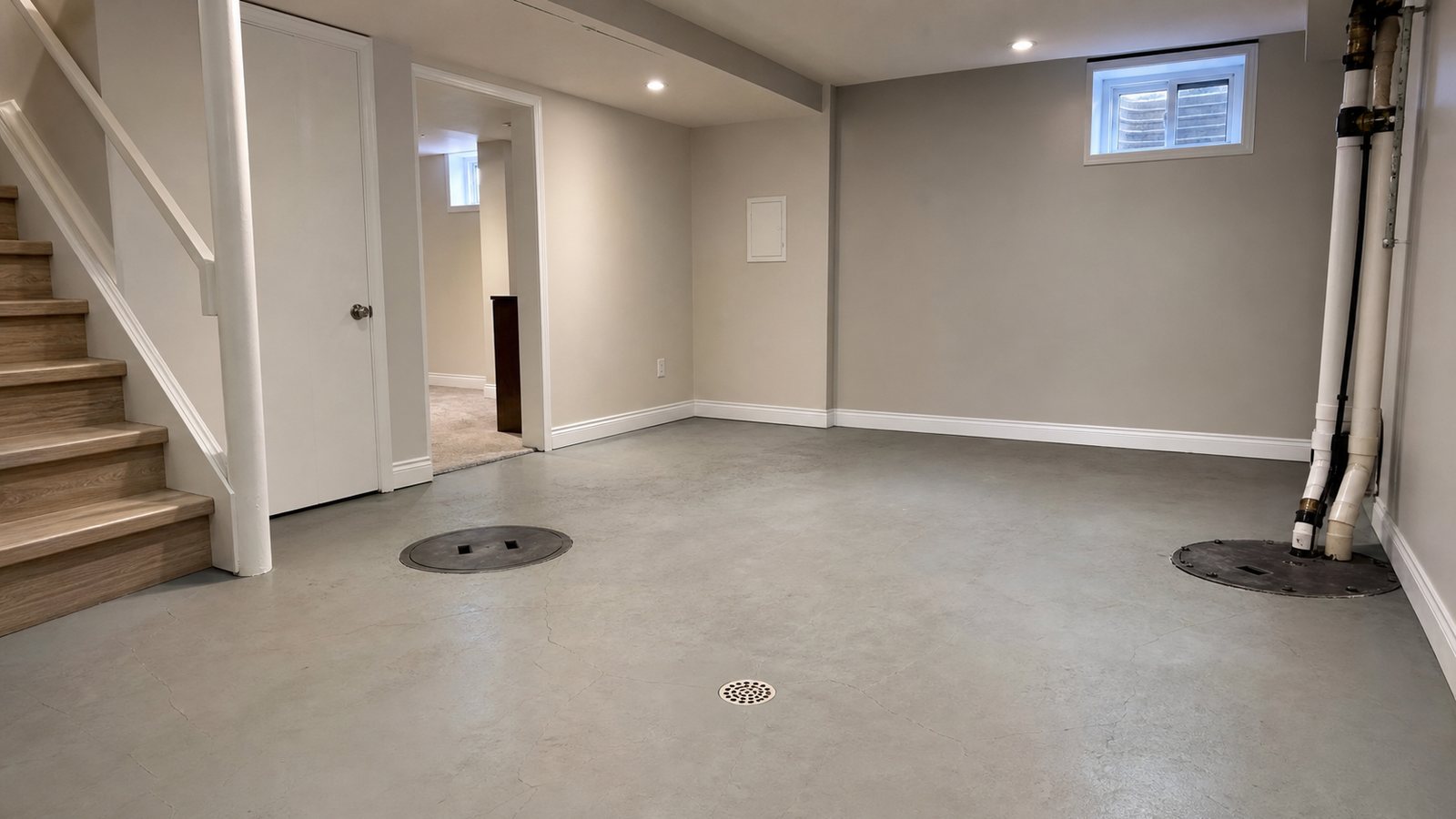
The short version for this list: stains and efflorescence on foundation walls, a sump pump that is either very new or absent, fresh paint on a basement wall at floor level only, and downspouts discharging against the house are the four things to look at while you are standing there.
Mould, and why testing it is usually the wrong spend
Mould is not really an item on this list. It is a symptom of the item above it — Health Canada's own account of how it starts is condensation from excessive humidity or poor ventilation, water leaking from a broken pipe, water getting in from outside through a leaking roof or a cracked basement, or a flood. Find the water and you have found the mould.
That matters because the instinct on discovering mould is to pay someone to test it, and Health Canada is unusually blunt about how little that tells you:
These recommendations apply regardless of the mould species found to be growing in the building. Further, in the absence of exposure limits, results from tests for the presence of fungi in air cannot be used to assess risks to the health of building occupants.
Health Canada, Residential Indoor Air Quality Guideline: Moulds
There is no Canadian exposure limit for mould in air, so a laboratory number has nothing to be measured against. Identifying the species does not change what you are told to do either, because the advice is the same for all of them. What Health Canada actually recommends is two things:
Control humidity and diligently repair any water damage — the prevention half, and the one that decides whether it comes back.
Clean thoroughly any visible or concealed mould. Note *concealed*: the visible patch is frequently the smaller half of it.
What to do with that as a buyer is narrower than it sounds. Ask what caused it, not what species it is. Visible mould on a basement wall in an older Ottawa home is a drainage question and belongs with basement water, flooding and sewer backup; mould in an attic near the eaves is usually an ice-dam and ventilation question, covered in the winter maintenance checklist; and a musty smell with no visible source in humid weather may be condensation rather than infiltration, which the summer checklist shows you how to tell apart with a square of plastic sheet.
The size of the job is the part worth pricing before you commit. A small patch with an identified and fixed cause is an afternoon. A large or concealed area, or one you cannot explain, is remediation plus the repair that stops it recurring — and the repair is the expensive half, because it is the foundation, the roof or the ventilation.
Buying an old house: what to actually do with all this
The mistake is treating this as a list of reasons to be afraid of a century home in Ottawa. It is not. Ottawa's older housing stock is in the neighbourhoods people most want to live in, and the problems above are known, priced and solvable. The mistake in the other direction is discovering them after closing, when every one of them is yours.
Keep the inspection condition. Every item here is found during it, and in a market where waiving conditions is common, an older home is the worst possible house to waive them on.
Tell the inspector what you are buying. Ask specifically about wiring type, plumbing material, evidence of a tank, and vermiculite. Some of these are outside a standard inspection and need to be raised deliberately.
Get a real insurance quote on the actual address before the condition comes off — wiring, oil tank and past water claims are all things an insurer prices or refuses.
Price the remediation before you renegotiate. A number from a contractor is a negotiating position; a worry is not.
Separate the urgent from the eventual. Radon is an annual average with a one-year action window. Undisturbed vermiculite is a renovation constraint. An active leak is neither of those — it is now.
Handled in that order, an older Ottawa home is a set of costs you chose with your eyes open rather than a set of surprises. Which is the whole difference between an old house being a good buy and a bad one.
There is no official price list for renovation work, which is why every number you find online disagrees with the last one. This is what a kitchen renovation, a bathroom renovation, a basement renovation, a roof and an electrical panel upgrade typically cost in Ottawa, what each range assumes, and which renovations actually return their money when you sell. The honest headline: the only real number is three written quotes.
Three different problems get called a wet basement, they have different causes, different fixes and different insurance, and telling them apart is most of the work. What to look for at a viewing, and the City of Ottawa rebates that pay a large share of the fix — up to $3,000 for a sump pump and $2,500 for an outdoor storm backwater valve.
No lender funds a purchase without insurance in place, so an insurer's opinion of the house is a closing condition whether you treated it as one or not. Insurance for an older home turns on knob and tube, an oil tank, a flooded basement and a previous owner's claims — and if you cannot get home insurance on that address, the deal does not close. What a home insurance refusal really means, and when to find out.
What does an inspection cover? A few hundred dollars of clarity on a several-hundred-thousand-dollar decision. What Ottawa inspectors typically look at, what they don't, what the inspection cost buys, and how the deficiencies they find fit a conditional-on-inspection offer.
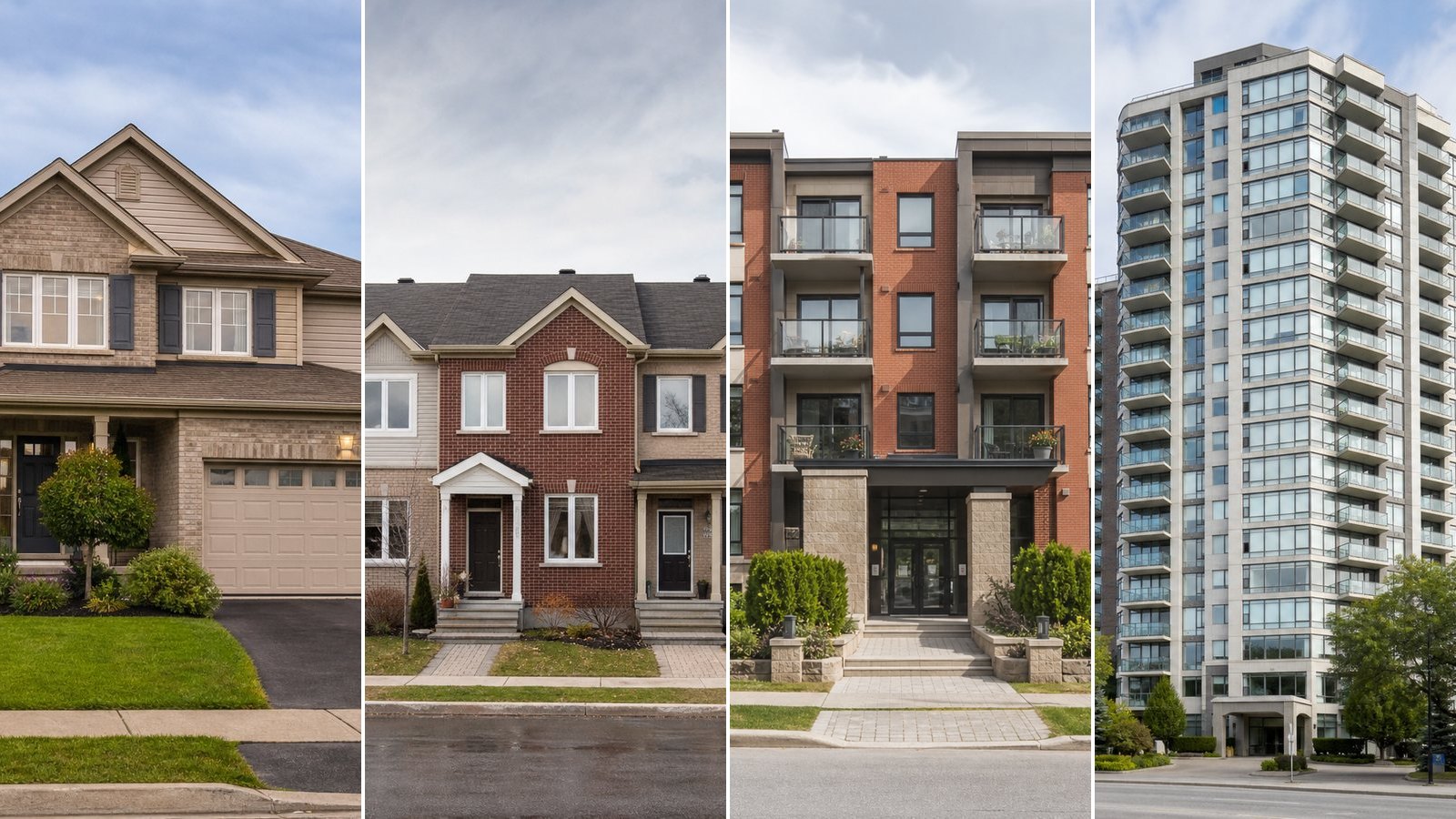
Detached, semi, townhouse, stacked town, condo, apartment — listing sites assume you already know what these words mean and what they commit you to. Here's the plain-language version: what each type looks like, how the ownership works, and the trade-offs that actually shape daily life. What is a semi, how a town home differs from a stacked one, and the freehold vs condo distinction that matters more than the shape of the building.
July 22, 2026
Get Ottawa property guidance in your inbox
You'll get: First-time buying explainers · Selling guidance · New-build and builder updates · Neighbourhood guides · Renting and ownership costs · Local market context.
Occasional emails. No spam, and you can unsubscribe with one click. By subscribing you consent to receive emails from Ottawa Property Guide. We record the date and source of your consent, as Canadian anti-spam law (CASL) requires. Read our privacy policy.