The Ottawa summer home maintenance checklist — the only season long enough to fix things properly
Summer is the quietest maintenance season and the most wasted one. It is the only stretch of the year when the exterior is dry, the ground is workable, trades are bookable and nothing is an emergency — which makes it the season to do the work that becomes impossible in November. Humidity and the basement, the deck and fence, exterior paint and caulk, the roof you can finally look at, and why the smartest thing you can do in August is book your furnace service.
By Ottawa Property Guide EditorialPublished August 2, 2026 Last verified August 2, 2026
Every other season on this site has a deadline attached. Fall work has to beat the freeze, spring work has to happen while the melt is still running, and winter work is mostly reacting. Summer has no deadline, which is exactly why it gets skipped.
That is the wrong instinct in this city. Ottawa's exterior working season is short — realistically late May to early October for anything involving paint, caulk, concrete or excavation. Almost everything that is expensive to fix in winter is cheap to prevent in July.
Humidity, and the basement in summer
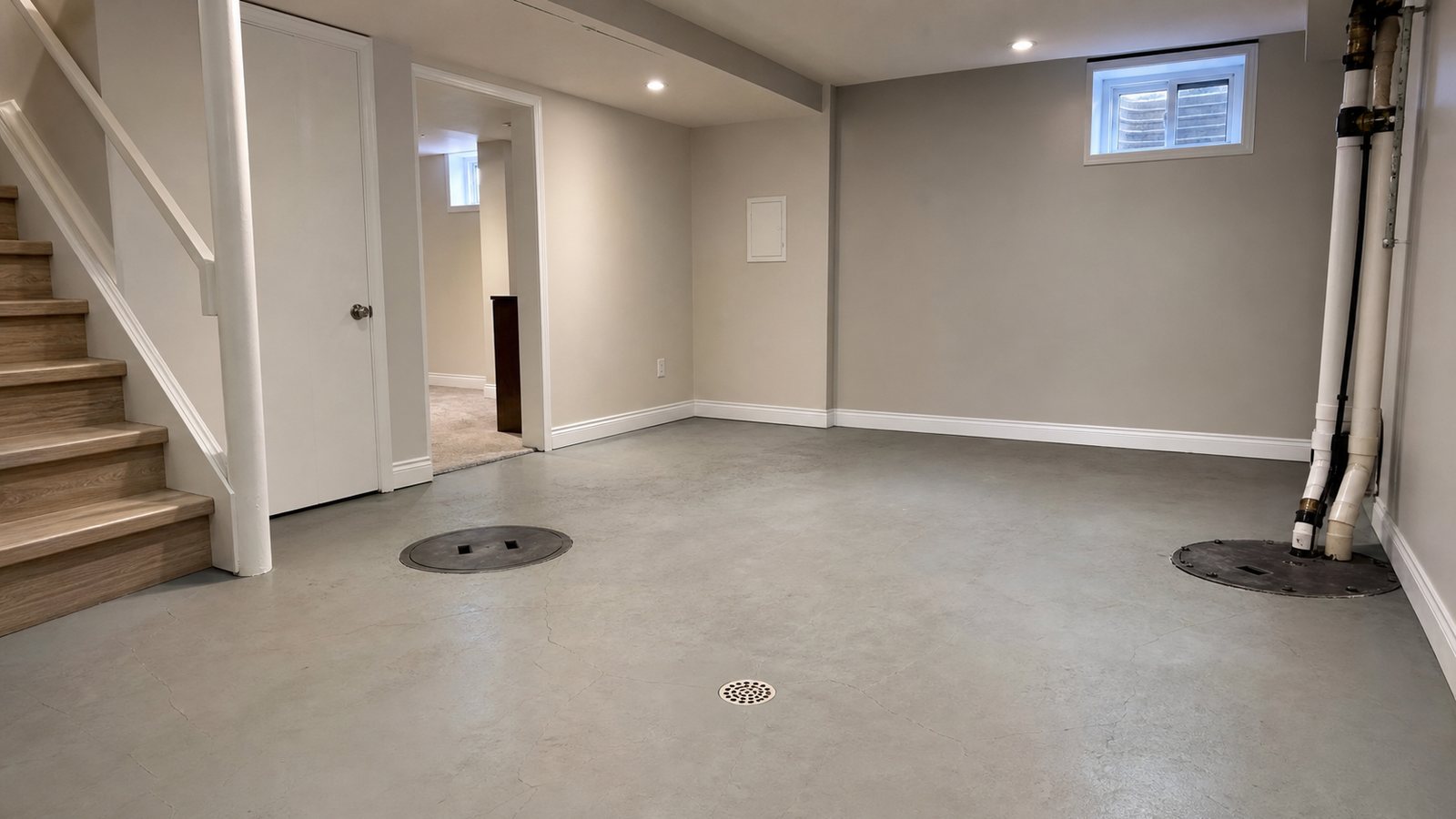
This is the season's genuinely counter-intuitive item. Ottawa summers are humid, and a cool basement in humid weather produces condensation on cold surfaces — which people routinely diagnose as a leak, and occasionally the reverse.
Learn to tell condensation from infiltration. Tape a square of plastic sheet tightly to a damp patch of foundation wall and leave it a couple of days. Moisture on the room side of the plastic is humidity; moisture underneath it is water coming through the wall.
Run a dehumidifier to hold the basement in a reasonable range, and make sure its drain or reservoir is actually being dealt with.
Check for musty smells in closed rooms and behind stored items — smell is a better early detector than sight.
Look at cold water pipes and the toilet tank for sweating, which drips onto floors and gets blamed on plumbing.
Do not seal a wall that is actively leaking to stop it looking damp. If the plastic test says infiltration, that is basement water, flooding and sewer backup, and paint will not fix it.
The exterior envelope — the work that has to happen now or not at all
Re-caulk around windows, doors and every penetration through the exterior wall. Caulk needs warm, dry conditions to cure properly, which Ottawa offers for about four months.
Touch up or redo exterior paint and stain, particularly on south and west faces, which take the most sun, and on anything at ground level that sat under snow.
Inspect the siding and brick for cracked mortar, gaps and anything an animal could get behind.
Look at the roof properly, from the ground with binoculars and from the attic. This is the season to have a roofer up there — a roof replacement booked in August is a scheduled project; the same roof in January is an emergency at a premium.
Check and clean the gutters mid-season, especially under maples and pines.
Reseal the driveway if it needs it, and fill cracks before water gets in and freezes.
Deck, fence and everything wooden
Check deck posts and joists where they meet the ground or the house — that connection is where rot starts and where deck failures happen.
Probe suspect wood with a screwdriver. Soft is rot, and rot spreads.
Check railings and stairs for movement. These are the parts that hurt people.
Clean and re-stain or seal on a dry stretch, which in practice means checking a forecast rather than picking a weekend in advance.
Look at fence posts for lean and rot at grade, and reset anything that moved with the spring frost.
Trim vegetation back from the house — branches off the roof and siding, shrubs clear of the foundation so air and light reach it, and nothing overhanging the driveway to load with ice later.
Water, pests and storms
Test the sump pump in the dry season, when finding it dead is an inconvenience rather than a flood. Pour a bucket of water into the pit and watch it run.
Check window and door screens and repair the holes rather than living with them.
Seal entry points — gaps at the roofline, around vents, under decks and where services enter the house. Ottawa has an ambitious population of squirrels, raccoons and mice, and autumn is when they start looking for somewhere warm.
Check the attic for signs of animal entry while you are up there for the roof.
After a summer wind or hail storm, look at the roof and siding. Storm damage that goes unnoticed in July becomes a leak in a January thaw.
Watering restrictions come and go by season and conditions — check the City of Ottawa's current position rather than assuming, especially if you are establishing new sod or plantings.
The counter-intuitive one: book winter now
The fall checklist opens by telling you to book furnace service before the heating season, because technicians' calendars fill after the first cold snap. The way to actually do that is to book it in August. The same applies to anything else with a seasonal rush.
Furnace or heat pump service, booked before the September stampede.
A snow-clearing contract, if you use one. Reputable operators cap their client lists early and the good ones are full before the first snowfall.
Chimney and fireplace inspection, if you burn anything.
Any roof, window or insulation work you already know you need — booking it for early fall means it happens in workable weather rather than being deferred to spring.
Order the parts and consumables you will want and cannot get in a hurry: furnace filters, ice melt, a spare shear pin for the snow blower.
The bottom line
Summer is the only season in Ottawa where you are ahead of the weather rather than behind it. Nothing on this list is urgent, which is precisely the point — every item is something that will be either impossible or expensive to deal with in five months. The most valuable thing you can do on a warm Saturday in August is make three phone calls about winter.
Ottawa winters don't forgive procrastination. A few weekends of fall work — furnace, gutters, grading, faucets, weatherstripping, and a snow plan — is the cheapest insurance a homeowner here can buy. Here's the full checklist, in the order the season demands it. Seasonal maintenance in the order it matters — and how to winterize before the freeze does it for you.
Spring in Ottawa is not a gardening season, it is an inspection season. Five months of freeze-thaw, ice loading and road salt have just finished working on your house, and the melt is the one time of year the drainage problems show themselves. Here is the spring maintenance checklist in the order the thaw demands it — roof and ice-dam damage, the melt test, regrading the ground you could not touch in November, frost heave, and getting the air conditioning looked at before every technician in the city is booked.
There is no official price list for renovation work, which is why every number you find online disagrees with the last one. This is what a kitchen renovation, a bathroom renovation, a basement renovation, a roof and an electrical panel upgrade typically cost in Ottawa, what each range assumes, and which renovations actually return their money when you sell. The honest headline: the only real number is three written quotes.
Every homeowner eventually hires someone in a hurry, at the worst moment, from the first name that answers. Ontario gives you a specific protection for exactly that: a contract signed in your home can be cancelled within 10 days, for any reason. How to choose a contractor when you have time — the contractor deposit, the insurance, the building permit for renovation work — and what changes in an emergency repair.
Three different problems get called a wet basement, they have different causes, different fixes and different insurance, and telling them apart is most of the work. What to look for at a viewing, and the City of Ottawa rebates that pay a large share of the fix — up to $3,000 for a sump pump and $2,500 for an outdoor storm backwater valve.
August 1, 2026
Get Ottawa property guidance in your inbox
You'll get: First-time buying explainers · Selling guidance · New-build and builder updates · Neighbourhood guides · Renting and ownership costs · Local market context.
Occasional emails. No spam, and you can unsubscribe with one click. By subscribing you consent to receive emails from Ottawa Property Guide. We record the date and source of your consent, as Canadian anti-spam law (CASL) requires. Read our privacy policy.