The Ottawa winter home maintenance checklist — the season you manage rather than prepare for
By January the preparation is done and winter is something you operate. This is the in-season checklist: ice dams and what they actually mean, roof snow load, keeping pipes from freezing, the condensation on your windows that is telling you something, and the two City of Ottawa rules that catch homeowners out every year — the windrow is yours, and pushing snow onto the road is against the by-law.
By Ottawa Property Guide EditorialPublished August 2, 2026 Last verified August 2, 2026
The fall checklist is about preparation and it has a deadline. Winter is different: the work is done, the house is as ready as you made it, and the job now is noticing things early. Most winter home emergencies in Ottawa were visible for a week beforehand as a symptom somebody did not recognise.
Two City rules that catch homeowners out every year
Start here, because these are the ones with a by-law behind them and they are widely misunderstood.
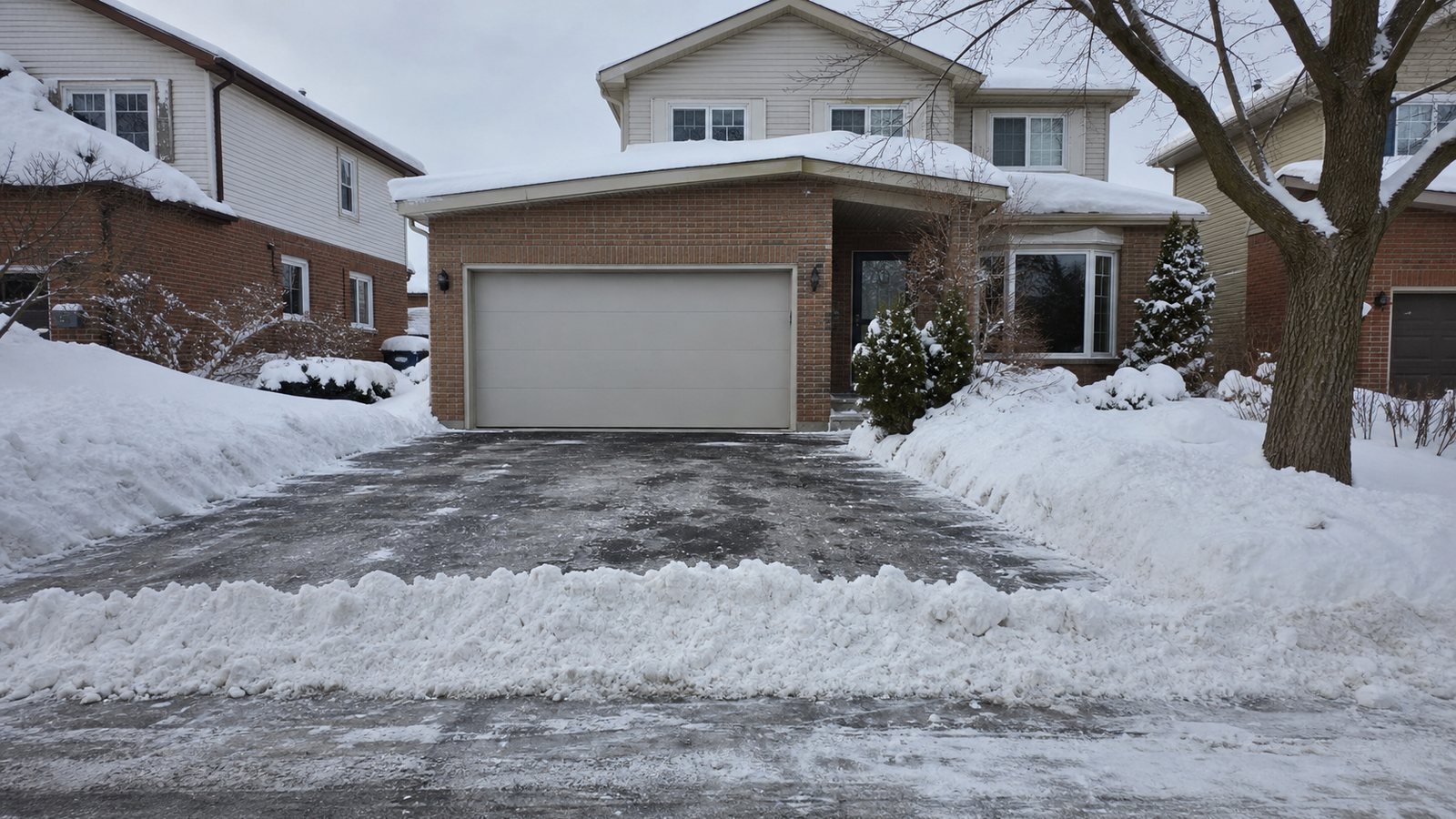
The windrow is yours. The ridge of hard snow the plow leaves across the end of your driveway is not something the City comes back for. Its own guidance is direct about it:
Property owners are responsible for removing the windrow.
City of Ottawa, on clearing snow from your property
And you may not push it into the street. This is the rule people break by default, usually with a snow blower pointed at the road, and it is covered by the Use and Care of Roads By-law:
do not push or shovel snow and ice on the City's right of way including: Streets, Sidewalks, Pathways, Parks
City of Ottawa, Use and Care of Roads By-law No. 2003-498
The practical version: snow from your property has to stay on your property. That is why the fall checklist tells you to choose a snow storage spot in October — by February, with a metre of accumulated snow already banked, the decision has been made for you and usually badly.
Keep the fire hydrant near your property clear, which the City asks residents to help with. It is not your legal problem until it is somebody's emergency.
Clear the catch basin — the storm drain at the curb — of snow and ice where you can safely reach it. This is the single highest-value thing on the list during a thaw, because a blocked catch basin is what turns melt into a pond at the end of your driveway and then into ice.
Do not bury your gas meter or its vent, and clear snow and ice away from exterior exhaust and intake vents for the furnace and dryer.
Know where snow is being stored so it drains away from the foundation when it goes.
The winter parking ban, in specifics
Worth knowing precisely rather than approximately, because a towed or ticketed car is the avoidable part of a snowstorm.
Ice dams — what they are actually telling you
An ice dam is a ridge of ice at the roof edge that stops meltwater draining, so the water backs up under the shingles and into the house. The important part is the cause: an ice dam is not a roof problem, it is a heat problem. Warm air escaping into the attic melts snow on the upper roof; that water refreezes when it reaches the cold overhang.
Watch for thick icicles along the eaves and a band of ice at the roof edge — the classic signature.
Look for water staining on interior ceilings near exterior walls, and damp or discoloured soffit outside.
Notice uneven melting on your roof. Bare patches over the living space while a neighbour's roof stays evenly covered means heat is getting up there.
Do not attack it with a hammer, a shovel or salt. You will damage shingles and flashing, and salt corrodes gutters and kills what is planted below. A roof rake used from the ground on the lower metre or two is the safe homeowner tool.
Treat repeated ice dams as an attic insulation and ventilation job, not an annual chore — that is the actual fix, and it is rebate-eligible work. See home energy rebates and retrofits.
Pipes, and the cold snap routine
Know where your main water shut-off is and make sure everyone in the house does. This is the sentence that saves a basement.
Identify the pipes at risk — anything running through an exterior wall, an unheated garage, a crawl space or against the foundation in an uninsulated corner.
In a deep cold snap, open the cabinet doors under sinks on exterior walls so room heat reaches the pipes.
Let a vulnerable tap run at a trickle in extreme cold. It is cheaper than a burst line by an enormous margin.
Do not let the house drop below about 15°C, including in rooms you are not using and including when you are away.
If you leave for more than a few days in winter, have someone check the house — a furnace failure discovered on return is a different event from one discovered on day two.
If a pipe does freeze, shut off the water first, then thaw gently with warm air. Never a torch or an open flame.
The house in winter: air, alarms and the roof above you
Condensation on the inside of windows is information. A little on the coldest mornings is normal; persistent running water, frost on the frames or damp sills means indoor humidity is too high for the outdoor temperature. Lower the humidifier, run bathroom and kitchen fans, and check that the dryer vents outside.
Test smoke and carbon monoxide alarms. Winter is when you are running the furnace, closing every window and possibly using a fireplace or a generator — the exact conditions CO alarms exist for.
Change the furnace filter on the schedule you stocked filters for in the fall. A blocked filter makes the furnace work harder in the month it can least afford to.
Watch the roof snow load after heavy or wet snowfall, particularly on low-slope sections, porch roofs, and anywhere drifting piles it deep. Look for sagging or new interior cracks.
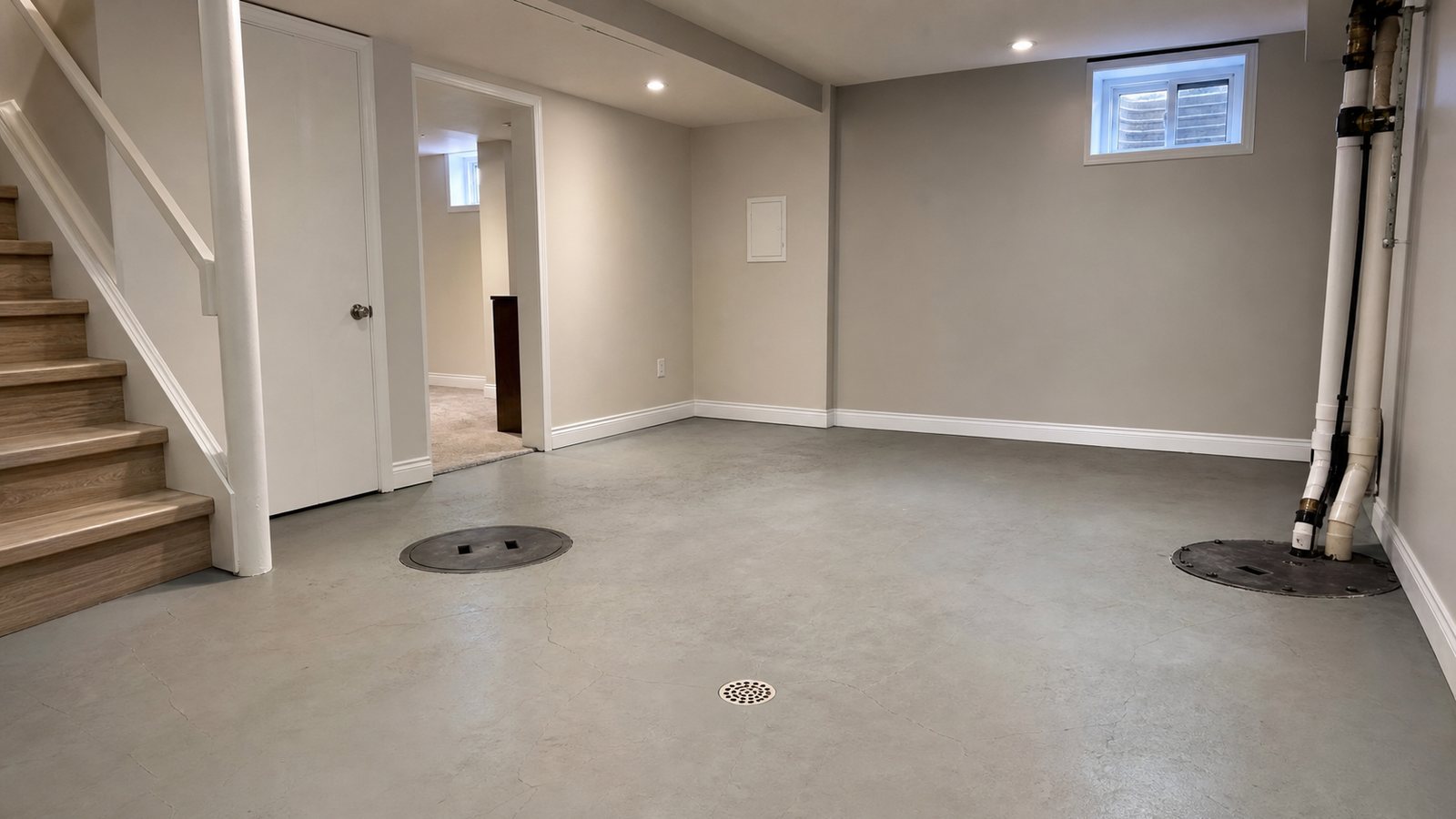
Keep the sump pump plugged in and tested through winter. A January thaw is a spring melt in miniature and it will find a dead pump.
Check the basement after every thaw, not just in spring.
The bottom line
Winter rewards noticing. Icicles along the eaves, a bare patch on the roof, condensation that stops drying off the window ledge, a catch basin under a snowbank during a thaw — each of those is a week of warning before it becomes a repair. The rest is knowing where the shut-off is, keeping the snow on your own property, and getting the windrow cleared before it sets.
Ottawa winters don't forgive procrastination. A few weekends of fall work — furnace, gutters, grading, faucets, weatherstripping, and a snow plan — is the cheapest insurance a homeowner here can buy. Here's the full checklist, in the order the season demands it. Seasonal maintenance in the order it matters — and how to winterize before the freeze does it for you.
Spring in Ottawa is not a gardening season, it is an inspection season. Five months of freeze-thaw, ice loading and road salt have just finished working on your house, and the melt is the one time of year the drainage problems show themselves. Here is the spring maintenance checklist in the order the thaw demands it — roof and ice-dam damage, the melt test, regrading the ground you could not touch in November, frost heave, and getting the air conditioning looked at before every technician in the city is booked.
Every homeowner eventually hires someone in a hurry, at the worst moment, from the first name that answers. Ontario gives you a specific protection for exactly that: a contract signed in your home can be cancelled within 10 days, for any reason. How to choose a contractor when you have time — the contractor deposit, the insurance, the building permit for renovation work — and what changes in an emergency repair.
The federal grant most people still ask about is closed. What replaced it is income-tested. But the provincial rebates on a heat pump, insulation and windows are substantial and open to everyone, and the City of Ottawa lends against energy efficiency work at a fixed rate over twenty years, repaid through your property tax bill. The trap is sequencing: several of these have to be applied for before the work is done, not after.
Three different problems get called a wet basement, they have different causes, different fixes and different insurance, and telling them apart is most of the work. What to look for at a viewing, and the City of Ottawa rebates that pay a large share of the fix — up to $3,000 for a sump pump and $2,500 for an outdoor storm backwater valve.
August 1, 2026
Get Ottawa property guidance in your inbox
You'll get: First-time buying explainers · Selling guidance · New-build and builder updates · Neighbourhood guides · Renting and ownership costs · Local market context.
Occasional emails. No spam, and you can unsubscribe with one click. By subscribing you consent to receive emails from Ottawa Property Guide. We record the date and source of your consent, as Canadian anti-spam law (CASL) requires. Read our privacy policy.