Renters' rights in Ottawa — what's legal, what isn't, and what your landlord can't do
Ontario tenants have stronger protections than most renters realize — and rental markets move too fast to learn them mid-crisis. What's legal at signing including first and last month's rent, what the standard lease means, rent control and the guideline increase, landlord entry and notice of entry, pets and no-pet clauses, and how to break a lease or end a tenancy properly.
By Ottawa Property Guide EditorialPublished July 23, 2026 Last verified July 31, 2026
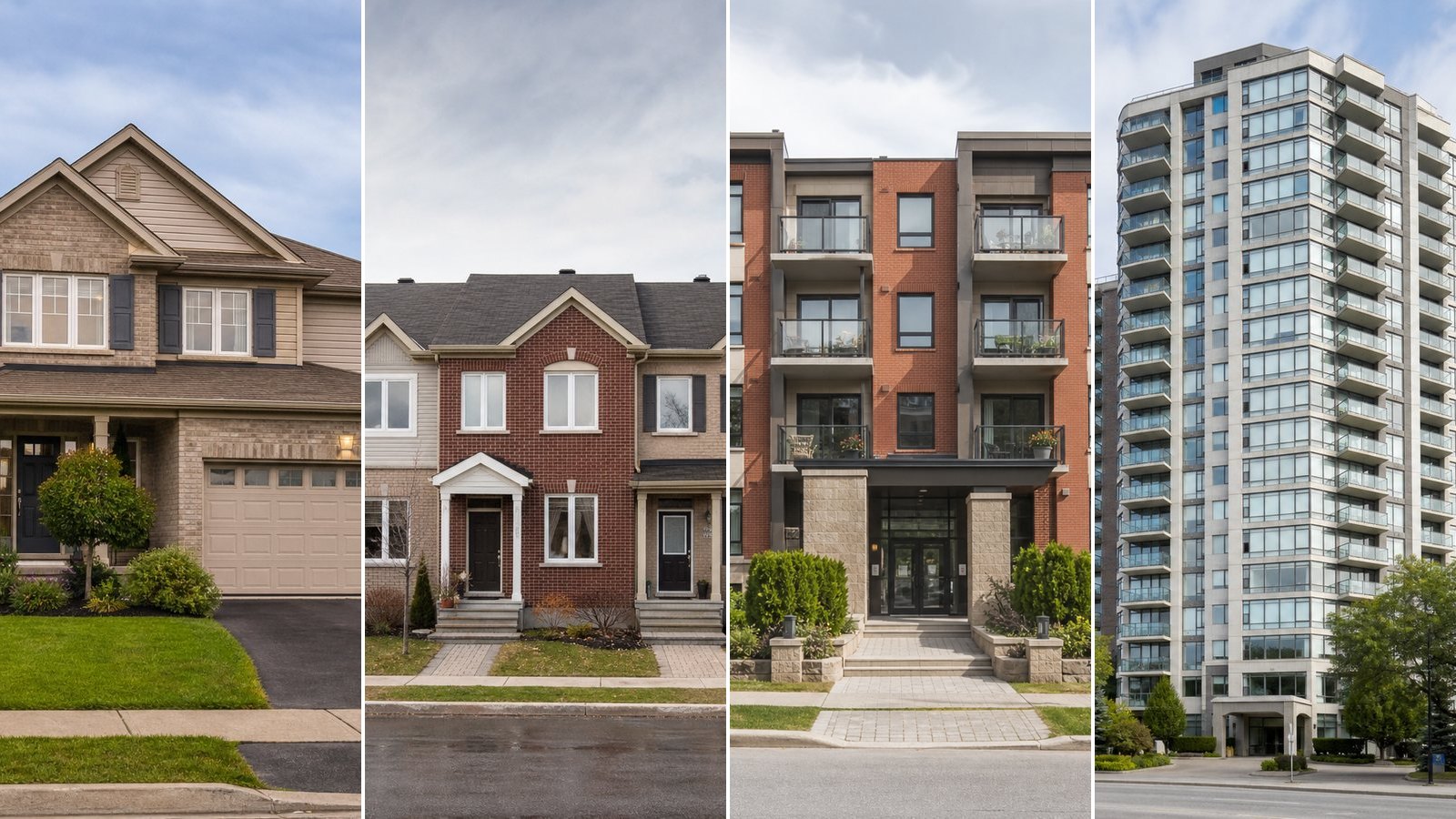
Illustrative image — not a real address or listing.
Renting in Ottawa — students, newcomers, professionals, families, people between owned homes — is how a huge share of the city lives. Ontario's Residential Tenancies Act gives tenants genuinely strong protections, but they work like seatbelts: only if used, and best understood before the collision. Ten minutes here covers what takes others a bad tenancy to learn.
Viewing a rental: verify before you pay anyone anything
See the actual unit — or a live video walkthrough at minimum. Rental scams harvest deposits for units that don't exist or aren't the scammer's to rent; pressure to e-transfer before viewing is the signature move
Verify the landlord — who owns this building? A property manager should name the company; an individual should be reachable and unbothered by questions
Ask what's included — heat, hydro, water, parking, internet, laundry: 'utilities extra' changes the real monthly cost substantially, especially in older Ottawa stock with electric heat
Applications can be asked for — income/employment information, credit checks, references and rental history are normal; screening still can't discriminate on Human Rights Code grounds (family status, receipt of assistance, disability and others)
First and last month's rent — and the illegal fees to refuse
Ontario is strict about move-in money, and knowing the rules protects you from the improvised versions. A landlord may collect a rent deposit of at most one rental period — and it applies to your last rent period (usually last month's rent). It is not a damage deposit: Ontario has no damage deposits for residential tenancies, and 'cleaning fees', 'pet deposits' and similar inventions aren't lawful charges either. The only other deposit allowed is a refundable key deposit at actual replacement cost. Your rent deposit earns annual interest, and you're entitled to rent receipts on request. In short: first and last month's rent is the deposit permitted; damage deposits, key deposits above replacement cost and "administration" charges are illegal fees, whatever the market feels like.
The lease: standard form, standard tenant rights
Renters rights and tenant rights are the same thing, and in Ontario they do not depend on what the lease says — the Residential Tenancies Act sets them and a clause that contradicts it is simply unenforceable. Whether your unit is rent controlled is the one part that does vary, and it turns on when the unit was first occupied rather than on anything you signed.
Most private residential tenancies must use Ontario's standard lease — read it before signing, especially the filled-in fields: rent, what's included, term, and any additional terms. Two comforts worth knowing: any added term that contradicts the RTA is void even though you signed it, and your tenancy doesn't end when the lease term does — it automatically continues month-to-month on the same terms, so a lease ending is not an eviction date. Get tenant insurance: your landlord's policy covers the building, not your belongings or your liability, and it's inexpensive protection.
While you rent: maintenance, landlord entry and pets
Repairs are the landlord's job — units must be kept in good repair and fit for habitation, regardless of what the lease says; report problems in writing and keep copies
Your home requires notice — outside emergencies, entry requires 24 hours' written notice, between 8 a.m. and 8 p.m., for permitted purposes
Rent increases have rules — generally once per 12 months with 90 days' written notice on the proper form, capped at the provincial guideline for most units (units first occupied after November 15, 2018 can be exempt from the cap — check current rules); an increase that ignores the rules isn't valid
Lockouts and cut services are illegal — a landlord can't change the locks, remove your belongings, or shut off vital services; only the LTB process, ending in a sheriff-enforced order, can lawfully remove a tenant
Eviction notices have grounds and forms — an N-form notice is the start of a process with hearing rights, not a moving date; if you receive one, get advice quickly (community legal clinics exist for exactly this) rather than packing
Landlord entry needs notice — a written notice of entry stating the reason and time, except in defined situations such as an emergency.
Pets — a no pet clause in a lease is generally not enforceable in Ontario, though that is not the same as a landlord being unable to act on other grounds.
Ending a tenancy: how to break a lease or end my lease early
If you need to break a lease or end my lease early is the question you are actually asking, the honest answer is that a fixed term does not simply end because you leave — assignment and subletting exist for exactly this, and doing it properly protects you. When it's time to go, give proper written notice — typically 60 days on the official form (N9), timed to the end of a rental period, and a fixed-term lease generally means notice for its end date unless you're assigning or subletting (both possible with landlord consent that can't be unreasonably withheld) or ending early on grounds the RTA allows. Your rent deposit covers your final rent period; document the unit's condition on the way out the way you did on the way in, return the keys, get the key deposit back, and leave a forwarding address in writing.
The bottom line
Know the rules before you need them. Rent control and the guideline increase, notice of entry, what happens if you are served an N4 for arrears or an N12 because the owner wants the unit — none of it is obscure, and all of it is easier to handle on a normal Tuesday than in a crisis. If you are worried about being evicted, read the notice, check the dates, and get advice before you agree to anything.
An apartment viewing is a sales appointment run by someone paid to fill the unit. Who pays the leasing agent, what a leasing agent fee changes, whether utilities included means anything in dollars, what tenant screening to expect — and the subjects nobody at a showing has any reason to raise.
Ontario landlording is a regulated business wearing a side-hustle costume. Your landlord obligations from day one: whether the unit is legal, screening tenants inside the rules, the standard lease, how rent increases really work, maintenance, notice of entry, and how a tenancy lawfully ends.
Detached, semi, townhouse, stacked town, condo, apartment — listing sites assume you already know what these words mean and what they commit you to. Here's the plain-language version: what each type looks like, how the ownership works, and the trade-offs that actually shape daily life. What is a semi, how a town home differs from a stacked one, and the freehold vs condo distinction that matters more than the shape of the building.
What my budget buys changes completely depending on where you point it. Hold a single number constant and move it around the city and it stops being a budget and becomes a set of trade-offs: space versus location versus age. Here is what you can get for it, by area.
Ottawa's downtown-adjacent core south of Parliament — Bank and Elgin street life, condo towers beside heritage rows, and the shortest commute in the city traded against density and noise.
A once-working-class west-side neighbourhood centred on Wellington West — arts spaces, independent food, small lots, and a fast-evolving streetscape close to downtown and the LRT.
UrbanVery walkableLRT
Get Ottawa property guidance in your inbox
You'll get: First-time buying explainers · Selling guidance · New-build and builder updates · Neighbourhood guides · Renting and ownership costs · Local market context.
Occasional emails. No spam, and you can unsubscribe with one click. By subscribing you consent to receive emails from Ottawa Property Guide. We record the date and source of your consent, as Canadian anti-spam law (CASL) requires. Read our privacy policy.