Ottawa housing types explained — what each one is, and what owning it is really like
Detached, semi, townhouse, stacked town, condo, apartment — listing sites assume you already know what these words mean and what they commit you to. Here's the plain-language version: what each type looks like, how the ownership works, and the trade-offs that actually shape daily life. What is a semi, how a town home differs from a stacked one, and the freehold vs condo distinction that matters more than the shape of the building.
By Ottawa Property Guide EditorialPublished July 22, 2026 Last verified July 31, 2026
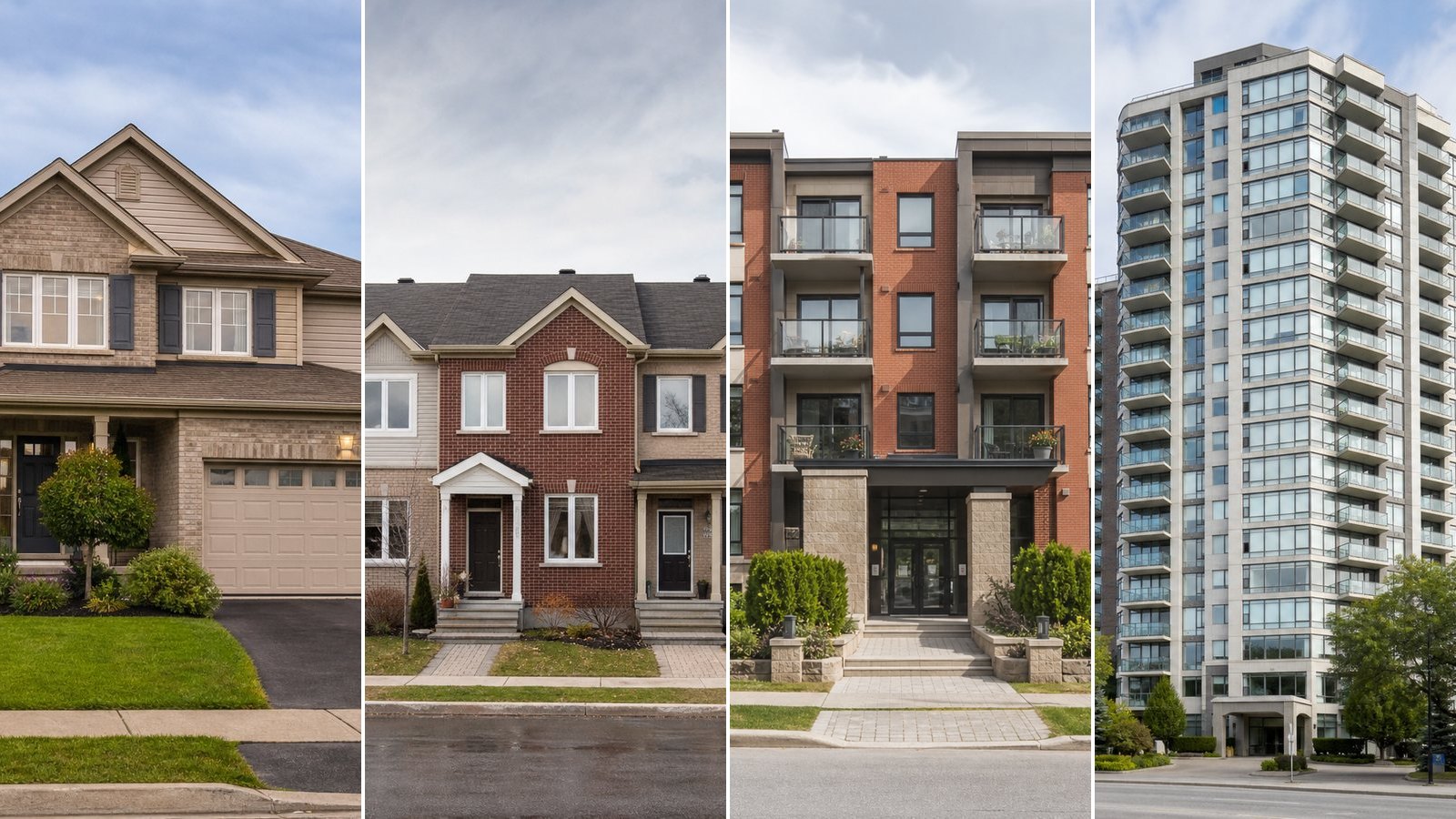
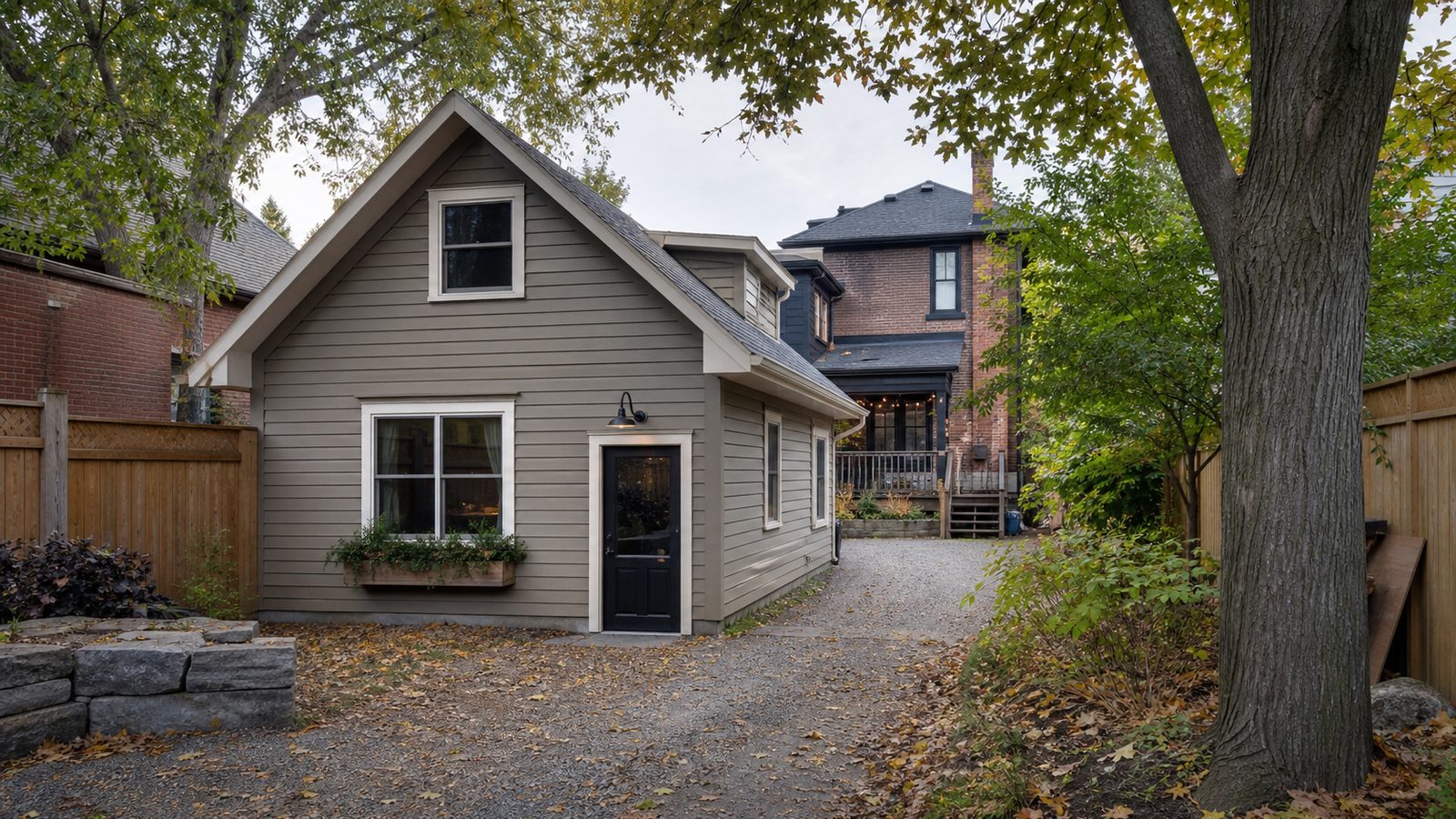
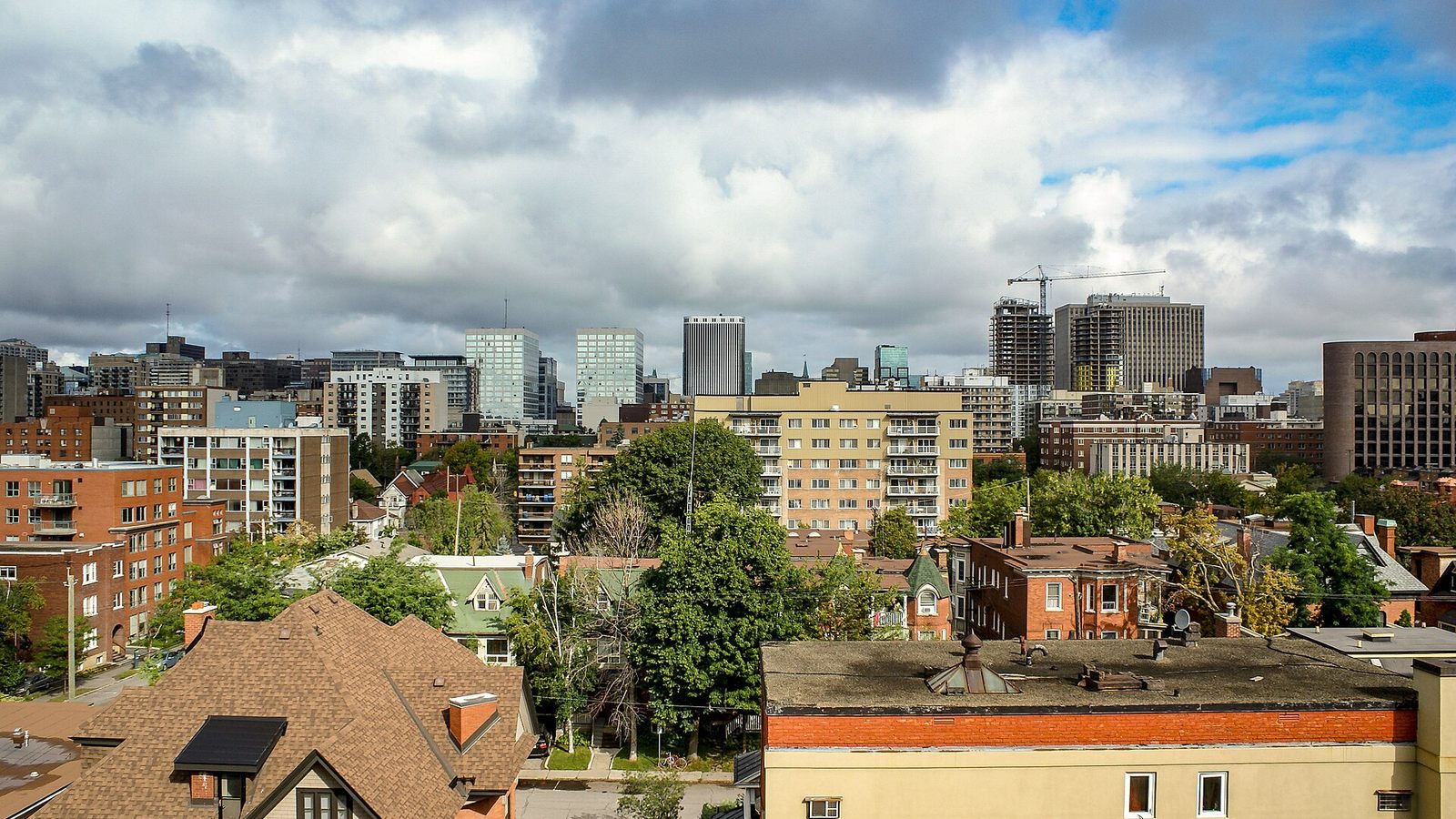
Illustrative examples of typical forms — not actual Ottawa properties.
Every Ottawa listing sorts itself into a handful of housing types, and each type is really a bundle of commitments: how much building you maintain yourself, what you share with neighbours, whether a condo corporation is involved, and how much private space — indoors and out — you get for the money. This guide walks through the types you'll actually see in Ottawa searches, from the most land to the least. The images are illustrative examples of each form, not real addresses.
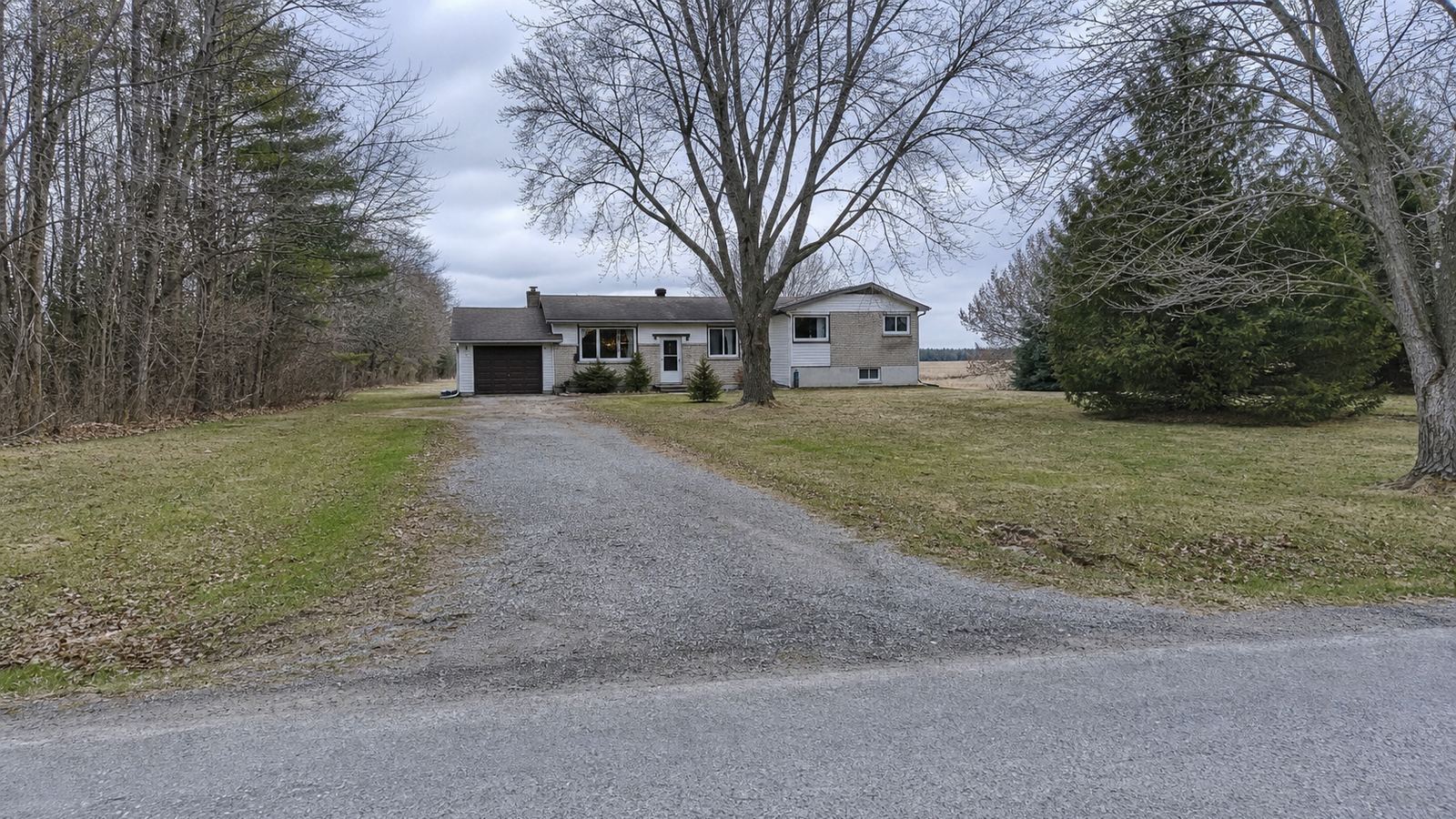
Detached (single-detached)
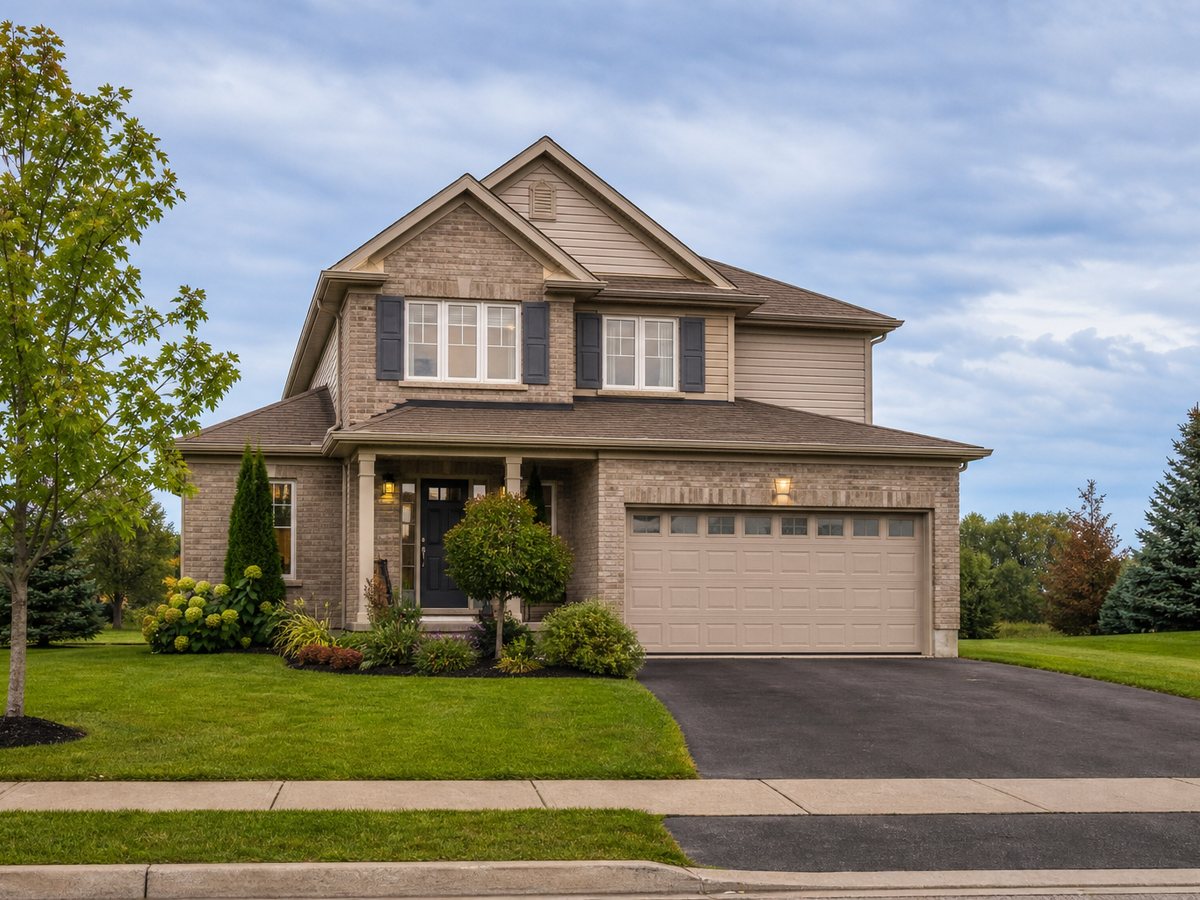
Illustrative example of a typical detached home — not a real Ottawa property.
A house that shares no walls with anyone, on its own lot. In Ottawa you'll find them in every era and size: postwar bungalows inside the greenbelt, larger two-storey homes with garages in newer suburbs like Barrhaven, Kanata and Stittsville, and century homes in older central neighbourhoods. It's the most private and most flexible type — and the one where every repair, from roof to furnace to snow-buried driveway, is entirely yours.
Space and privacy: the most of both — no shared walls, your own yard, usually your own parking
Responsibility: all maintenance, all costs, all decisions are yours; budget for irregular big-ticket repairs, not a monthly fee
Cost position: typically the most expensive way to buy a given neighbourhood, because you're buying the land too
Good fit when: you want control over the property, need the space, and are ready to be your own property manager
Semi-detached
Illustrative example of a typical semi-detached pair — not a real Ottawa property.
One building, two homes, one shared wall down the middle. Each side is owned separately — usually freehold — with its own lot, entrance and yard. Semis are a long-standing Ottawa compromise: most of the detached experience at a somewhat gentler price, in exchange for one wall's worth of proximity to a neighbour you don't choose.
Space and privacy: close to detached living; one shared wall, so sound transfer depends heavily on construction quality
Responsibility: freehold semis carry the same full maintenance duty as a detached — the shared wall just makes some repairs a two-household conversation
Cost position: generally sits between detached homes and townhouses in the same area
Good fit when: you want a freehold house and a yard, and one shared wall is an acceptable trade for the savings
Townhouse (row)
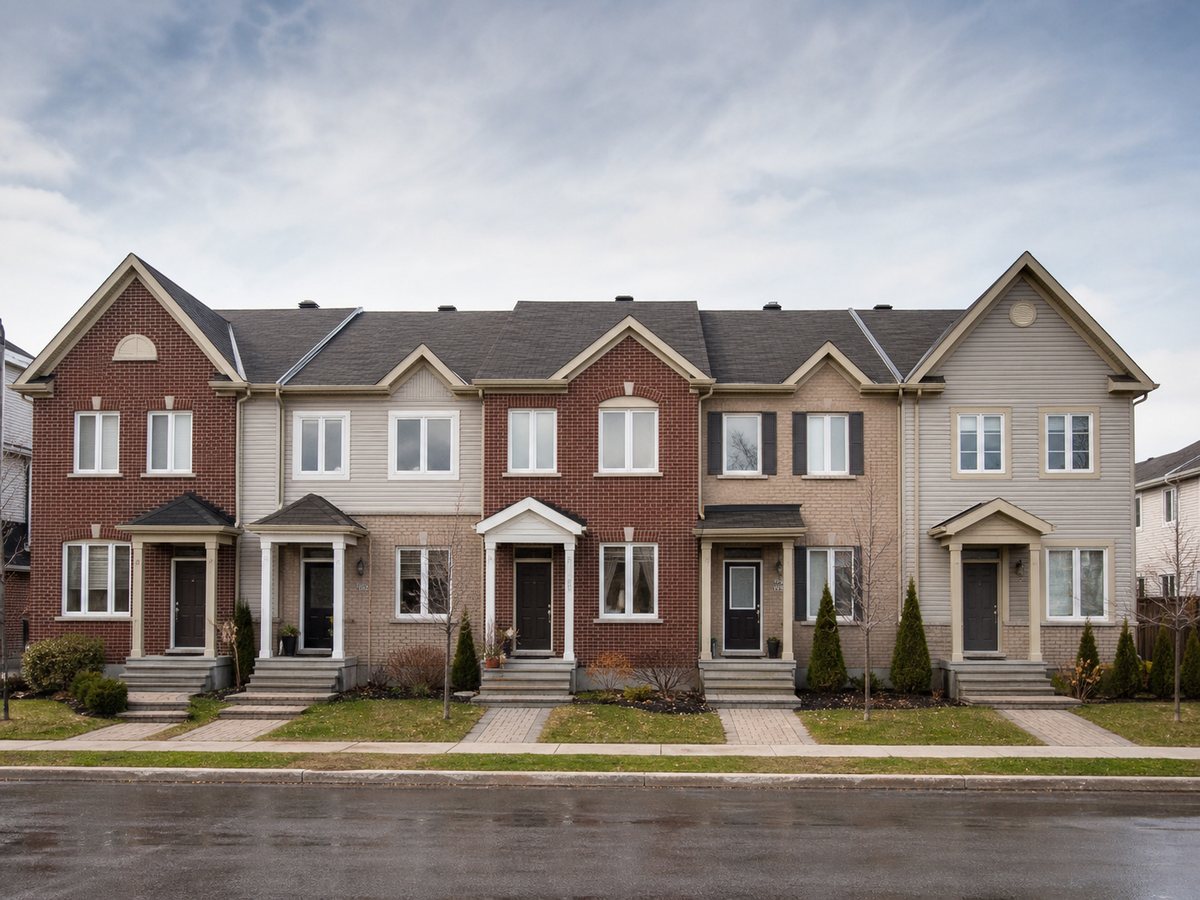
Illustrative example of a typical townhouse row — not a real Ottawa property.
A row of homes sharing walls with neighbours on one or both sides, each with its own front door and usually a small yard. This is one of Ottawa's most common family-home formats, especially in newer suburbs. The critical thing to check on any townhouse listing is the tenure: a freehold townhouse means you own and maintain everything yourself; a condo townhouse means a corporation maintains shared elements and charges a monthly fee. Same building shape, very different ownership lives.
Space and privacy: a full multi-storey home, but with shared walls on one or both sides and a smaller lot
Responsibility: depends entirely on tenure — freehold rows behave like small detached homes; condo rows shift exterior work to the corporation for a fee
Cost position: typically the most affordable way to get a whole house with its own front door in a given area
Good fit when: you want house-style living — stairs, bedrooms up, yard out back — and will trade some privacy and lot size for price
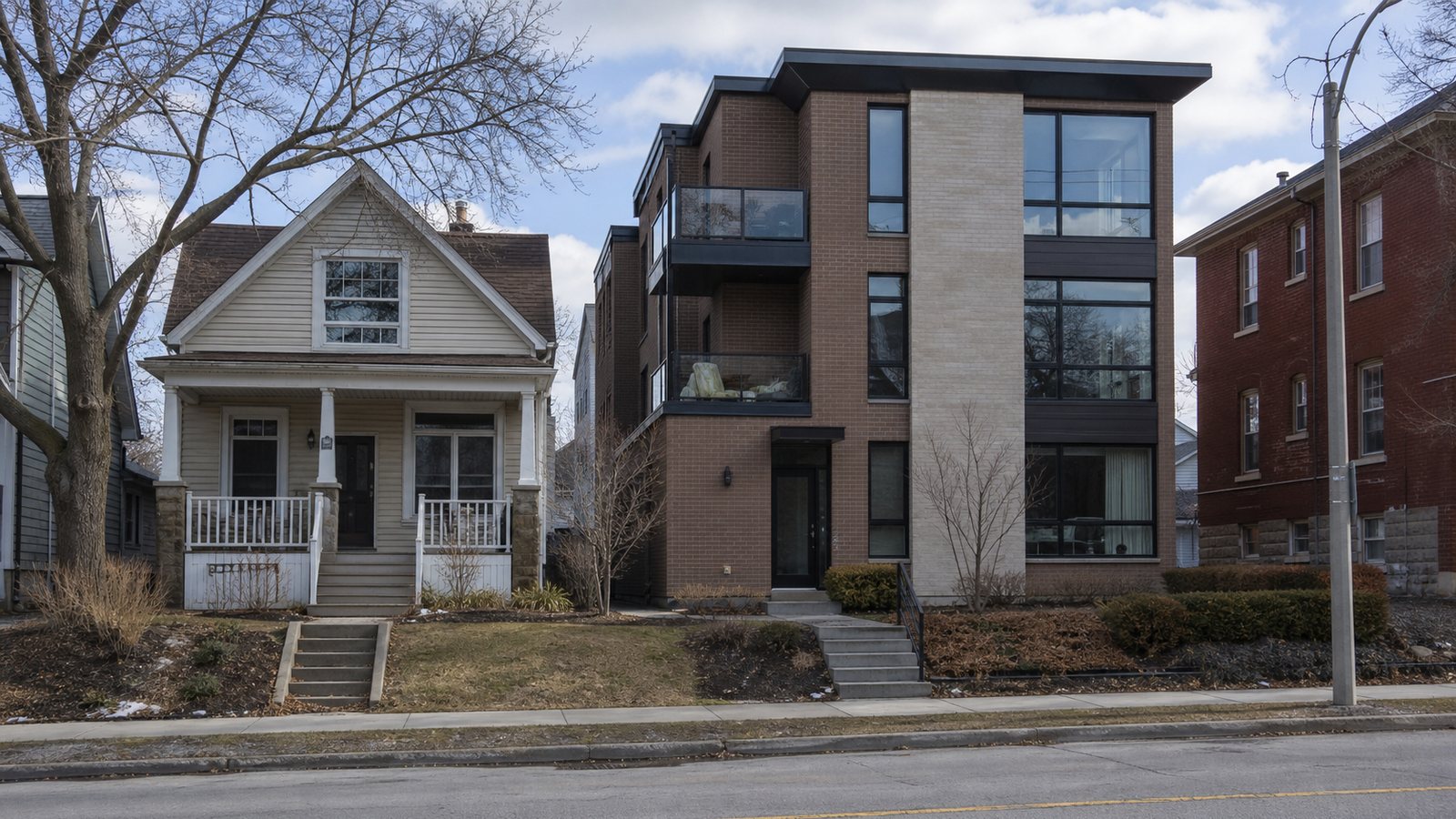
Stacked townhouse
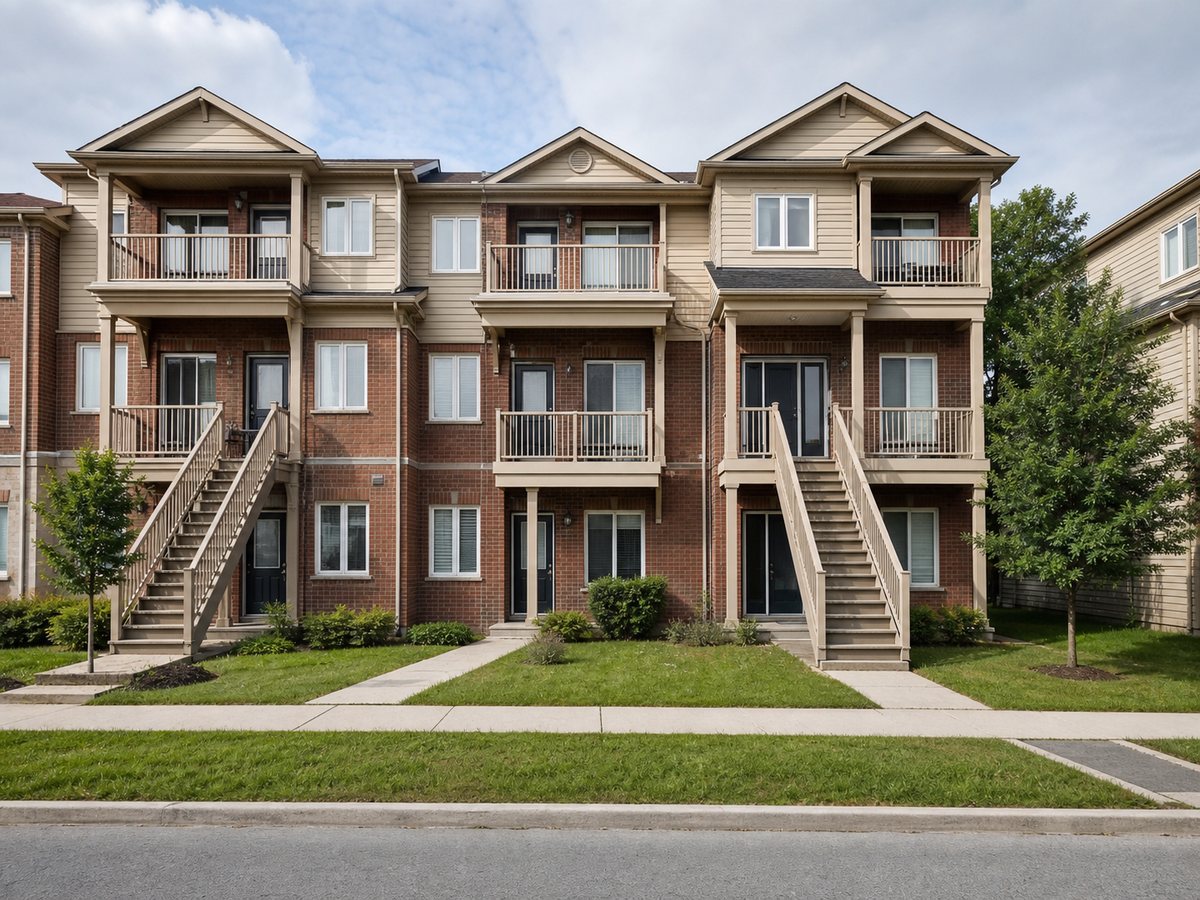
Illustrative example of a typical stacked townhouse block — not a real Ottawa property.
Townhouses stacked two units tall: an upper home sits on top of a lower one, each multi-level internally, with entrances from outside rather than a shared corridor. They're common in Ottawa's newer suburbs as a denser, more affordable cousin of the row townhouse. Almost always condominium tenure, so a monthly fee and a corporation come with the keys — and whether you're the upper or lower unit changes the experience (stairs and ceiling neighbours versus ground access and floor neighbours).
Space and privacy: multi-level living with a private entrance, but neighbours above or below as well as beside
Responsibility: condo fee covers exteriors and common elements; interior is yours
Cost position: usually below row townhouses — often the least expensive route to a multi-storey home format
Good fit when: budget leads, you want more than a flat, and you're comfortable with condo ownership and closer neighbours
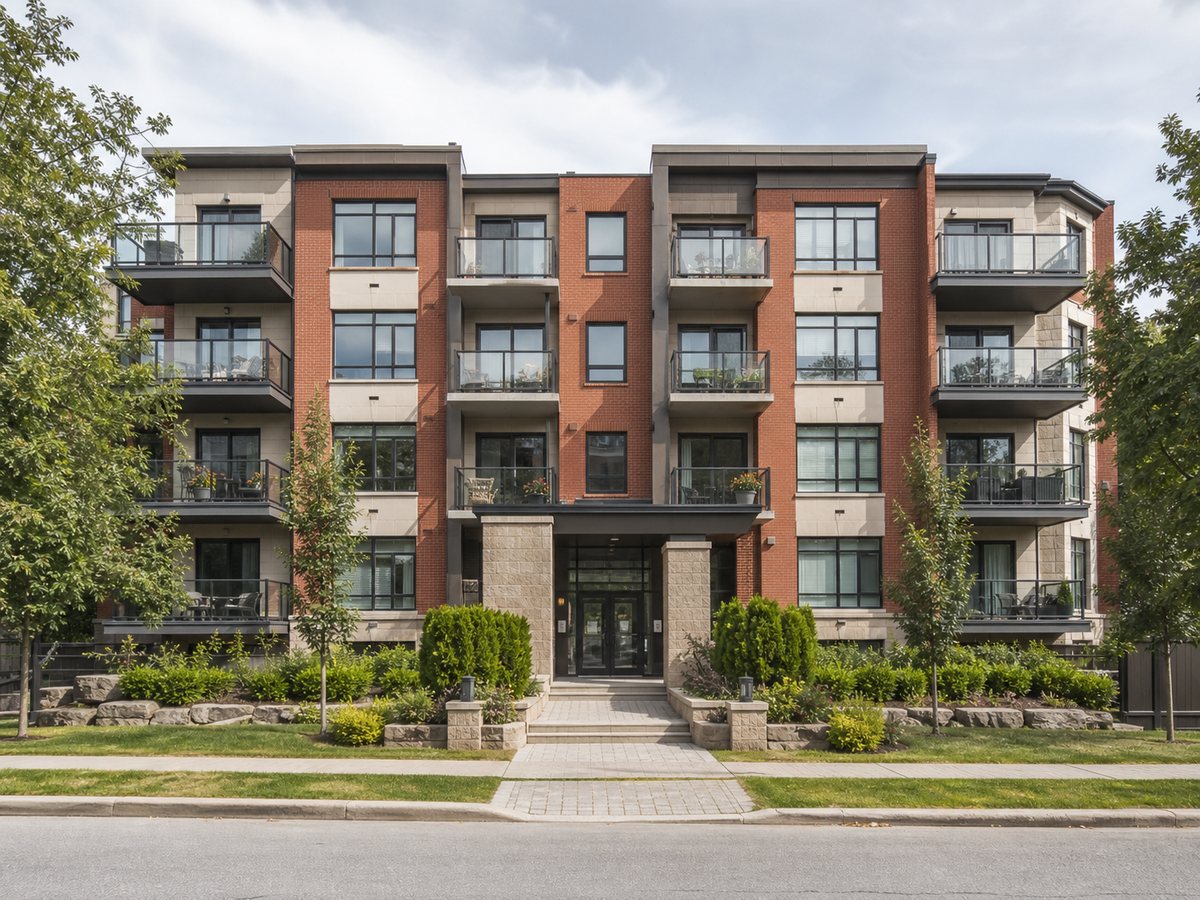
Low-rise condo
Illustrative example of a typical low-rise condo building — not a real Ottawa property.
A condominium apartment in a smaller building — typically a handful of storeys, sometimes without elevators or extensive amenities. Ottawa has them along traditional main streets, in infill projects near the core, and in suburban clusters. Fewer amenities generally means a leaner fee than a tower, and the smaller community can make the corporation's decisions feel closer to home — for better and worse.
Space and privacy: single-level living in a shared building; balcony rather than yard; neighbours on more sides
Responsibility: the corporation handles the building; you handle your unit and pay the monthly fee — read our condo fees guide before comparing fees
Cost position: often among the most attainable ownership options in central neighbourhoods where houses are out of reach
Good fit when: you want to own in a walkable area, don't need a house's space, and prefer predictable monthly costs to surprise repairs
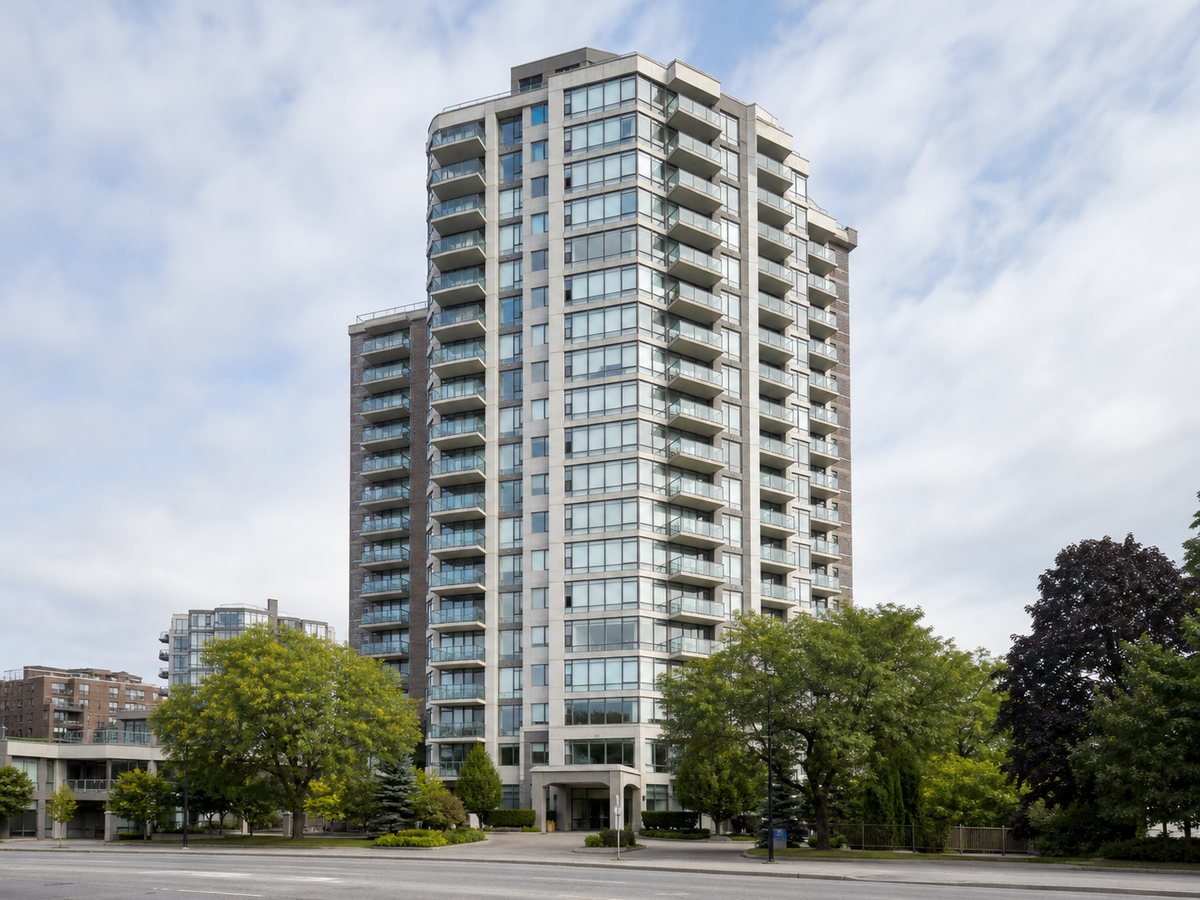
High-rise condo
Illustrative example of a typical high-rise condo tower — not a real Ottawa property.
A condominium unit in a tower — concentrated in and near downtown, with views, elevators, and often substantial amenities: gyms, party rooms, concierge, underground parking. Those amenities are genuinely convenient and genuinely cost money, which shows up in the fee whether you use them or not. Towers also live and die by their reserve funds; elevators and building envelopes are expensive to renew, which makes the status certificate review especially important.
Space and privacy: compact, efficient, lock-and-leave; sound and elevator waits vary by building quality
Responsibility: the corporation runs a complex building; your job is the fee, the rules, and your own four walls
Cost position: wide range — modest units can be an accessible downtown entry point, while large or high-floor units compete with houses
Good fit when: location and convenience outrank space, and amenity value matches how you actually live
Apartment (purpose-built rental)
Illustrative example of a typical purpose-built apartment building — not a real Ottawa property.
A building of rental homes under one owner or property manager — you rent rather than buy, so there's no fee, no reserve fund, and no maintenance responsibility beyond treating the place well. Apartments belong in this guide for two reasons: renting in a neighbourhood is the lowest-risk way to test it before buying there, and Ottawa's older purpose-built stock often offers more interior space than a similar-vintage condo unit. When a listing says "apartment" for sale, look closer — it usually means a condominium unit, which takes you back two sections.
Space and privacy: similar to condo living, set by the building's era and quality
Responsibility: the landlord's, not yours — repairs are a phone call, not a reserve fund
Cost position: rent instead of mortgage, fee and property tax; no equity, but no exposure to repair risk either
Good fit when: you're new to a city or neighbourhood, saving a down payment, or want flexibility more than ownership
How to use this when you search
Think in two steps. First pick the types that fit your life — how much maintenance you genuinely want to own, how much shared-wall proximity you can live with, whether a condo corporation's rules and fees suit you. Then look at where those types actually exist at your budget: our neighbourhoods index filters every area by housing type, and What a budget buys across Ottawa walks the same trade-off from the price side. The honest version of the choice is rarely "which type is best" — it's which bundle of commitments you'll still be glad about in year three.
Zoning decides what a property may be used for and what may be built on it — and in Ottawa there is a complication most people have not caught up with: two zoning by-laws are in effect at once, and the most restrictive provision of the two applies. How to check what your property is zoned, what the codes control, and what to do when your plan does not comply.
Ottawa is mostly rural by area, and a country property replaces three things you never think about in the city: the water comes from your well, the waste goes into your septic system, and the road may belong to you and your neighbours. What to check before offering, who regulates what, and the free water testing most owners never use.
An in-law suite, a granny flat, a garden suite, a basement apartment — an Ottawa lot with a principal dwelling may have up to two additional dwelling units, three in total, but how many you actually get depends on your servicing rather than your ambition. What makes a legal basement apartment, why a septic system caps you at one, and why converting an existing basement still needs a permit.
What my budget buys changes completely depending on where you point it. Hold a single number constant and move it around the city and it stops being a budget and becomes a set of trade-offs: space versus location versus age. Here is what you can get for it, by area.
Condo fees get treated like a penalty box on listing sheets, but they're really a bundled bill for things every homeowner pays somehow. Here's what the fee typically buys, what a reserve fund is for, and why a suspiciously low fee deserves more scrutiny, not less. What do condo fees cover, why maintenance fees and condo fees are the same thing under two names, and why the lowest fee is rarely the prize.
What does an inspection cover? A few hundred dollars of clarity on a several-hundred-thousand-dollar decision. What Ottawa inspectors typically look at, what they don't, what the inspection cost buys, and how the deficiencies they find fit a conditional-on-inspection offer.
Ottawa's fast-grown southwest suburb — newer family housing at scale, big-box convenience, strong community infrastructure, and a car-first commute that residents plan their lives around.
Ottawa's downtown-adjacent core south of Parliament — Bank and Elgin street life, condo towers beside heritage rows, and the shortest commute in the city traded against density and noise.
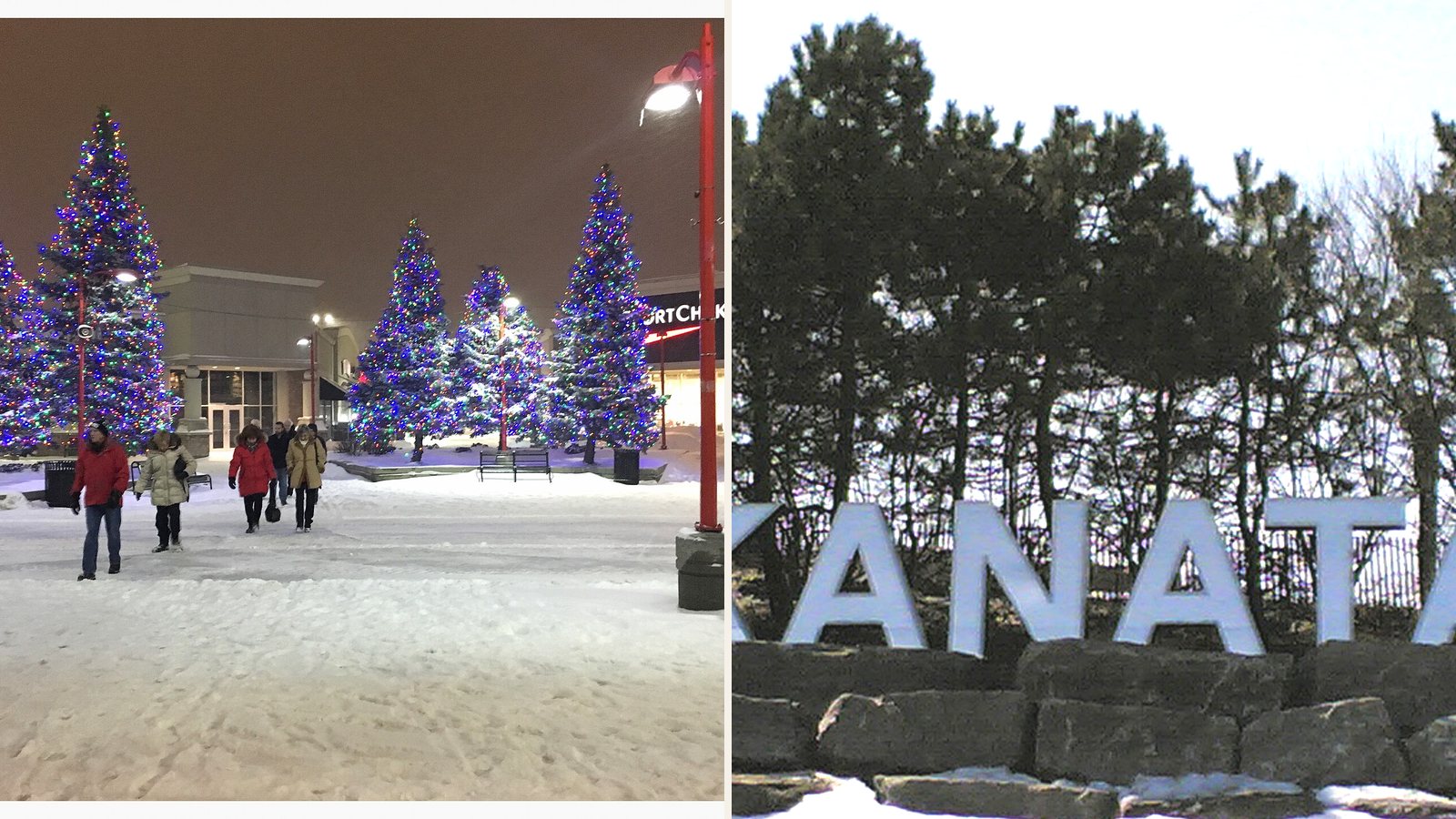
Ottawa's west-end tech suburb — planned communities around the Kanata North business park, family subdivisions, trails and ponds, and a location that shortens tech commutes while lengthening downtown ones.
SuburbanFamily-friendlyGreen space
Get Ottawa property guidance in your inbox
You'll get: First-time buying explainers · Selling guidance · New-build and builder updates · Neighbourhood guides · Renting and ownership costs · Local market context.
Occasional emails. No spam, and you can unsubscribe with one click. By subscribing you consent to receive emails from Ottawa Property Guide. We record the date and source of your consent, as Canadian anti-spam law (CASL) requires. Read our privacy policy.