
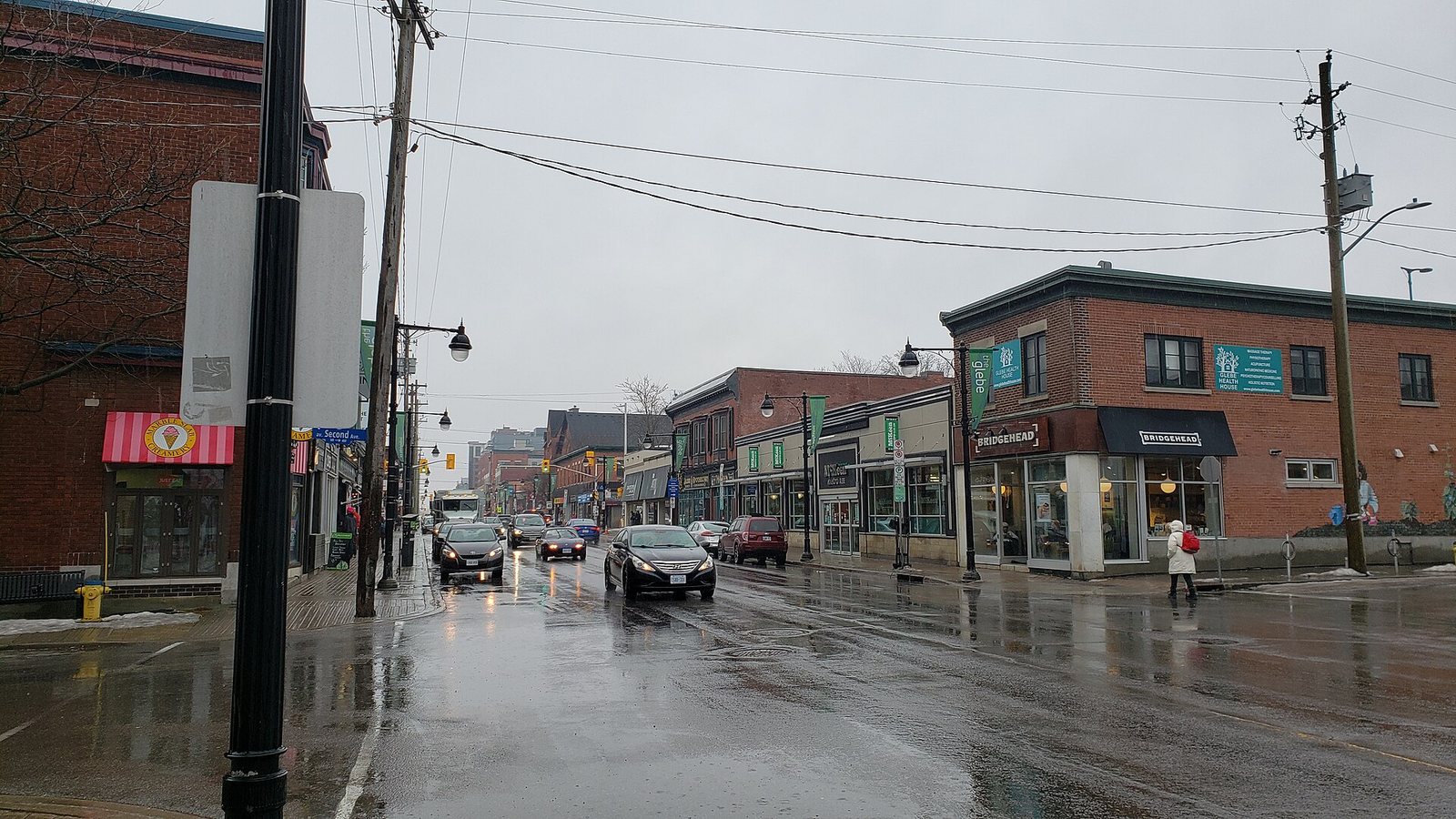
The Glebe
A walkable, established inner-urban neighbourhood between the Rideau Canal and Bank Street's shops — century homes, canal life, and one of Ottawa's strongest main-street cultures.
Neighbourhood guide · Urban Ottawa
Ottawa's downtown-adjacent core south of Parliament — Bank and Elgin street life, condo towers beside heritage rows, and the shortest commute in the city traded against density and noise.
Last reviewed July 22, 2026 · Assessments of neighbourhood character are editorial opinions based on local knowledge, not measured data.
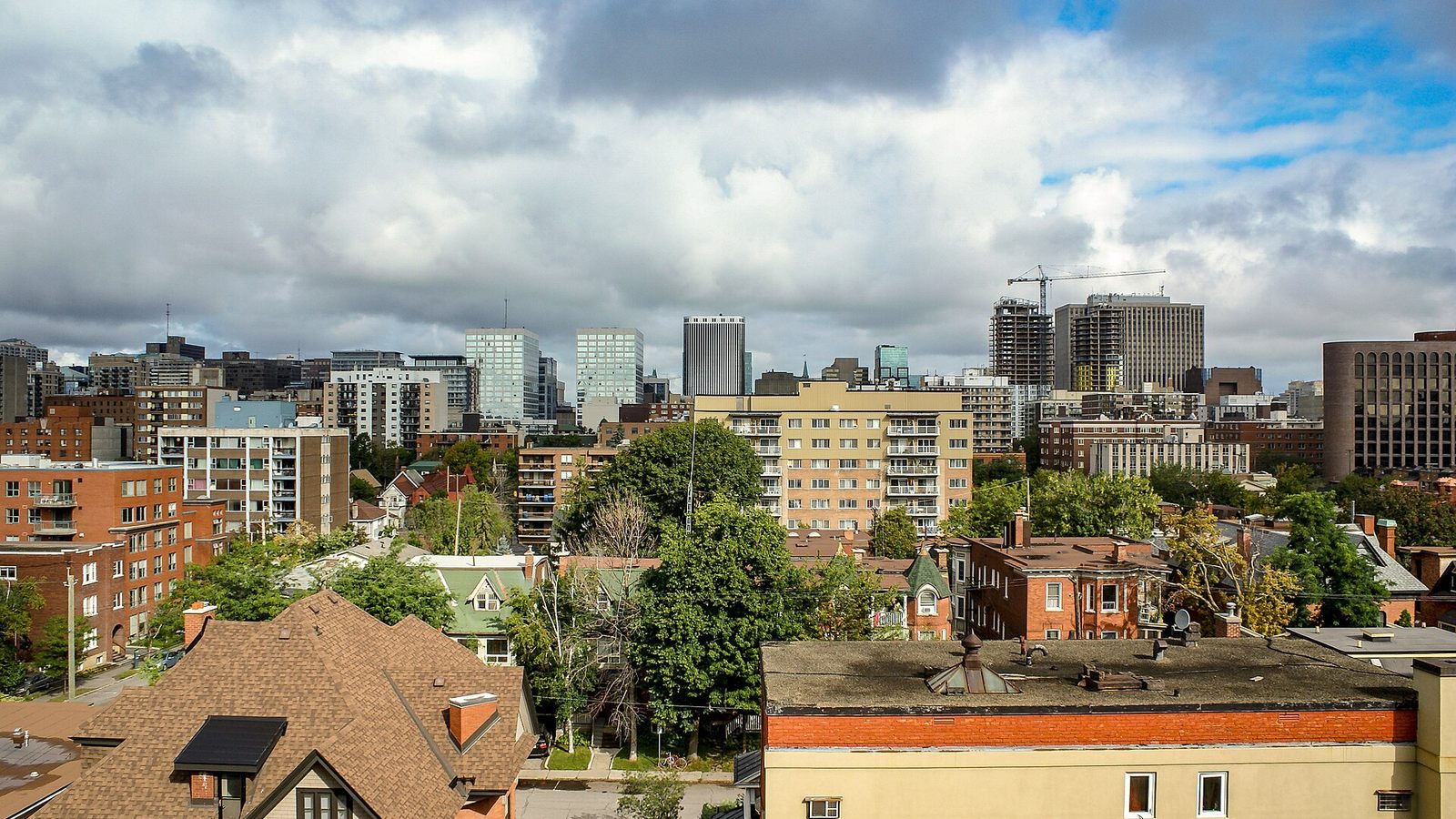
Housing you'll find here: High-rise condo · Low-rise condo · Apartment · Townhouse · Detached — each links to what that type is and its trade-offs.
Centretown is where Ottawa actually lives downtown. South of Parliament Hill and the office core, it runs on two main streets — Bank for errands and everything-shops, Elgin for restaurants and nightlife — with a dense residential grid between them: condo towers, walk-up apartments, and surviving rows of Victorian brick often on the same block.
The deal here is straightforward and worth stating plainly: you get the shortest possible commute and the city at your door, and you trade away quiet, space, and easy parking. Sirens, patios, and construction are part of the soundtrack. People who want that energy thrive; people who think they can tune it out are sometimes wrong.
Centretown covers the blocks south of the Parliament precinct, roughly from the office core down to the Queensway, with the Rideau Canal to the east and Bronson Avenue commonly treated as the western edge. As always in Ottawa, exact lines are informal — Golden Triangle, Centretown West, and downtown proper all blur at the edges, and locals argue the details. Treat this as editorial description.
In practical terms: Parliament and the core are a walk north, the canal and its pathways form the eastern boundary, the Glebe starts across the Queensway to the south, and Hintonburg is a short ride west.
Housing splits into three broad camps: high-rise condos of varying vintages, older low-rise apartments and walk-ups, and a heritage layer of Victorian and Edwardian rows and detached homes on the quieter streets. The condos deliver low-maintenance living and views; the heritage stock delivers character and land, at the cost of century-home upkeep in a dense setting.
For condo buyers, building-level due diligence matters as much as the unit: reserve funds, upcoming assessments, and how the building has aged. For freehold buyers, expect small or no yards, permit parking questions, and neighbours close on every side.
This is Ottawa's most complete car-optional life. Bank Street handles groceries, pharmacies, and practical retail; Elgin carries restaurants, pubs, and late evenings; the canal adds running, cycling, and winter skating on the Skateway. Museums, the market, and every downtown event are within walking range.
The population mix leans toward professionals, students, and downsizers rather than school-age families, though families do live here. Weeknights are livelier than anywhere else in the city — which is either the point or the problem, depending on the buyer.
Transit access is about as good as Ottawa offers: Line 1 LRT stations sit along the northern edge of the neighbourhood within walking distance of most addresses, frequent buses run the north-south streets, and Line 2 serves the western side of the core. Many residents simply walk to work downtown.
Owning a car here is possible but often the most annoying part of the arrangement — parking is scarce and priced accordingly, and the Queensway ramps at the southern edge are the main escape route for trips out of the core.
English public, Catholic, and French-language schools serve the area, and everything is walkable by definition. Families weighing Centretown usually think less about distance to school and more about whether the density and pace suit family routines.
Green space comes in urban doses: the canal corridor along the eastern edge is the workhorse, supplemented by smaller squares and parks scattered through the grid — enough for a daily walk or run, but not backyard substitutes. Dow's Lake and the Glebe's larger green spaces are a short ride south when more is needed.
Between Bank Street's full spread of practical retail and Elgin's food-and-drink strip, daily needs are covered on foot better than anywhere else in the city, with the ByWard Market and Rideau Centre a walk north for the rest. Big-box trips are the one errand that still usually means a car or delivery.
Condo ownership dominates here, so the sharpest questions are building-level: status certificate review, reserve fund health, special assessment history, and rules on rentals and pets. Older buildings can carry great locations and looming repair bills at the same time.
For freehold heritage homes, the Glebe-style century-home checklist applies — wiring, foundations, drainage — plus downtown-specific items: heritage overlay constraints on some streets, permit parking, and what redevelopment is possible on adjacent lots.
A walkable, established inner-urban neighbourhood between the Rideau Canal and Bank Street's shops — century homes, canal life, and one of Ottawa's strongest main-street cultures.
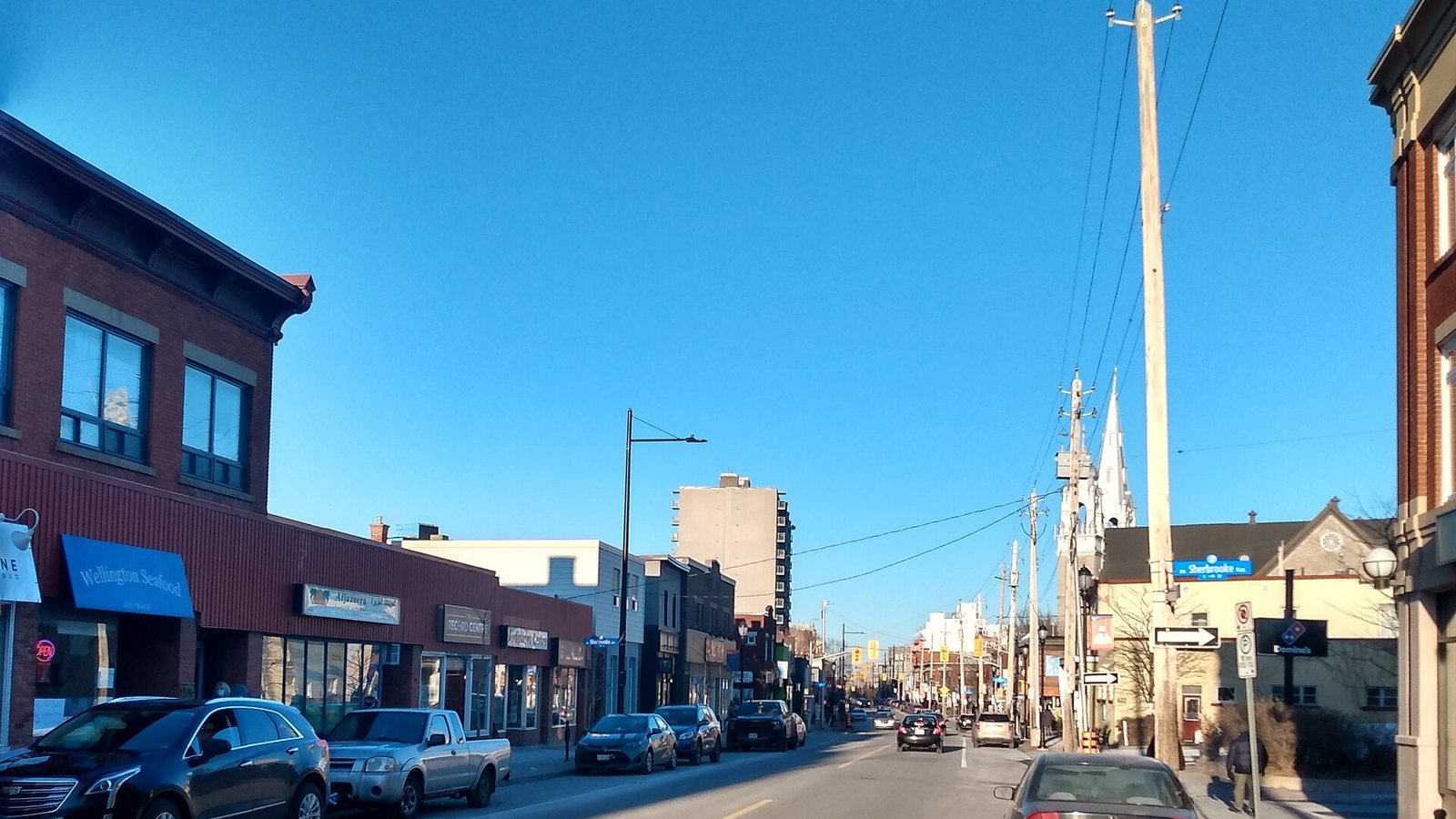
A once-working-class west-side neighbourhood centred on Wellington West — arts spaces, independent food, small lots, and a fast-evolving streetscape close to downtown and the LRT.

A west-end urban village on the Ottawa River — boutique main street on Richmond Road, a real beach, mature side streets, and steady infill that keeps changing the skyline.

What does an inspection cover? A few hundred dollars of clarity on a several-hundred-thousand-dollar decision. What Ottawa inspectors typically look at, what they don't, what the inspection cost buys, and how the deficiencies they find fit a conditional-on-inspection offer.
What do I pay on closing? The purchase price is only the headline number. Between the accepted offer and closing day, a cluster of hidden costs comes due — land transfer tax, lawyer fees and disbursements, title insurance, adjustments and the repair buffer nobody budgets for.