Who pays the buyer's agent? Who works for you when you buy in Ottawa
Does the realtor work for me? Every person in a purchase is paid by someone, and it is rarely the person they are standing next to. How real estate commission flows, what buyer representation and multiple representation actually mean, who the open house agent works for, how a mortgage broker is paid, and why the appraisal is for the lender.
By Ottawa Property Guide EditorialPublished July 31, 2026 Last verified July 31, 2026
A home purchase puts six or seven professionals around you in the space of a few months. All of them are competent, most of them are pleasant, and every one of them is paid by someone. Working out who, in each case, tells you more about the advice you are getting than anything on a business card.
This is not a warning about bad actors. The overwhelming majority of the people in an Ottawa transaction do their jobs properly. It is about something duller and more useful: incentives shape what gets volunteered. A person with an obligation to someone else will answer your question honestly and still never raise the subject you needed raised.
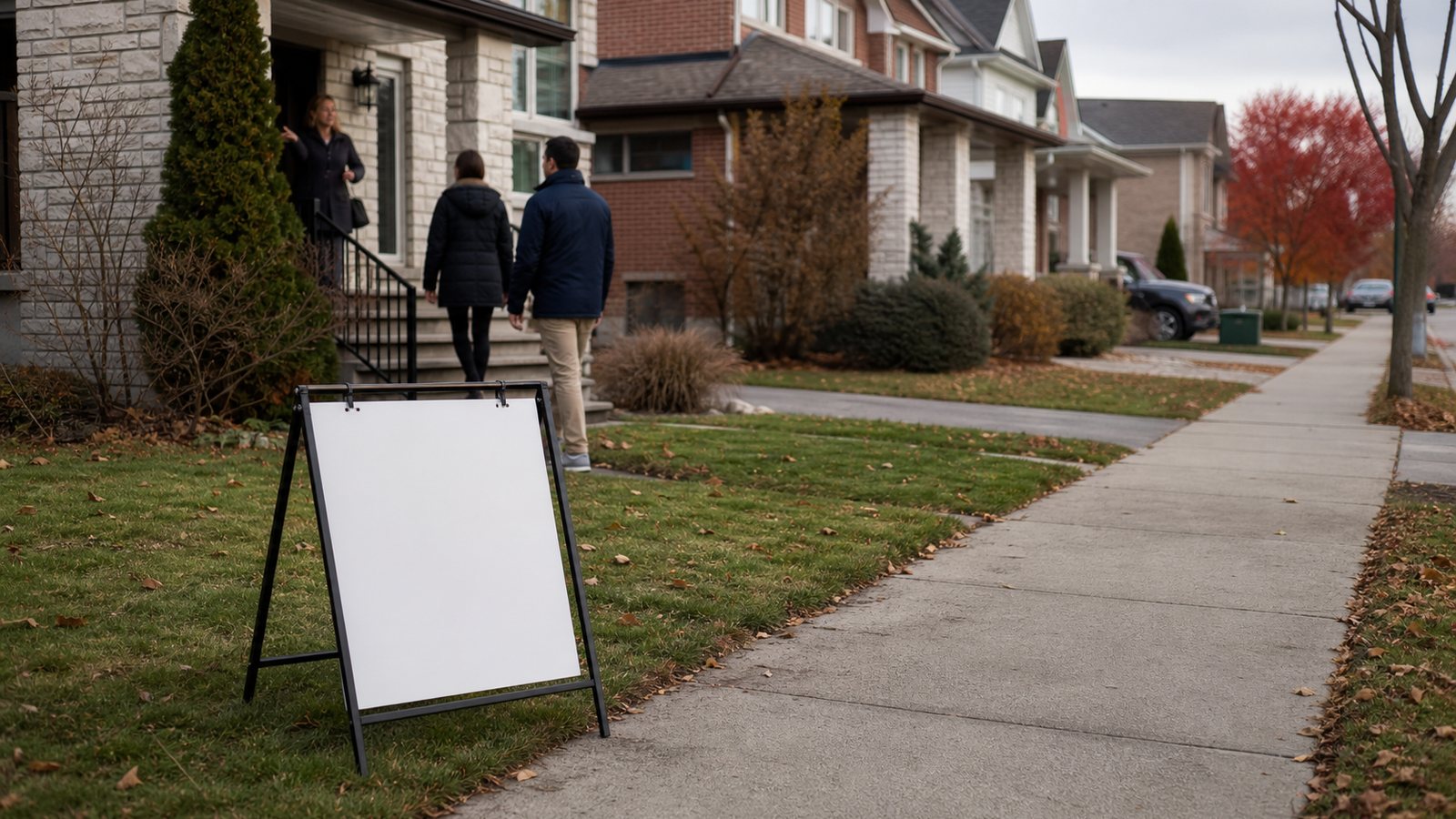
The open house agent works for the seller
The agent hosting an open house is the seller's listing agent, or someone standing in for them. That is their client, and their obligations run there. The buyer's agent vs listing agent distinction is the whole point: one of them is retained by you and one of them is not. They can be helpful, accurate and genuinely nice to you, and none of it changes who they act for.
The practical consequence is about information flowing the wrong way. Casual answers — what you can afford, how much you love it, that your lease ends in October, that you have already lost two offers — are useful to the other side of a negotiation you have not started yet. There is nothing improper about them using it. Say less than feels natural, and save the enthusiasm for the car.
Who pays the buyer's agent? Real estate commission, and what it aligns
So: does the realtor work for me? Your own agent does — under a buyer representation agreement — but in the usual arrangement they are paid out of the proceeds of the sale when it closes, as a share of the price. Two things follow from that structure, and it is worth being clear-eyed about both.
The alignment is strong on finding you a home you will actually buy — no purchase, no payment, so a wasted year serves nobody. The alignment is weaker on price, because a difference that materially changes your mortgage for twenty-five years changes their compensation by a small amount. That is not a reason to distrust anyone. It is a reason to form your own view of value rather than outsourcing it entirely — see pricing evidence over hope, which is written for sellers but describes the same comparables exercise from the other side.
Ask early and directly: how are you paid, by whom, and what happens if the seller's side offers less than usual? A professional will answer without flinching.
Multiple representation (dual agency): when one brokerage sits on both sides
Sometimes the person representing you and the person representing the seller work for the same brokerage — or are the same person. Multiple representation — often called dual agency — is a recognised situation with its own rules and its own paperwork, and it must be disclosed and agreed to in writing before it happens.
What changes is what can be told to you. Advice that would ordinarily flow freely — what the other side might accept, how to structure your offer — becomes restricted, because the same firm cannot advance both sides of a negotiation at once. Read the form you are asked to sign, and understand that agreeing to it costs you something even when everyone behaves impeccably.
How a mortgage broker is paid, and where mortgage advice comes from
A mortgage specialist at a bank sells that bank's mortgages. A mortgage broker is generally paid by the lender the mortgage is placed with, so the question of who a mortgage broker is paid by has a straightforward answer and is worth asking out loud. Neither arrangement is hidden and neither is improper — but neither is a neutral survey of the market on your behalf, and it is a mistake to treat a rate conversation as impartial advice about how much to borrow.
The number that causes the most damage is the pre-approval maximum. It is the output of a ratio calculation applied to your income and debts. It knows nothing about your childcare costs, your car's remaining life, the pace of your savings or your appetite for risk. Nobody in the chain is worse off if you buy at the top of it.
One more piece of structure worth knowing: where a down payment is below the conventional threshold, mortgage insurance is required — and that insurance protects the lender, not you, even though you pay for it. What CMHC actually is sets out how that works.
The appraisal is for the lender, not for you
An appraisal for the lender is exactly that: if your lender orders one, it exists to tell the lender whether the property supports the loan. You may pay for it. You are not necessarily entitled to it, and it is not a second opinion produced for your benefit. Do not confuse it with an inspection, and do not treat its absence as reassurance.
The inspector, and who they are reporting to
A home inspector is one of the few people in the process you hire directly and pay regardless of whether you buy. That makes the incentives unusually clean — which is exactly why it is worth protecting.
Referrals are normal and often good. But the inspector is working for whoever engaged them, so engage them yourself, be present for the inspection, and ask for the findings verbally as well as in the report. What a home inspection covers sets out the scope — and its limits.
The lawyer is the one fee that doesn't scale with the price
A real estate lawyer charges broadly a fixed fee for the work, not a share of what you pay for the house. Their compensation does not rise if you bid higher, which makes them the least conflicted voice in the transaction on the question of whether the paperwork protects you.
Use that. Send the agreement before you are committed rather than after, and ask what it does not say. On a new build this matters even more, because the contract is the builder's own — see what a sales centre won't tell you.
The things sold to you at the end
Closing is where a tired buyer meets a short series of purchase decisions — title insurance, mortgage life and disability coverage, moving add-ons. Some are genuinely worth having. All of them are easier to sell to someone who has been signing documents for an hour, and none of them has to be decided in that meeting. Ask what each one covers, what it costs annually, and whether it can be arranged separately.
Ask everyone who pays them. It is a normal question and the answer is informative.
Assume the friendly person at the open house acts for the seller, because they do.
Decide your monthly number before anyone gives you a maximum.
Hire the inspector yourself and be there.
Send the agreement to a lawyer before you are bound, not after.
Buy nothing at the closing table that you have not thought about beforehand.
None of this requires suspicion. It requires knowing that a room full of professionals doing their jobs correctly is still a room where nobody's job is to protect your interests unless you have hired them to. For the process itself, see buying a home in Ottawa, step by step.
Choosing a buyers agent is not the same problem as choosing a listing agent. You are picking someone who will tell you what to pay, and signing a buyer representation agreement that decides what you owe them — including if the seller offers nothing towards it. The questions to ask a buyer's agent, what to check first, and what to read before you sign.
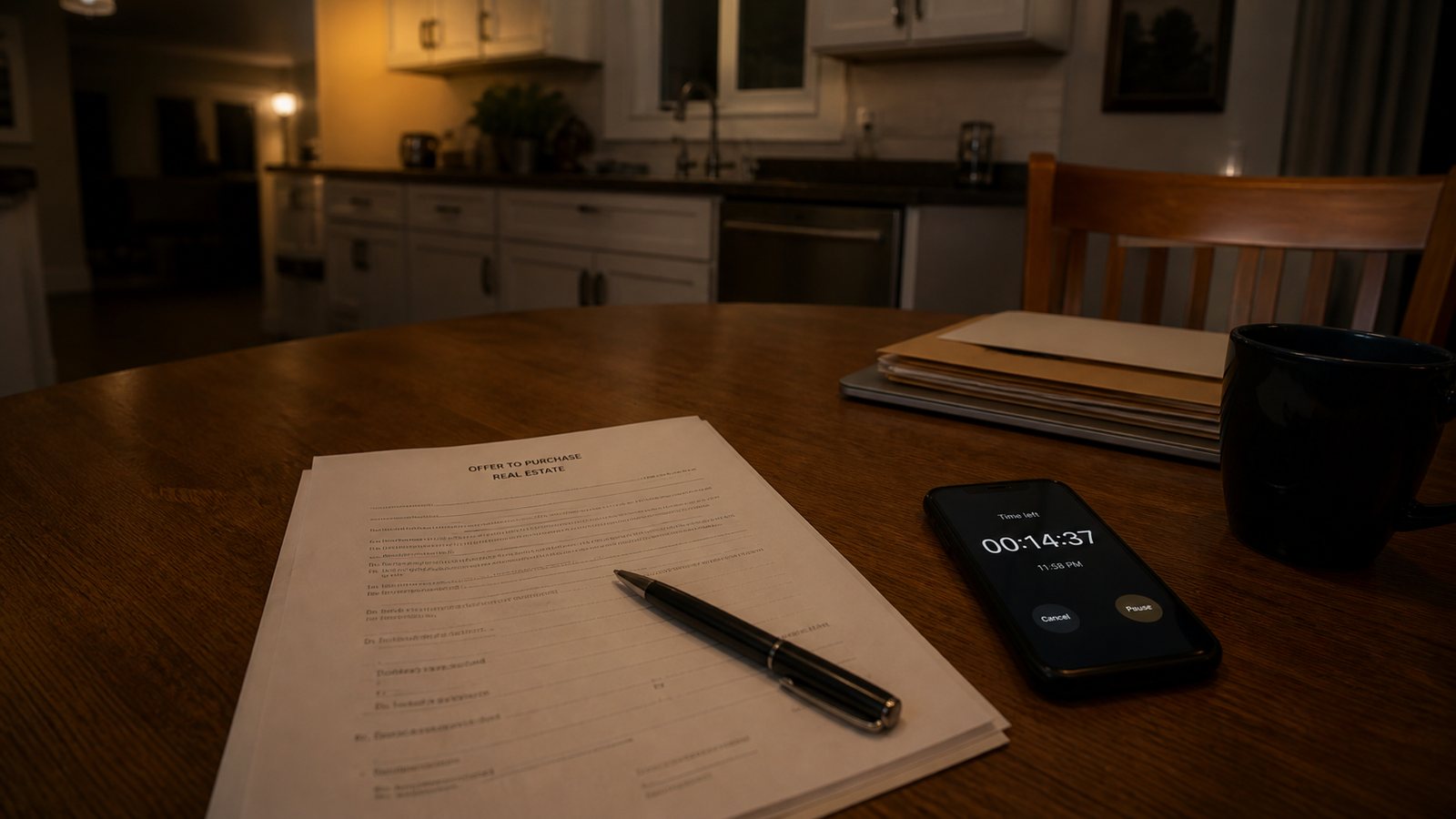
An accepted offer is a binding contract, and most of what decides whether it goes well is settled before you sign it. Whether to make a conditional offer or a firm one, what an irrevocable date commits you to, where your deposit goes and the honest answer to can I get my deposit back, and exactly what you are entitled to be told when there are competing offers.
What does an inspection cover? A few hundred dollars of clarity on a several-hundred-thousand-dollar decision. What Ottawa inspectors typically look at, what they don't, what the inspection cost buys, and how the deficiencies they find fit a conditional-on-inspection offer.
What do I pay on closing? The purchase price is only the headline number. Between the accepted offer and closing day, a cluster of hidden costs comes due — land transfer tax, lawyer fees and disbursements, title insurance, adjustments and the repair buffer nobody budgets for.
A sales centre answers the questions you ask. It is nobody's job there to raise the ones you don't. Who the builder's agent across the desk works for, why agent registration on your first visit decides whether you can be represented, what the advertised price leaves out, and why the new build pressure you feel is structural.
July 31, 2026
Get Ottawa property guidance in your inbox
You'll get: First-time buying explainers · Selling guidance · New-build and builder updates · Neighbourhood guides · Renting and ownership costs · Local market context.
Occasional emails. No spam, and you can unsubscribe with one click. By subscribing you consent to receive emails from Ottawa Property Guide. We record the date and source of your consent, as Canadian anti-spam law (CASL) requires. Read our privacy policy.