
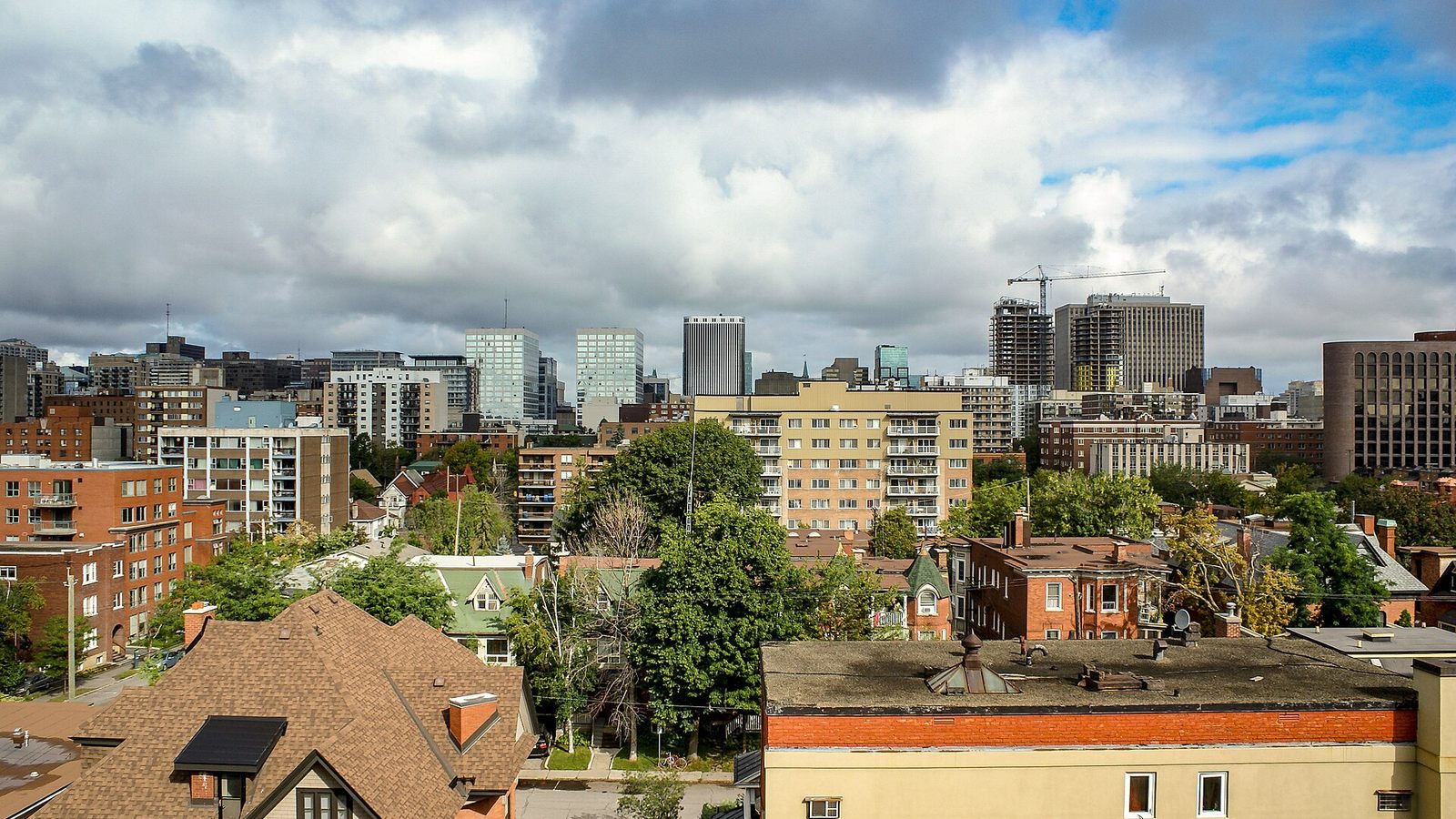
Centretown
Ottawa's downtown-adjacent core south of Parliament — Bank and Elgin street life, condo towers beside heritage rows, and the shortest commute in the city traded against density and noise.
Neighbourhood guide · Urban Ottawa
A walkable, established inner-urban neighbourhood between the Rideau Canal and Bank Street's shops — century homes, canal life, and one of Ottawa's strongest main-street cultures.
Last reviewed July 22, 2026 · Assessments of neighbourhood character are editorial opinions based on local knowledge, not measured data.
Housing you'll find here: Detached · Semi-detached · Townhouse · Low-rise condo — each links to what that type is and its trade-offs.
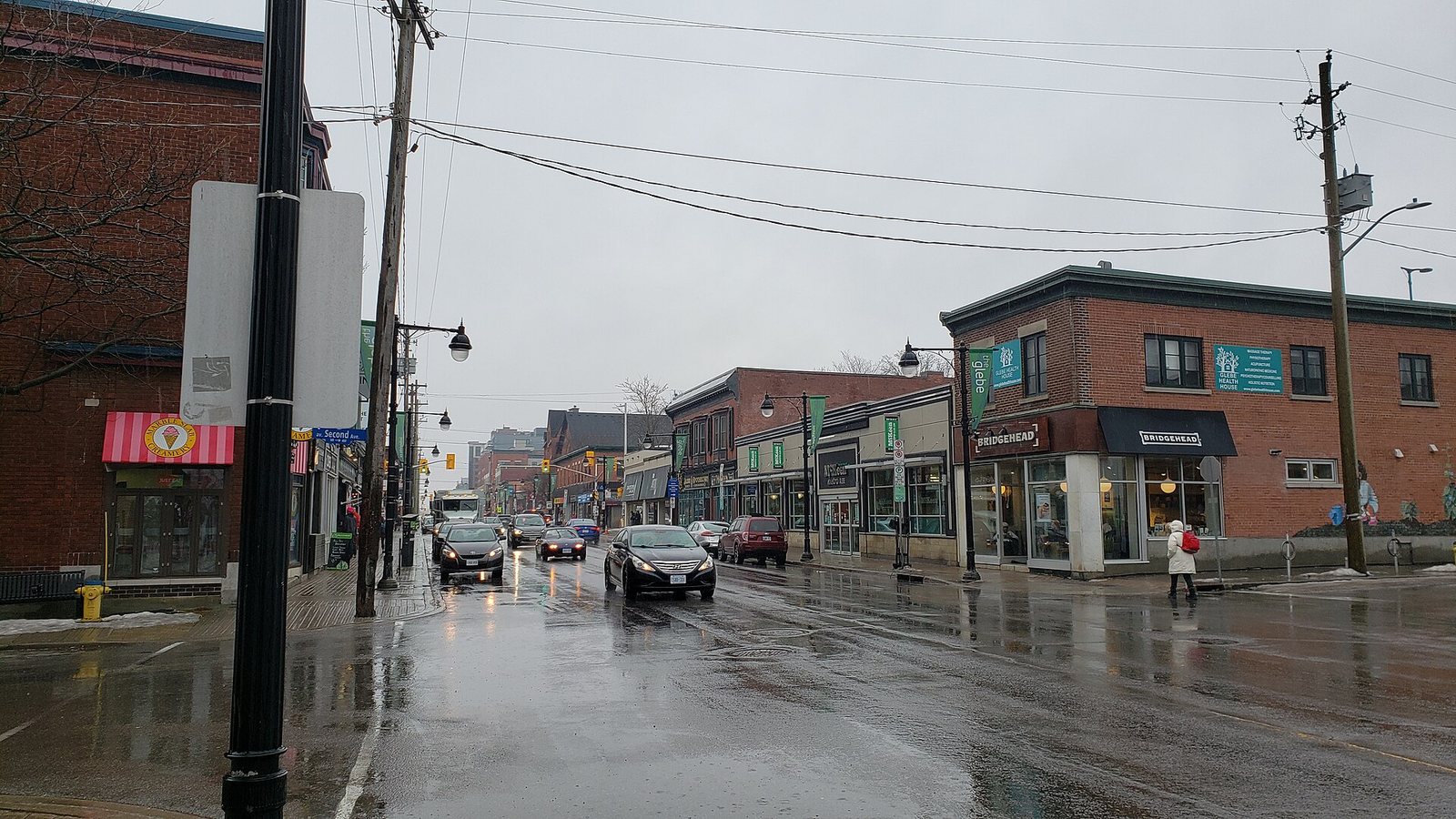
Ask Ottawans to name a neighbourhood with a real main street and the Glebe comes up fast. It sits just south of downtown, wrapped by the Rideau Canal on two sides, with Bank Street running through the middle like a spine — groceries, hardware, cafés, pubs, and one of the city's best-known farmers' landmarks at Lansdowne. It's an old neighbourhood that behaves like one: mature trees, front porches, and people walking to most of what they need.
The Glebe's reputation as one of Ottawa's pricier established neighbourhoods is broadly deserved, and worth taking seriously when you're deciding whether it fits your budget. What you're paying for is location and fabric — the housing stock is mostly a century old, which brings both charm and maintenance realities.
The Glebe occupies the area south of the Queensway (Highway 417) down to the Rideau Canal at Lansdowne, roughly bounded by the canal's curve to the east and south. Bronson Avenue is commonly treated as its western edge. As with most Ottawa neighbourhoods, exact boundaries are informal and locals will happily argue about them — treat these as editorial description, not official lines.
In practical terms: downtown is one neighbourhood north, Old Ottawa South is directly across the canal at Bank Street bridge, and Dow's Lake sits at the southwest corner.
The housing character is dominated by early-1900s single-detached and semi-detached homes — red brick, porches, deep but narrow lots — with pockets of row townhouses and a growing set of low-rise condos and apartments, especially around Lansdowne and along Bank. Fully detached homes on quiet streets are the neighbourhood's signature; move-in-ready examples are the most contested.
Because so much of the stock is a century old, condition varies enormously house to house. Knob-and-tube wiring, older foundations, and heritage-sympathetic renovation constraints are all things a good inspection should look at closely here.
Daily life leans heavily on foot. Bank Street covers most errands; the canal path handles running, cycling, and winter skating when the Skateway is open; Lansdowne adds a farmers' market, events, and TD Place — which also means game-day crowds and event-night parking pressure, part of the trade for living near the action.
The atmosphere is settled rather than trendy: long-time residents, families in the school years, professionals who want downtown a short ride away. It's lively in daytime and around events, quieter in the evenings than a downtown address.
Frequent bus service runs along Bank Street toward downtown, and the O-Train's Trillium/Line 2 side is reachable near Dow's Lake at Carling — walkable from the western Glebe, less so from the eastern side. Driving downtown is short outside rush hours; the Queensway on-ramps at the neighbourhood's north edge are convenient, though Bank Street itself moves slowly at peak times.
Cycling is a genuine daily option here — the canal pathway network connects downtown, Old Ottawa South, and Dow's Lake without fighting traffic.
The neighbourhood has long-established English public, Catholic, and French-language school options in and around it, and its walkability makes school runs on foot realistic — a real quality-of-life difference for many families.
Green space is a Glebe strength: the canal corridor itself, Central Park (the Glebe's own, not New York's), Brown's Inlet's loop, and Commissioners Park's tulip beds at Dow's Lake are all in or beside the neighbourhood. Winter changes the geography — the Skateway effectively becomes a linear park at the front door.
Bank Street through the Glebe is one of Ottawa's most complete main streets: independent grocers plus a full-size supermarket, pharmacies, hardware, bakeries, restaurants and cafés, and Lansdowne's larger-format stores. For most households a car is a convenience here, not a requirement, for daily needs.
Owning a century home is the Glebe's defining ownership consideration. Budget mentally for the systems that age out — roofs, wiring, plumbing, foundations, drainage — and expect renovation quotes to reflect heritage-era construction. Narrow lots can also mean shared driveways or no parking, which matters more once winter snow storage enters the picture.
On-street parking permits, event-day restrictions near Lansdowne, and older sewer laterals are the kinds of unglamorous details worth checking for a specific address.
Ottawa's downtown-adjacent core south of Parliament — Bank and Elgin street life, condo towers beside heritage rows, and the shortest commute in the city traded against density and noise.

A west-end urban village on the Ottawa River — boutique main street on Richmond Road, a real beach, mature side streets, and steady infill that keeps changing the skyline.

What does an inspection cover? A few hundred dollars of clarity on a several-hundred-thousand-dollar decision. What Ottawa inspectors typically look at, what they don't, what the inspection cost buys, and how the deficiencies they find fit a conditional-on-inspection offer.

What do I pay on closing? The purchase price is only the headline number. Between the accepted offer and closing day, a cluster of hidden costs comes due — land transfer tax, lawyer fees and disbursements, title insurance, adjustments and the repair buffer nobody budgets for.